In a nutshell
- 🧲 Explains the physics: Tension increases pressure, boosting static friction and grip so lids and trays stop slipping; a simple stretch delivers an instant hold.
- ⚡ Quick setup: tie a lid to its pan via knob-to-handle, criss-cross bands for rounded lids, or create a hook-to-hook elastic “gate”; set up in seconds with no drilling.
- 🧰 Smart materials: choose thick, flat bands for stacks, narrower bands for ties, heat-proof silicone bands near the hob; replace at first cracks and prioritise elastic memory and width.
- 🗂️ Everyday wins: group glass lids by size, wrap plastic-top stacks, strap baking sheets and odd kit; renters gain order and noise reduction without permanent fixtures.
- 💡 Big payoff: the rubber band trap is low-cost, reversible and tidy—reclaim a chaotic cupboard in under 15 minutes while keeping labels visible and access easy.
There’s a low-tech fix slinking out of the junk drawer and into Britain’s kitchens: the humble rubber band. Used cleverly, it becomes a neat “trap” that corrals wandering pot lids, slippery plastic tops and rogue roasting trays. No drilling. No special kit. Just tension. Wrap, anchor and let physics do the tidying. This trick stops the clatter and keeps pairs together, instantly. It’s the sort of simple solution that makes you wonder why you didn’t try it earlier. In tight cupboards, where lids slide and tumble at the slightest knock, a stretchy loop turns chaos into a quiet, orderly stack.
The Simple Mechanics: Tension, Friction, and Grip
At the heart of the rubber band trap is a three-part dance: tension, friction and surface grip. Stretching a band builds tension, which pulls items together and boosts the normal force between them. That pressure raises static friction—the invisible brake that stops things slipping. No adhesives. No residue. Just the physics you learned at school doing domestic service in your kitchen. Increase the stretch, increase the hold. A modest tug often suffices; overtighten and you risk distortion, but the sweet spot is easy to find by feel.
Rubber has a naturally grippy surface. Against glass, steel or polypropylene, it adds that crucial bite. Two bands criss-crossed multiply both coverage and control, especially on rounded pot lids that love to roll. Consider contact points: a band across the lid knobs creates a natural anchor; a second band around the rims prevents sideways creep. The result is immediate and calm. Open the cupboard door and nothing lunges out at your toes.
Setting Up the Rubber Band Trap in Seconds
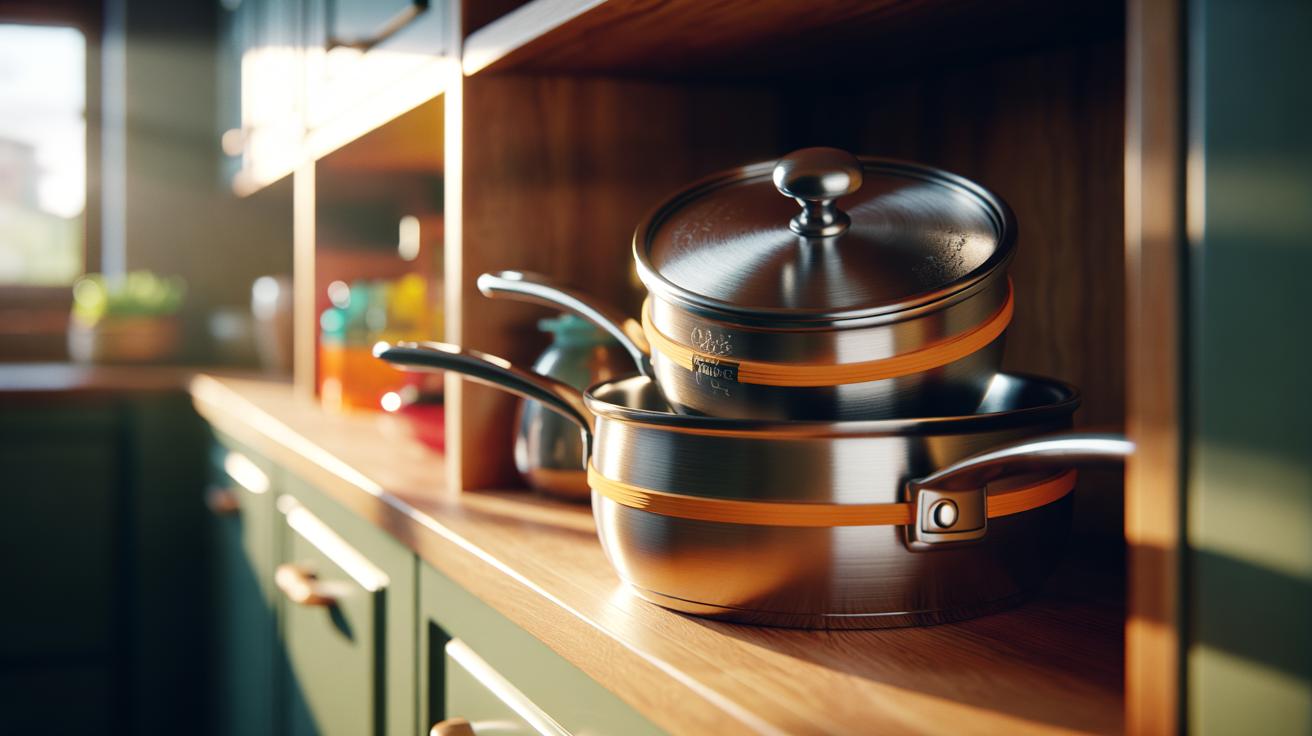
Start with your problem pair: say, a saucepan lid and its matching pan, or a stack of plastic containers with fidgety lids. Hook one medium-width band over the lid knob, stretch it under the pan’s handle, and double it back. The tension pins the lid to its mate. For loose lids stored together, lay them like records, then run a wide band around the stack’s circumference. Add a second band diagonally for stubborn sizes. Two quick loops, ten seconds, instant order.
For shelves, make a vertical “gate”. Fix a small cup hook or reusable adhesive hook under the shelf, loop a long band from hook to hook across the lid pile, and twist once for extra grip. This creates a springy barrier that lets your hand in but holds lids back from the brink. Short on bands? Daisy-chain two smaller ones: loop tip through tip and pull tight. It’s modular, cheap and reversible—ideal for renters.
Noise drops too. The elastic barrier absorbs knocks, turning that dreaded midnight crashing sound into a dull nothing. Labels stay visible, access remains quick, and the system scales across cupboards in minutes.
What to Use: Sizes, Materials, and Safe Alternatives
Not all elastics are equal. Choose thick, flat bands for lid stacks; they spread pressure and resist cutting into edges. Use narrower bands for knob-to-handle ties where a smaller contact patch still holds well. Pale bands show grime early; coloured ones are easier to sort by length. Replace tired bands at the first sign of cracking. Heat, oil and sunlight age natural rubber, so keep spares in a cool drawer and avoid direct contact with hot cookware.
| Band/Material | Best Use | Pros | Watch-outs |
|---|---|---|---|
| No. 64 Rubber Band | Pot lid to handle | Strong tension, common size | Perishes with heat/oil |
| Wide Postal Band | Lid stacks | High friction, gentle on edges | Bulkier appearance |
| Silicone Band | Dishwasher-safe bundling | Heat-resistant, durable | Higher cost |
| Cut Inner Tube | Heavy trays | Super grippy, tough | Can mark light plastics |
Silicone alternatives handle washing and mild heat, helpful for lids that live near the hob. Reuse hair ties for smaller tubs. For heavier baking sheets, a strip of bicycle inner tube gives industrial grip. Whichever route you choose, prioritise elastic memory and sufficient width.
Everyday Wins: From Pan Lids to Plastic Tops
Lid chaos begins with mismatched sizes and slippery finishes. The trap solves both. Group glass lids by diameter and strap once around the rims; thread a second band through the steam vents or over the knobs to stop rotation. Plastic food container lids sort beautifully into two stacks—small and large—each wrapped with a broad band so they travel as one. Families save minutes every morning just finding the right top. For renters, it’s liberation: no drilling racks or adding rails, yet the cupboard behaves as if custom-fitted.
This approach also secures awkward items. Baking sheets slide like cards; a single wide band makes a silent block you can grip with one hand. Salad spinner tops, colanders with handles, even loose chopping boards benefit from a quick loop. When cleaning day comes, slip bands off and wipe the lot. The method scales for seasonal kit—cling film boxes, Christmas tins—trapped when needed, freed when not.
In a world of gadget-heavy “solutions”, the rubber band trap is a charming rebuke: simple materials, clear physics, immediate pay-off. It cuts noise, prevents scrapes, and lets small kitchens punch above their weight without permanent fixtures. A handful of bands can reclaim an entire cupboard in under fifteen minutes. If you try it this week, start with the noisiest corner and work outwards; the satisfaction is contagious. What lid stack, sliding tray or stray top in your home is begging for a quick loop and a calmer life?
Did you like it?4.4/5 (23)