In a nutshell
- 🧅 Sulphur volatiles from a cut onion quarter (thiosulfinates, syn‑propanethial‑S‑oxide) mask host scents and irritate pests, deterring aphids, whitefly, and carrot fly; it’s a deterrent, not a killer.
- 🧭 How to use: place a fresh quarter 5–10 cm from stems, on mulch/stone or under a pot rim; replace every 3–5 days or after rain; avoid soggy spots; keep pieces away from pets and edible leaves just before harvest.
- 🧰 Limits and combos: scent barriers won’t stop slugs/snails or some thrips; pair with netting, reflective mulches, beneficial insects, soft soap, and beer traps/copper for integrated pest management.
- 🌿 Companion planting: interplant alliums (onions, garlic, chives, leeks) and marigolds to sustain low‑level sulphur cues; diversify beds, water in the morning, and use potted chives as movable defenders.
- 📊 Quick reference: typical piece lifespan 3–5 days; best targets aphids, carrot fly, whitefly; under pot rim ~2–3 days, on mulch ~4–6 days—adjust for weather and airflow.
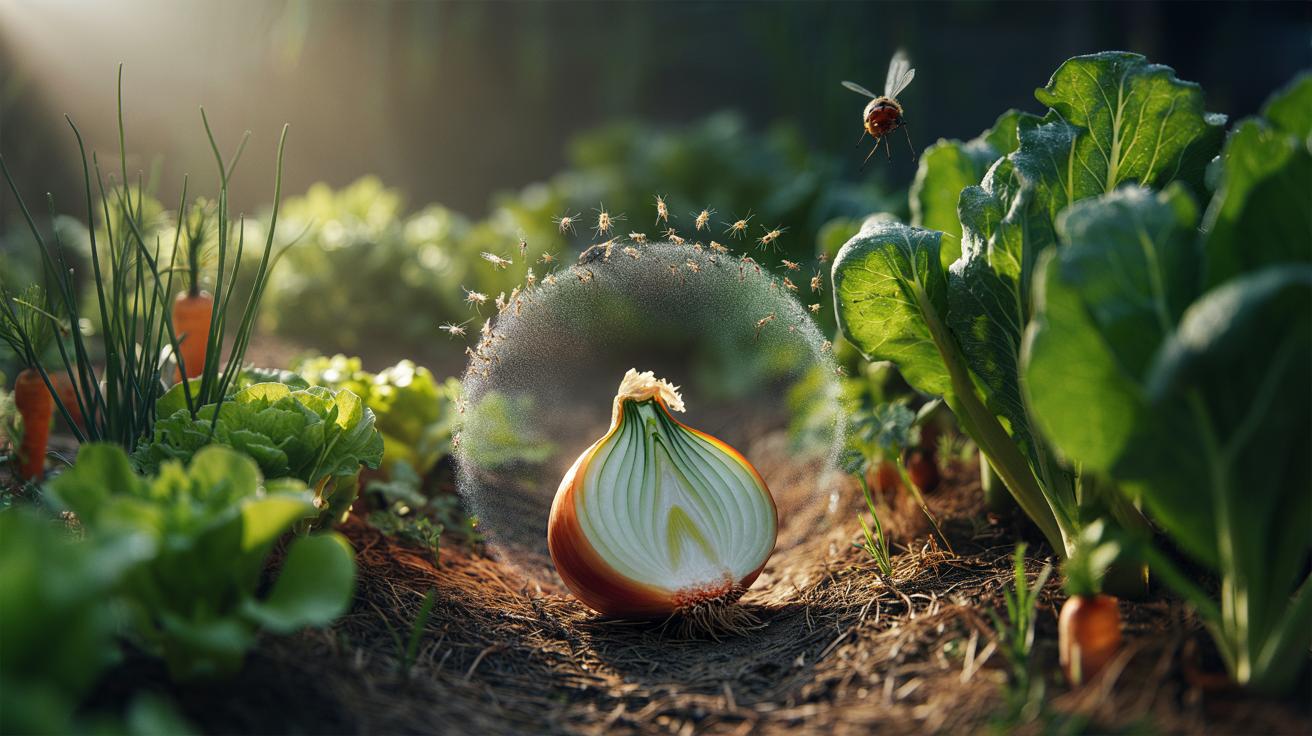
The humble onion has long doubled as kitchen staple and garden ally. Slice it open and you release pungent chemistry that makes eyes water and, crucially, pests retreat. This simple trick — tucking an onion quarter near vulnerable seedlings — leans on natural sulphur volatiles to scramble the senses of sap-suckers and nibblers. It’s cheap. It’s quick. It’s surprisingly effective in the right conditions. Think of it as a scented shield that both confuses and discourages intruders without dosing your beds in synthetic sprays. Here’s how that works, when to use it, and what to combine it with for a resilient, low-input defence across your patch, pots, and borders.
Why Sulphur in Onions Repels Pests
Cutting an onion sets off a chain reaction. Enzymes fracture stored amino acid derivatives into a cloud of volatile compounds — notably sulfenic acids that rapidly form thiosulfinates and the tear-inducing syn‑propanethial‑S‑oxide. To a human, that’s a sharp, familiar aroma. To many pests, it’s a cue to turn around. These sulphur-rich molecules interfere with the odour trails and plant cues that guide aphids, whitefly, and some leaf beetles to tender growth. They also have mild antimicrobial effects around the cut surface. By masking host signals and adding an irritant layer, an onion quarter can buy plants crucial time, especially during early growth when damage multiplies.
Research on alliums shows this broader principle: sulphur compounds can disrupt feeding and settlement, lowering the likelihood of colonisation. It’s not an extermination; it’s deterrence. That distinction matters in a home garden focused on balance. Expect reduced probing, slower build‑ups, and shorter visits rather than total absence. Wind helps spread the scent; still, humid evenings can trap it where you need it. Results vary by species: carrot fly and some beetles dislike it; thrips may be indifferent; slugs often ignore scents and follow moisture. Precision expectations keep the method useful and honest.
How to Use an Onion Quarter Around Garden Plants
Choose a fresh, firm bulb. Cut into quarters to maximise exposed surface but keep pieces chunky enough to handle. Place each onion quarter 5–10 cm from the stem of seedlings or plants you wish to protect — carrots, lettuces, brassicas, herbs in containers. Don’t press it against stems or bury it deep. Let air circulate. Replace every three to five days, or sooner after heavy rain, because potency fades as the cut surface dries or decomposes. In hot spells, smaller eighths work well because they dry more slowly and smell stronger for a short burst.
Avoid waterlogging around the piece. Rotting onion can invite fungus gnats if kept constantly soggy. In raised beds, sit the piece on a mulch chip or small flat stone to keep it off wet soil. For patio pots, tuck fragments under the rim for shade and to shield from downpours. Night raids by cats or foxes? A mesh cloche keeps onion bits in place. If the odour indoors is a concern for balcony growers, use at dusk and remove in the morning, prioritising the pest-active window.
| Placement | Typical Lifespan | Best Targets | Notes |
|---|---|---|---|
| 5–10 cm from stem | 3–5 days | Aphids, carrot fly, whitefly | Move if stems touch |
| Under pot rim | 2–3 days | Planter infestations | Reduces smell drift |
| On mulch/stone | 4–6 days | Seedlings in beds | Keeps piece drier |
Evidence, Limits, and When to Combine Methods
The science behind alliums and pests is solid; the effect size on any given day in your garden is the variable. Studies repeatedly show organosulphur volatiles alter insect behaviour, but wind, temperature, and competing scents can blunt the benefit. An onion quarter is a tactical nudge, not a strategy in itself. Heavy infestations will overwhelm scent barriers. Some pests, such as slugs and snails, follow moisture and texture cues more than smell, so expect little change without physical deterrents. And note the irony: thrips that plague onions themselves may shrug at the bouquet surrounding other crops.
So, combine. Net carrots against carrot fly. Use reflective mulches to confuse whitefly. Encourage ladybirds and lacewings with flowering strips. A weekly soft soap spray knocks back aphid hotspots. Beer traps or copper tape reduce slug pressure. Keep plants well fed and evenly watered; stress makes them louder to pests. If you’re organic‑certified, onion quarters are acceptable, but remove decomposed pieces promptly to avoid mould build‑up. Pets shouldn’t eat onions; position pieces where dogs cannot reach. For food safety, keep onion fragments off edible leaves you’ll harvest within a day or two.
Companion Planting and Sulphur-Rich Allies
Onion quarters are the quick fix; companion planting is the long game. Interplant alliums like onions, garlic, leeks, or chives among carrots and lettuces to maintain a background of sulphur notes all season. Continuous low-level odour can make your beds less discoverable to pests that navigate by smell. Chives along bed edges are tidy and perennial. Garlic cloves popped between brassicas pull double duty, edging out weeds and complicating pest scouting. Marigolds add a different set of bioactive compounds, broadening your scent palette beyond sulphur alone.
There’s a soil angle too. Sulphur has gentle antifungal properties, which can help keep leaf surfaces cleaner in damp spells, though it’s no cure for established disease. Rotations that include alliums may subtly shift the microbial community in your favour. Mind diversity: monocultures scream “buffet” to pests. Mix plant heights, leaf shapes, and aromas. Water in the morning to dry foliage quickly; perfumed leaves plus midday sun can be a better deterrent than any spray. If space is limited, use mobile pots of chives as modular defenders, nudging them beside at‑risk crops during peak pressure weeks.
Used with intent, a simple onion quarter becomes a powerful cue. It tells pests to look elsewhere while you grow seedlings past their vulnerable stage. It also tells you something: sustainable control is often about timely nudges, not blunt force. Lean on sulphur volatiles for short-term disruption, then layer in smart planting, hygiene, and gentle biological help for durable resilience. In a season of unpredictable weather and shifting pest cycles, that flexibility is worth its weight in bulbs. How might you weave this quick, natural deterrent into your broader, low‑spray gardening routine this year?
Did you like it?4.5/5 (22)