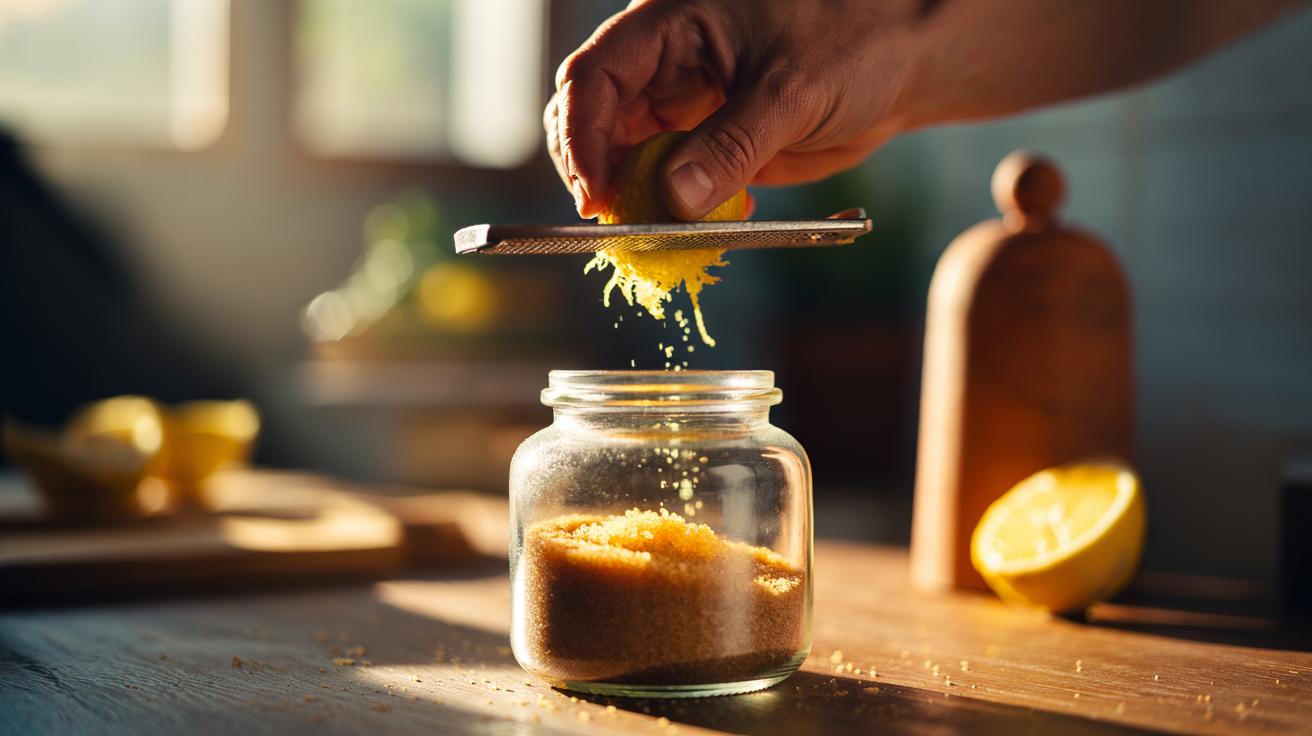
In a nutshell
- 🧱 Brown sugar hardens as molasses-coated crystals lose moisture; its hygroscopic film dries, bridges between grains set, and large, dry headspace accelerates the process.
- 🍋 Lemon dusting adds trace humidity and essential oils that aid moisture retention, gently rehydrating the molasses film without meaningfully shifting pH or flavour when used sparingly.
- 🛠️ Method: mix 500 g sugar with 1–2 tsp dried zest or mist 1:20 lemon-water lightly, seal airtight, rest 12–24 hours, then break clumps—use tiny doses to avoid stickiness.
- 🧰 Alternatives: terra-cotta savers for steady humidity, a bread slice for quick fixes (flavour risk), or the microwave for short-lived softening; choose by speed and aroma tolerance.
- 🔒 Best practice: airtight storage, minimal headspace, cool temps, and gentle “humidity nudges” keep sugar soft while preserving clean flavour for baking.
Brown sugar turns from pillowy-soft to rock-hard with alarming speed, yet a deceptively simple trick—“lemon dusting”—can hold the line. The idea is to use a whisper of lemon zest or a faint lemon-water mist to help the sugar keep its moisture and stay malleable. This isn’t culinary folklore. It’s grounded in how molasses-coated crystals exchange water with the surrounding air. Done right, the technique preserves texture while adding almost no flavour. Keep moisture where it matters and the sugar won’t set like concrete. Here’s the science, the method, the pitfalls, and some smart alternatives.
Why Brown Sugar Hardens
Brown sugar is white sucrose crystals wrapped in a thin film of molasses. That film is hygroscopic: it draws water from humid air and gives it up in dry air. In a loosely sealed bag, water drifts out until the sugar equals the room’s humidity. The film dries, tacky bridges between crystals rigidify, and the whole mass locks into a brick. Small gaps in packaging accelerate the loss.
Inside a container, the relationship between sugar and headspace matters. If the air volume is large and dry, the sugar sacrifices moisture to humidify it. If it’s small and humid, equilibrium tilts the other way. Seal tightly and reduce headspace, and the sugar keeps its softness longer. Temperature swings can worsen the seesaw, pushing water out during warm periods and leaving crystals brittle when it cools.
Texture is a function of water activity and the integrity of those molasses films. When they’re hydrated, granules flow. When they desiccate, they interlock. Any intervention that sustains a modest, local humidity around the granules—without soaking them—slows hardening dramatically. That is where lemon dusting earns its keep.
What Lemon Dusting Actually Does
Lemon dusting means tossing brown sugar with a tiny amount of very fine zest or adding a micro-mist of lemon-infused water. The zest contributes trace moisture plus essential oils; a mist raises the immediate humidity inside the container. Both help the molasses film rehydrate, loosening clumps and preventing new welds. A tiny amount achieves a big effect; too much turns the sugar sticky.
The chemistry is gentle. Citric acid in lemon doesn’t “dissolve” your sugar; at these miniature doses it barely shifts pH. The essential oils—mainly limonene—create a mild hydrophobic barrier at contact points, slowing evaporation without sealing granules. Practically, you’re managing moisture exchange rather than introducing a syrup.
Flavour transfer is the trade-off. Zest can perfume the sugar, which many bakers find pleasant in cookies or crumble toppings. If neutrality is vital, use dried zest, which is subtler, or a very dilute lemon-water mist. The goal is micro-adjustment, not marinade. Keep additions minimal and the molasses character stays front and centre.
Step-By-Step: Lemon Dusting for Softness
Start with 500 g of brown sugar in an airtight tub with minimal headspace. For zest: microplane 1–2 teaspoons of lemon zest, spread it on a tray, and air-dry for 2–3 hours (or 30 minutes at 60–70°C in the oven). Crumble to a fine “dust.” For a mist: mix 1 part lemon juice with 20 parts clean water in a food-safe mister.
Toss the sugar with about 1 teaspoon dried zest, or give 1–2 light sprays of the dilute lemon water across the surface, stirring to distribute. Seal the container. Leave 12–24 hours so moisture can equilibrate. Break up remaining clumps with a fork, then reseal. If you can smell strong lemon when you open it, you likely used too much.
For maintenance, add a pinch of dried zest every few weeks, or one faint mist when the sugar feels slightly firm. Store cool, dark, and sealed. Label the tub. Do not add wet slices of lemon; they over-humidify and invite microbial growth. If you used a strip of peel to rehydrate a brick, remove it after 24 hours to avoid uneven wet patches.
Alternatives and Storage Best Practice
There are other low-fuss ways to manage moisture retention and keep granules flowing. Terra-cotta “sugar savers” release a measured humidity after being briefly soaked, while a slice of bread or apple works in a pinch—though both can introduce flavour and uneven damp spots. Microwave fixes are emergency-only; they soften externally but can recrystallize fast. The table below compares quick options.
| Method | Speed | Flavour Risk | Best For |
|---|---|---|---|
| Lemon dusting (zest) | 12–24 h | Low–moderate citrus scent | Ongoing softness with subtle aroma |
| Dilute lemon-water mist | 6–12 h | Low if used sparingly | Quick tune-up without added solids |
| Terra-cotta saver | 12–24 h | None | Long-term maintenance |
| Bread slice | 6–12 h | Possible yeasty note | Emergency rehydration |
| Microwave with damp towel | Minutes | None | Immediate use; short-lived |
Best practice is boring but effective: airtight container, minimal headspace, cool storage, and periodic humidity nudges. Keep the bag within a sealed tub, expel excess air, and avoid temperature swings. These “macro” controls reduce how often you’ll need “micro” fixes like lemon dusting—and they preserve the sugar’s flavour integrity for baking.
Lemon dusting works because it respects the physics of moisture equilibrium while giving you a culinary edge. A pinch of zest or a restrained mist restores the molasses film, protects flow, and keeps your cupboard ready for last-minute bakes. Use it sparingly. Combine it with airtight storage, and hard bricks become history. Small, smart humidity management beats brute-force rehydration every time. What will you try first in your kitchen: a whisper of zest, a terra-cotta saver, or a clever tweak to your storage routine?
Did you like it?4.6/5 (25)