In a nutshell
- 🍋 Clumping comes from a surface starch gel; citric acid loosens it, lemon balm oils lubricate, and brisk agitation completes fast detangling.
- ⏱️ The ten‑second method: warm bowl or pan, add lemon juice, lemon balm or olive oil, a spoon of hot pasta water, then toss hard for 10–15 seconds; salt after separation.
- 🌿 Lemon balm gives gentle citrus aroma without harsh acidity; combine with lemon juice and zest for balanced flavor and function, or keep an infused balm oil ready.
- 📏 Use simple ratios (e.g., 200 g pasta + 1–2 tsp juice + 1 tsp oil + 1 tbsp water) to form a quick, glossy micro‑emulsion that coats strands evenly.
- 🔧 Troubleshooting: reheat cold pasta with brief steam, go lighter on acid for gluten‑free, swap in white wine vinegar/verjus if lemon’s missing, avoid acid in boil water, and don’t over‑oil.
Limp spaghetti glued into tight nests can ruin a dinner in seconds. Yet the fix can be just as fast. Cooks across busy home kitchens and restaurant pass counters are leaning on a fragrant ally: lemon balm, backed by bright citrus. The trick is scientific, not mystical. A splash of lemon juice, the oils from crushed lemon balm leaves, a sheen of olive oil, and vigorous tossing. In ten seconds the strands separate, glossed and springy, ready to take sauce instead of fighting it. What seems like a quirky hack is a smart way to tame surface starch, lift aroma, and rescue timing when the doorbell rings or the sauce comes up late.
The Science: Why Citrus Unclumps Pasta So Fast
Pasta clumps because of a thin coat of surface starch that gelatinizes in hot water, then cools into a sticky film that glues strands together. Acid and oil reframe that chemistry. Lemon juice contains citric acid, which lightly hydrolyzes the gel matrix and reduces slipperiness where two strands meet. Meanwhile, the essential oils in lemon balm—rich in terpene compounds such as citral—are hydrophobic and slide between the strands, lowering friction so movement can do the rest. Agitation is the hidden engine here: once you reduce adhesion, ten seconds of firm tossing or tongs-turning provides the mechanical separation that finishes the job.
There’s another layer. Citrus plus fat makes a quick micro‑emulsion, especially if you add a tablespoon of hot pasta water. The emulsified droplets coat the spaghetti evenly, so you don’t get greasy slicks or sour pockets. Temperature matters too. Warmth keeps starch flexible; cold sets it like glue. That’s why this fix works best right off the boil or after a brief reheat with steam or hot water. The result: liberated strands, a bright nose of lemon balm, and a base that welcomes sauce.
Lemon Balm vs. Lemon: Flavor, Oils, and Practicality
They’re allies, not rivals. Lemon balm brings gentle citrus aroma without the sharp acidity of lemon juice; its oils are tender and herbal, almost tea-like. Lemon juice and zest contribute real acid and intense volatile oils. Blend them and you balance perfume with function. Bruise lemon balm leaves in a warm bowl to release oils, or muddle briefly with a spoon. Zest adds high notes without extra liquid, and a measured squeeze of juice provides the pH nudge that loosens starch.
For weeknight speed, keep a small jar of chopped lemon balm and zest covered in neutral oil in the fridge. One teaspoon transforms a pan of tangled spaghetti, especially when followed by a spoon of hot pasta water. If you only have lemons, you still get the detangling power; if you only have lemon balm, you gain silky glide and aroma—use an extra splash of starchy water to compensate. Either way, the fix is clean, bright, and fast enough to save a course between courses, with no heavy flavors that bulldoze the sauce you planned.
The Ten-Second Method, Step by Step
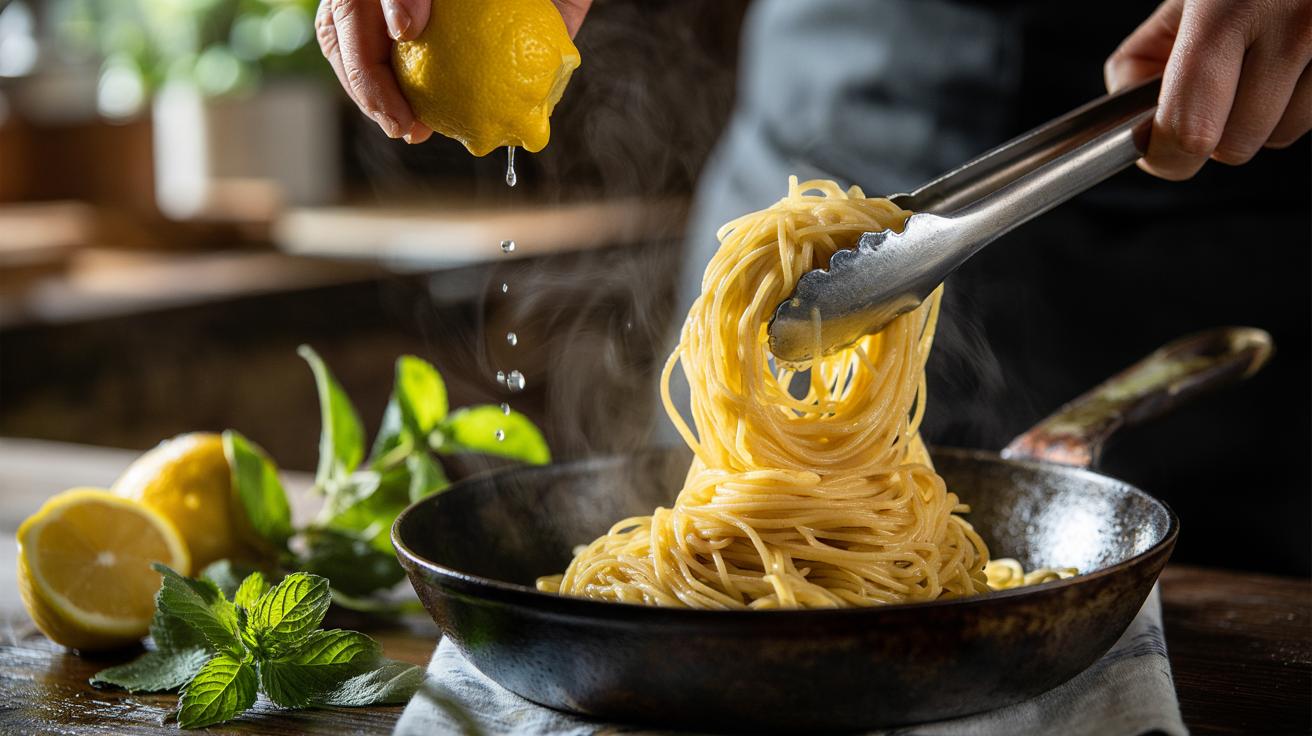
Work hot. Tip the clumped spaghetti into a warm skillet or bowl. Add lemon balm oil or a drizzle of olive oil, a squeeze of lemon, and a spoon of just‑off‑the‑boil pasta water. Tongs ready. Toss hard for ten seconds. Watch the nests loosen, strands sliding apart as the emulsion coats them. Salt to taste only after separation, then marry with your sauce. Ten seconds is enough when the ratios are right and the liquid is hot. Here’s a simple guide you can scale up or down without thinking.
| Cooked Spaghetti | Lemon Juice | Olive Oil or Lemon Balm Oil | Hot Pasta Water | Toss Time |
|---|---|---|---|---|
| 200 g | 1–2 tsp | 1 tsp | 1 tbsp | 10 seconds |
| 400 g | 2–3 tsp | 2 tsp | 2 tbsp | 10–15 seconds |
| 800 g | 1–2 tbsp | 1 tbsp | 3–4 tbsp | 15–20 seconds |
Keep it modular: for dairy‑based sauces, swap oil for a knob of butter and the citrus for zest alone, then finish with a squeeze at the end. For tomato, use both juice and zest for brightness. If serving plain with cheese, cut the lemon by half to avoid curdling hard‑grated varieties, and rely on lemon balm oil for glide.
Troubleshooting and Variations for Busy Kitchens
Cold leftovers? Revive with steam. Splash a tablespoon of water into a skillet, cover for 30–45 seconds, then apply the citrus‑oil toss. The warmth relaxes the starch gel so the acid can work. Gluten‑free spaghetti tends to shed more starch; go lighter on juice and heavier on hot pasta water to prevent breakage. If you cooked in advance and rinsed the pasta, the citrus trick still works—just remember to reintroduce starch via a ladle of cooking water from your next pot or a cornstarch pinch whisked into hot water.
No lemon to hand? Try a teaspoon of white wine vinegar or verjus; both are gentle acids that encourage detangling without shouting. Orange works in a pinch for delicate fish sauces, though it’s sweeter. Avoid adding acid directly to the boiling water; it can toughen the exterior and prolong cooking, making cling worse later. Finish with a little oil, not a lot; excess grease defeats emulsion and turns strands slick rather than separate. The north star: hot, acidic, lubricated, and agitated—fast.
In a culinary world obsessed with gadgets, it’s pleasing that a tangle of pasta yields to a garden herb and a squeeze of fruit. The method gives you speed, fragrance, and that essential gloss chefs chase when pasta meets sauce. It’s also forgiving enough for a midnight snack. Once you feel the moment the strands slip free, you’ll never wrestle with sticky nests again. What dishes in your repertoire would benefit from this lemon balm–citrus detangling trick, and how might you adapt the ratios to your own pace and pans?
Did you like it?4.4/5 (26)