In a nutshell
- 🌿 An overnight egg yolk mask enlivens dull houseplants by delivering lecithin, proteins, and micronutrients in a thin film that boosts leaf sheen and light capture.
- 🧪 The science: foliar feeding is a supplement, not a substitute—overnight contact increases time-on-leaf; the biggest gain is cleaning dust to improve photosynthesis.
- 🥄 Simple method: whisk 1 yolk with 250–300 ml water and a drop of mild soap, strain, apply a very thin coat at dusk, and wipe clean by morning; repeat monthly.
- ⚠️ Handle with care: raw egg can smell, attract pests, and clog stomata—prioritise hygiene, ventilation, and light application; avoid fuzzy leaves and many succulents.
- 🌱 Smart swaps and routine: try aloe or seaweed extract as gentler options, and remember the core diet is a balanced fertiliser and fresh substrate.
Across Britain’s window ledges, a quiet experiment is reviving tired foliage: the humble egg yolk mask. A dabbed-on emulsion, left to work while you sleep, can lend a near-instant sheen and a steadier green to houseplants that have lost their lustre. It sounds quaint. It’s also rooted in chemistry. Egg yolk’s lecithin, proteins, and micronutrients form a soft film that nourishes leaves while gently lifting dust, allowing light to penetrate. Apply thoughtfully and the results can look dramatic by morning. The trick is balance: a thin coat, not a slick. Here is how the nutrients do their work, and how to deploy them safely for overnight gains.
Why Egg Yolk Perks Up Leaves
Inside an egg yolk sit concentrated reserves of phospholipids, amino acids, and vitamins A, D, and E. In miniature, this package mimics elements of a mild foliar feed. The lecithin acts as a natural emulsifier, helping water spread across the cuticle rather than beading. That matters because nutrients travelling in a uniform film have a better chance of passing through micro-channels in the waxy surface. A fine, even coat improves contact; heavy smears hinder breathing. Lipids confer a temporary polish, too, which makes leaves reflect light more evenly and look immediately refreshed.
Proteins and free amino acids may be absorbed in tiny amounts through the cuticle, supplementing the plant’s usual nutrient pipeline from roots. Trace minerals, including phosphorus and sulphur, play supportive roles in energy transfer and chlorophyll maintenance. While the headline glow is cosmetic, many growers report steadier turgor and perkier petioles the next day. That’s plausibly due to a cleaner surface and eased light capture as much as nutrition. Think of it as a night cream for foliage: nurturing, not miraculous. Used sensibly, it helps dusty, dull leaves recover both shine and function.
Timing is crucial. A cool evening reduces evaporation, giving the microfilm time to settle. The thin emulsion also loosens grime, so a gentle wipe the next morning removes residue and reveals the benefit. Less is more: one yolk treats a whole shelf if properly diluted and strained. Over-application invites trouble—odour, pests, and blocked pores—so restraint is not optional.
Safe, Simple Recipe and Application Timeline
Make a small batch. Whisk one fresh egg yolk with 250–300 ml lukewarm water until silky. Add a single drop of unscented, mild soap to aid dispersion, then whisk again. Strain through muslin or a coffee filter to catch chalazae and clumps. Straining is non‑negotiable: it prevents streaks and residue. Decant into a spray bottle or keep as a bowl for cloth application. Always spot‑test on one leaf; wait 24 hours before treating the lot. If no spotting or stickiness appears, proceed at dusk.
| Component | Purpose | Notes |
|---|---|---|
| Egg yolk | Nutrients, lecithin, sheen | Use fresh; avoid yolk with off odour |
| Water | Dilution, gentle carrier | Lukewarm improves mixing |
| Drop of mild soap | Spreading, light degreasing | Avoid fragranced detergents |
| Muslin/filter | Removes solids | Reduces residue risk |
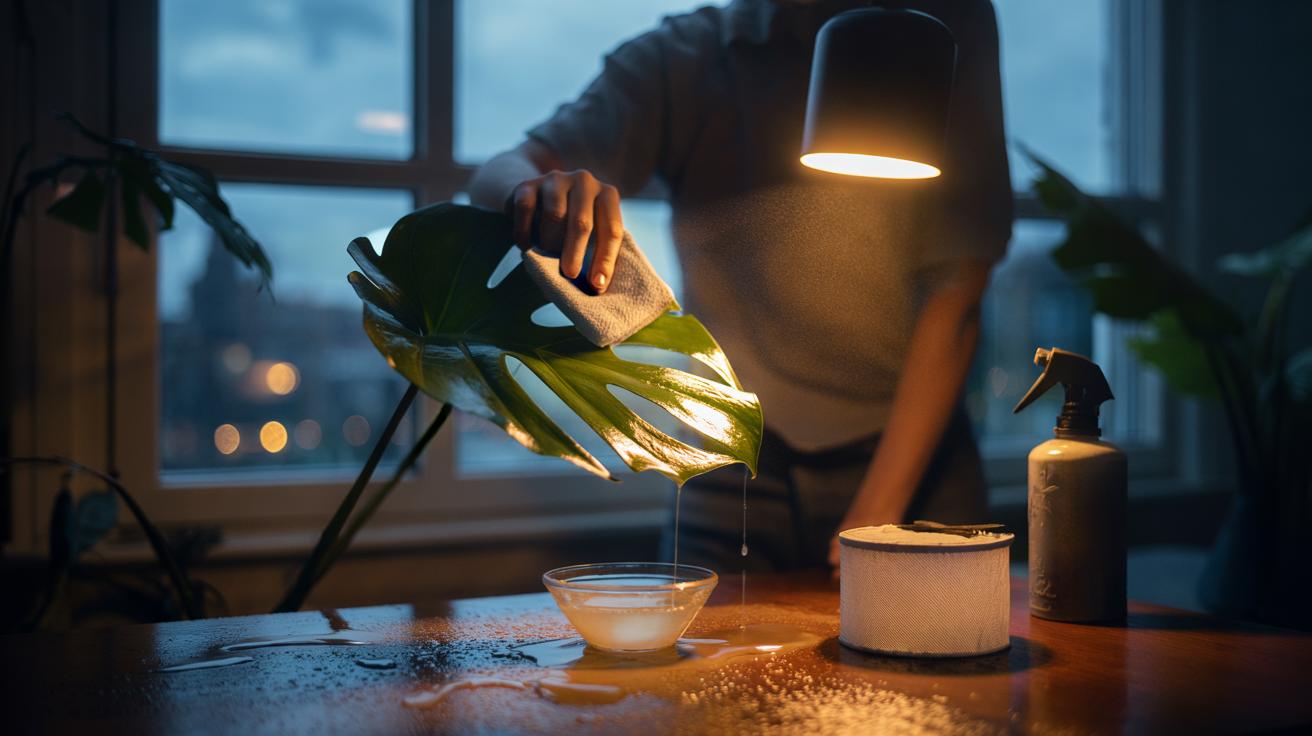
To apply, mist a microfibre cloth with the emulsion and buff each leaf’s top side, following the vein. For delicate species, spray lightly then dab away excess. Leave overnight in a ventilated room. In the morning, wipe with clean water to lift loosened dust and any remaining film. Never allow pools to sit in crowns; they rot. Repeat no more than monthly in growing season. Skip flowers, fuzzy leaves, and succulents, which dislike films on their skin.
What Science Says About Overnight Uptake
Plants primarily take up nutrients through roots. Foliar feeding is a supplement, not a substitute. Absorption across the leaf occurs via the cuticle and, to a lesser extent, through stomata. Most common houseplants are C3 species whose stomata are more active in daylight; CAM plants (certain succulents) open at night. So why the overnight mask? Cooler, darker hours cut evaporation and photodegradation, giving dilute molecules more time to linger and permeate the cuticle’s waxy matrix. The benefit is time-on-leaf, not a secret nocturnal switch.
Studies on amino acid sprays, lecithin carriers, and micronutrient solutions show measurable, if modest, uptake when solutions are dilute, evenly spread, and left for several hours. In practice, the egg yolk mask’s biggest win often lies in cleaning: breaking the bond between dust and wax, then being wiped away to restore light exposure. That alone can raise photosynthetic efficiency the next day, especially on leaves neglected through winter.
Two caveats apply. First, concentration matters. Strong, sticky mixtures can clog stomata and invite fungi. Second, hygiene. Raw egg may harbour bacteria. Use fresh yolk, apply thinly, ventilate, and remove residue by morning. The aim is a brief, beneficial contact period—not a permanent coating.
Caveats, Hygiene, and Sustainable Alternatives
Raw egg brings risks alongside rewards. It can smell, attract flies, and in warm rooms it spoils fast. Keep pets away during application. If you’re uneasy, pasteurised yolk or a boiled‑yolk dilution reduces microbial risk, though heat alters proteins and slightly dulls the shine. When in doubt, prioritise cleanliness and plant health over gloss. Always wash hands and tools, and disinfect cloths afterwards. Sensitive species—ferns, African violets, velvety aroids—do better with plain water dusting or a very light, quickly removed wipe.
As for frequency, treat the egg mask like a special polish, not routine feeding. Your plant’s real diet comes from a balanced fertiliser in the pot and fresh substrate. A monthly leaf buff in spring and summer is plenty. If leaves feel tacky after application, you’ve gone too strong. Rinse, then step down the ratio next time. Clarity test: leaves should feel clean, not waxed.
Prefer plant‑based options? A drop of aloe gel in water makes a gentle wetting agent. Dilute seaweed extract offers trace minerals without the eggy scent. Both are kinder on fuzzy leaves. Whatever you choose, stick to the same principles: thin films, cool timings, good airflow, next‑day wipe‑down. That disciplined routine delivers healthy shine without courting pests.
Handled wisely, an egg yolk mask can be a charming, low‑cost tune‑up for jaded greenery, lending gloss tonight and a calmer, brighter canopy tomorrow. It is not magic; it’s careful cleaning plus a whisper of nutrition. The difference is visible, especially in small flats where dust builds quickly. Are you tempted to try the yolk method for a single plant first, record the change, and then decide whether this nocturnal polish deserves a spot in your regular care ritual?
Did you like it?4.5/5 (24)