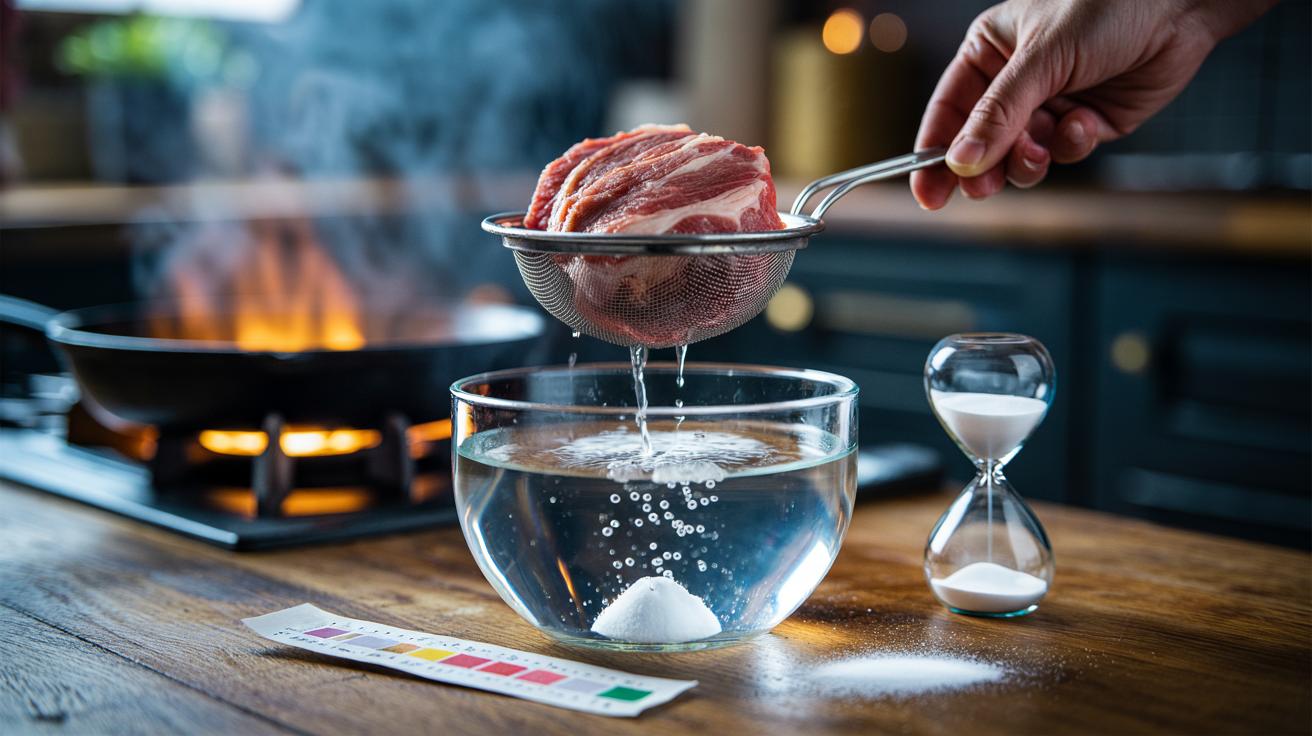
In a nutshell
- 🔬 Alkaline reaction raises surface pH, increases repulsion between myofibrillar proteins, reduces contraction, and helps meat retain moisture—fast, surface-level tenderising without melting collagen.
- ⏱️ Use precise ratios and timing: 1 tsp baking soda : 250 ml water for 3–5 minutes; seafood 30–60 seconds; mince ~1/4 tsp per 500 g; steaks a scant 1/2 tsp per 450 g. Always rinse and pat dry.
- 🥩 Best for lean, quick-cook cuts (beef strips, pork slices, chicken pieces); not a fix for collagen-heavy cuts like brisket or shin. Slice across the grain and keep pieces thin for maximum effect.
- 🍳 For flavour and browning: rinse thoroughly to avoid soapy notes, then season after; dry surfaces turbocharge Maillard. Balance with acids post-rinse (soy, vinegar, lemon) and use high-heat methods like wok searing.
- ✅ Safety and workflow: don’t reuse the bath, sanitise equipment, and pair the rinse with sharp knives, dry meat, and fierce heat. A baking soda rinse is cheap, quick, and reliably upgrades budget cuts.
It sounds like culinary alchemy: a quick rinse in baking soda and last-minute cuts turn supple in minutes. The trick is chemistry, not magic. By briefly bathing meat in a mildly alkaline solution, you shift surface proteins into a friendlier state, locking in moisture and reducing chew. The clock matters. So does the ratio. Done right, the technique is discreet, fast, and transformative for stir-fries, skewers, weeknight steaks, and thrifty chops. In under five minutes, the texture moves from stubborn to succulent. Here’s how the alkaline reaction works, why it’s powerful, and the pitfalls to avoid if you don’t want mushy, soapy meat.
The Science Behind Alkalinity and Tenderness
Meat toughness isn’t only about connective tissue; it’s also about how myofibrillar proteins behave. Increase the pH at the surface and you increase the net negative charge on those proteins. That electrical shift makes fibres repel slightly rather than cling, which reduces contraction in the pan and helps the meat retain water. The result is juicier bites and a looser chew. Alkalinity nudges proteins away from their tightest packing state, which is why the effect is fast. This isn’t a slow marinade that has to penetrate; it’s a surface science play.
Baking soda—sodium bicarbonate—is a mild base. At the right dose, it raises pH enough to alter protein interactions without dissolving them. It also buffers against the acidic environment of some marinades or the pan, helping preserve moisture during searing. Think of it as a microscopic shock absorber. But it remains a surface fix: collagen-heavy cuts still need time and heat to melt. Use it where tenderness is limited by muscle fibres, not gristle.
Because the reaction is concentrated near the exterior, it pairs brilliantly with quick-cook methods—wok searing, hot griddles, air-fryer finishes. The technique shines on thinly sliced beef, pork strips, chicken pieces, and even minced meat destined for burgers or kebabs. Applied correctly, the alkaline boost is invisible to taste yet dramatic in texture.
The Under-5-Minute Rinse: Ratios, Timing, and Technique
Set up a bath: 1 teaspoon baking soda per 250 ml cold water (roughly 1 cup). Submerge your meat—thin slices or small pieces work best—for 3 to 5 minutes. That’s it. Never exceed five minutes, or you risk a spongy bite and a faintly soapy note. Lift out, rinse under cold running water to remove residual alkalinity, then pat bone-dry with kitchen paper. Drying is vital for browning. Salt and season after the rinse; sear over high heat.
For whole steaks up to 2.5 cm thick, rub on a scant 1/2 teaspoon of baking soda per 450 g, rest 5 minutes, rinse, and dry. With minced meat, sprinkle 1/4 teaspoon per 500 g, toss, wait 3 minutes, then proceed. Chicken benefits in the same window. Seafood is delicate: a 30–60 second dip for prawns or squid is enough, followed by a thorough rinse. The thinner the cut, the quicker the reaction.
Avoid mixing baking soda directly into salty wet marinades; the buffering can mute tang and complicate flavours. Instead, do the rinse, dry well, then apply your seasoning or quick marinade. If you taste any alkalinity, you used too much or didn’t rinse properly. The payoff for precision is huge: faster browning, less weeping, and meat that feels upgraded.
Choosing Cuts and Knowing Limits
This method excels on lean, quick-cooking cuts where chewiness comes from tight muscle rather than heavy collagen. Think rump, minute steak, pork shoulder slices, belly strips, chicken breast or thigh pieces, and beef for stir-fry. It works brilliantly on supermarket-value packs that can otherwise be unforgiving. It will not melt connective tissue; slow braises and pressure cooking still rule for shanks and brisket. Consider grain direction too. Slicing across the grain plus an alkaline rinse multiplies tenderness. For very thick cuts, treat only the exterior or slice before cooking.
| Cut/Protein | Ratio (Bicarb:Water) | Soak Time | Rinse? | Notes |
|---|---|---|---|---|
| Beef strips | 1 tsp : 250 ml | 3–5 min | Yes | Ideal for stir-fries |
| Pork slices | 1 tsp : 250 ml | 3–5 min | Yes | Great for skewers |
| Chicken pieces | 1 tsp : 250 ml | 3–5 min | Yes | Juicier white meat |
| Prawns/Squid | 1/2 tsp : 250 ml | 30–60 sec | Yes | Very brief dip |
Respect the rinse. The goal is a subtle pH boost, not a flavour takeover. If you’re working with brisket, oxtail, or shin, save the soda for a separate recipe and lean into time, moisture, and low heat. For steaks thicker than a thumb, consider slicing before cooking or pairing with a conventional dry brine after rinsing and drying. Choose technique to match the cut’s anatomy.
Flavour, Safety, and Smart Pairings in the Pan
The fear is that baking soda will make meat taste odd. It shouldn’t. Used correctly, you’ll taste seasoning, not soda. Thorough rinsing and drying prevent alkaline residue from dulling browning or clashing with acids. After the rinse, season assertively—salt, pepper, garlic, soy, or a splash of vinegar. Because the surface is slightly protected, you’ll retain more juices under heat, so the meat carries flavours better. Dry surfaces mean better Maillard, and better Maillard means bigger flavour.
Sodium load is modest at these levels, but still be mindful. If you’re keeping salt low, season with aromatics, spices, and umami-rich sauces instead. Want tang? Add acidic components post-rinse: rice wine, lemon, yoghurt, or tomatoes. They’ll balance the alkaline treatment without cancelling it. In wok cookery, the method mirrors traditional “velveting” steps, just without the egg-white starch cloak. For burgers, the tiniest pinch in mince stops tight packing and keeps patties plush.
Practical safety still applies. Keep raw juices away from ready-to-eat food, and sanitise bowls after the soak. Don’t reuse the alkaline bath. And don’t chase miracles: the rinse won’t fix sinew, poor slicing, or a lukewarm pan. Combine it with sharp knives, dry meat, and fierce heat for best results. Used sparingly and swiftly, baking soda is a quiet, powerful ally.
In kitchens where time is short and budgets matter, a baking soda rinse is a rare win: inexpensive, quick, and reliable when applied with care. A few grams of powder, a bowl of water, and five minutes can turn Tuesday-night meat into something that eats like Saturday. The craft lies in restraint—correct ratios, strict timing, rinse and dry, then season and sear. It’s small science with big impact. Which cut on your next shopping list will you transform first—and how will you season it to let the improved texture sing?
Did you like it?4.5/5 (22)