In a nutshell
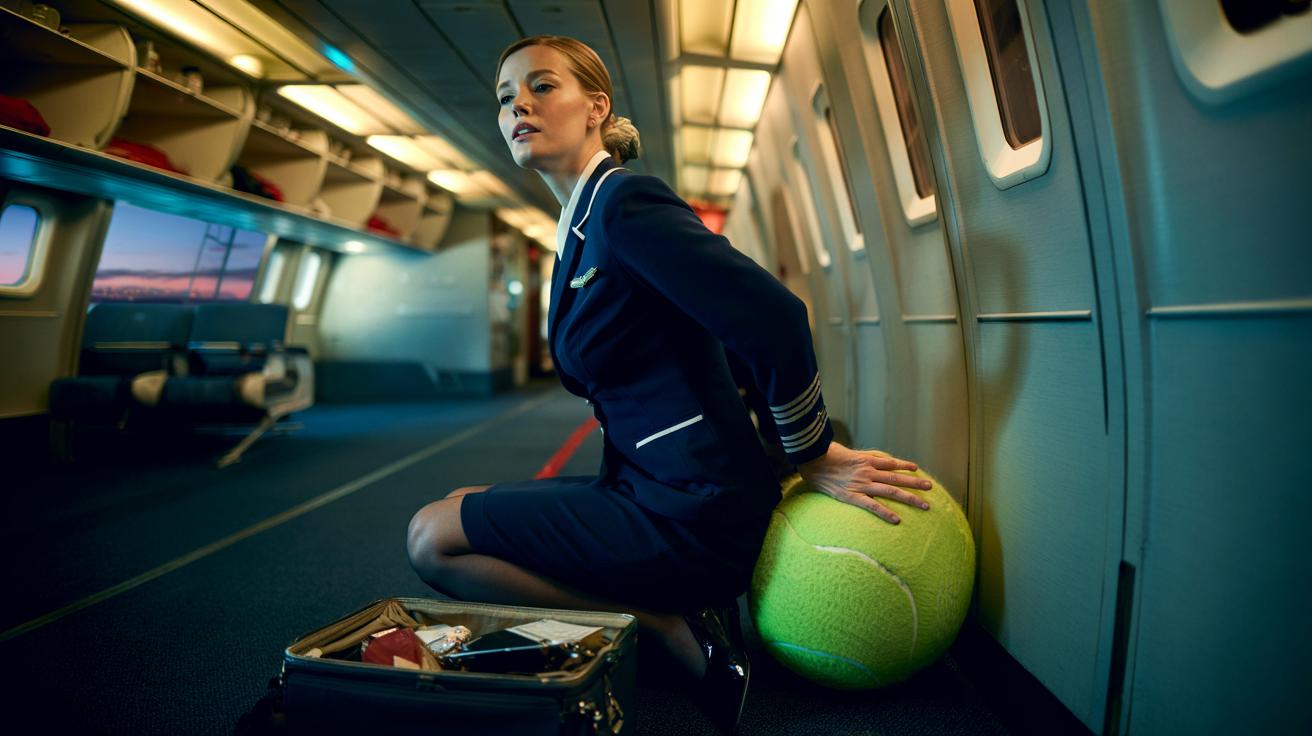
- 🎾 Flight attendants rely on a tennis ball for quick myofascial release that eases lower back pain after long flights—portable, cheap, and TSA‑friendly.
- ⏱️ The 2-minute roll targets the glutes, piriformis, and QL, plus a brief roll under the plantar fascia; apply slow, steady pressure and avoid the spine.
- 🧠 Why it works: sustained pressure boosts blood flow, reduces muscle guarding, and calms the nervous system—delivering fast relief without bulky gadgets.
- ⚠️ Safety first: skip recent injuries and bony areas; be cautious with osteoporosis or anticoagulants, and seek professional advice for numbness, weakness, or persistent symptoms.
- 🧳 Pro tips from crew: roll during quiet cabin moments, hydrate, pair with light hip flexor and hamstring stretches, use compression socks, and prioritise consistency over intensity.
Flight attendants keep their bodies battle-ready on punishing rosters, and their simplest secret weapon fits in a shoe: a tennis ball. After hours of cramped seats and stale cabin air, a quick 2-minute roll can melt the ache that gathers across the lower back and hips. It’s cheap, TSA‑safe, and brutally efficient. You don’t need a massage gun or yoga mat. Just a wall, the floor, or even the side of a seat row. If you sit for long stretches, your back isn’t “weak” so much as it’s locked by tight hips and glutes. This tiny sphere unlocks that tension fast, anywhere from gate to hotel room.
Why a Tennis Ball Works on Flight-Induced Back Pain
Long-haul flying encourages a hunched posture, hip flexors become short, and the muscles that stabilise the lumbar spine—glutes, deep rotators, and the quadratus lumborum—switch to survival mode. The result is nagging, diffuse lower back pain. A tennis ball delivers targeted myofascial release: gentle, local pressure that compresses irritated trigger points, nudging them to relax and restoring sliding between layers of tissue. It’s firm enough to reach trouble spots, yet forgiving compared to a lacrosse ball, making it ideal for travel-weary bodies and tight spaces.
The science is pragmatic, not mystical. Sustained pressure boosts blood flow, eases protective muscle guarding, and downshifts the nervous system’s pain alarm. Never roll directly on the spine—treat the muscles around it. Focus on the glutes, piriformis, and the strip of tissue beside the lumbar vertebrae. Unlike bulky gadgets, a ball never runs out of battery, gets past security without fuss, and doubles as a discreet aid you can use in a terminal corridor. For cabin crew who must perform minutes after landing, it’s the definition of reliable.
The 2-Minute Roll: Step-by-Step Guide
Start standing with your back to a wall. Place the tennis ball on the fleshy outer glute, then lean in until you feel a tender spot. Breathe. Spend about 30 seconds gliding slowly over a palm-sized area. Small movements, millimetres at a time. Shift slightly toward the centre of the buttock to reach the piriformis, a common culprit in travel tightness. Then move the ball to the side of your lower back, aiming for the muscles just beside the spine—the quadratus lumborum (QL). Keep pressure gentle here. If you feel sharp or radiating pain, stop immediately.
Repeat on the other side for roughly 30–45 seconds per zone. Finish by placing the ball under a foot and rolling the arch for 20–30 seconds; releasing the plantar fascia often softens tension up the posterior chain. On a plane, use the wall near the galley or the lavatory queue; in a hotel, lie on a carpet or press against a doorframe for extra stability. Move slowly, breathe consistently, and avoid bones. The aim isn’t bruising; it’s calm, sustained pressure that tells your body it’s safe to let go.
| Target Area | Body Position | Time | What You Should Feel |
|---|---|---|---|
| Outer glute | Standing, ball between hip and wall | 30–45 sec | Dull ache easing to warmth |
| Piriformis | Standing or lying, ball mid-buttock | 30–45 sec | Local tenderness, no sharp zings |
| QL (beside spine) | Standing, ball just lateral to lumbar | 20–30 sec | Gentle pressure, easy breathing |
| Plantar fascia | Sitting or standing, ball under arch | 20–30 sec | Relieving sore “stretch” sensation |
When (and When Not) to Use It
Timing matters. Do a quick sequence during boarding lull, again mid-flight if you can stand and lean against a bulkhead, and once more after baggage claim. Hydrate before and after; cabin air is arid and tight tissue hates dehydration. Pair the 2-minute roll with two moves: gentle hip flexor stretch (one foot on a chair, tuck pelvis, 30 seconds) and a standing hamstring sweep (hinge at hips, long spine). These calm the tug-of-war across your pelvis that feeds lower back pain. Small, consistent doses beat heroic, once-a-week efforts.
There are caveats. Skip direct pressure over recent injuries, fresh bruising, or if you’re on strong anticoagulants or have severe osteoporosis. If you have numbness, weakness, or progressive leg symptoms, consult a clinician before self-treatment. Pregnant travellers should avoid deep pressure over the abdomen and be conservative around the lower back. Prefer a gentler surface? Wrap the ball in a sock for cushioning and easy retrieval. If tenderness lingers past a few days, seek a physiotherapist; precision advice trumps guesswork when symptoms persist or escalate.
Pro Tips From Cabin Crew
Airline staff swear by tiny rituals that add up. Keep a tennis ball in a zip bag with earplugs and a collapsible water bottle so you never forget it. Use it first thing after take-off while the aisle is quiet, then again 30 minutes before landing to walk off the plane feeling human. Slip the ball inside a thick sock to create a “sling” you can anchor behind your back on the seat—micro-movements during the film count. Consistency beats intensity every time.
Want extra mileage? Combine with compression socks to tame lower-leg pooling, and set a phone reminder to stand every 45–60 minutes on longer sectors. Crew also rotate through hotspots: glutes, then QL, then feet. That sequence calms the chain from ground to spine. Wipe the ball with a sanitising wipe after airport floors; hygiene is not negotiable. For the ultra-sore, start against a mattress for softer give, then progress to a wall. It’s discreet, it’s inexpensive, and it works when the schedule doesn’t care how you feel.
A humble tennis ball won’t replace a physio, but it gives travellers a portable reset that costs pennies and wins back comfort on demand. Two minutes of focused pressure can unknot the cranky tissues that flights quietly sabotage, letting you step off refreshed rather than rigid. Pack one, learn the map of your own sore spots, and turn dead time at the gate into relief. Your back prefers little-and-often to once-in-a-blue-moon heroics. When your next journey looms, where will your first 30 seconds of rolling go: glutes, QL, or feet?
Did you like it?4.5/5 (24)