In a nutshell
- 🧠 Memory anchoring links key details to deliberate retrieval cues, delivering sharper recall, cleaner responses, and sustained presence in fast-moving conversations.
- 🔬 It leverages associative memory, boosted by encoding specificity and dual coding, so matching cues and paired imagery make recall faster and more reliable.
- 🛠️ Use discreet, repeatable anchors: gestural taps for themes, verbal tags for names and numbers, visual marks for timelines, and spatial routes for lists.
- 🗂️ Build a personal toolkit: start with a covert gesture and unique tag, add a simple visual code, then layer cues; consistency drives automatic recall.
- ⚖️ Prioritise ethical use and acknowledge limitations; practice under mild stress and support anchors with micro-summaries, verification, and focused listening.
In a fast-moving meeting, a live interview, or a tense negotiation, your brain juggles facts, names, and intent. Drop one ball and the thread unravels. Memory anchoring offers a deceptively simple remedy: pair the detail you need to remember with a deliberate cue you can trigger later. It works in real time, without props or apps. Think subtle gestures, quick sketches, or phrase tags that attach meaning to a moment. The result is sharper recall right when pressure peaks. This technique doesn’t replace note-taking; it augments it, allowing you to keep listening, respond crisply, and retain the story that unfolds as people speak.
The Science Behind Anchoring in Real-Time Dialogue
Behind the smooth magic of recall sits an old idea: associative memory. Our brains store experiences as networks of sights, sounds, words, and emotions, so that one detail can awaken several others. Anchoring exploits that network by linking key information to a deliberate retrieval cue. In conversation, cues can be sensory (a touch on a pen), verbal (a unique tag), or spatial (mentally placing a point in a “location”).
Two mechanisms make it stick. First, encoding specificity: the closer your cue matches the moment of learning, the better your recall when you reactivate it. Second, dual coding: pairing a word with an image or gesture gives the brain two routes back to the same memory. When you choose cues you can safely and discreetly repeat while talking, you prime recall without breaking rapport. That’s vital in interviews, clinical consultations, and high-stakes pitches where constant eye contact and fluency matter as much as accuracy.
Practical Anchors You Can Deploy Mid-Conversation
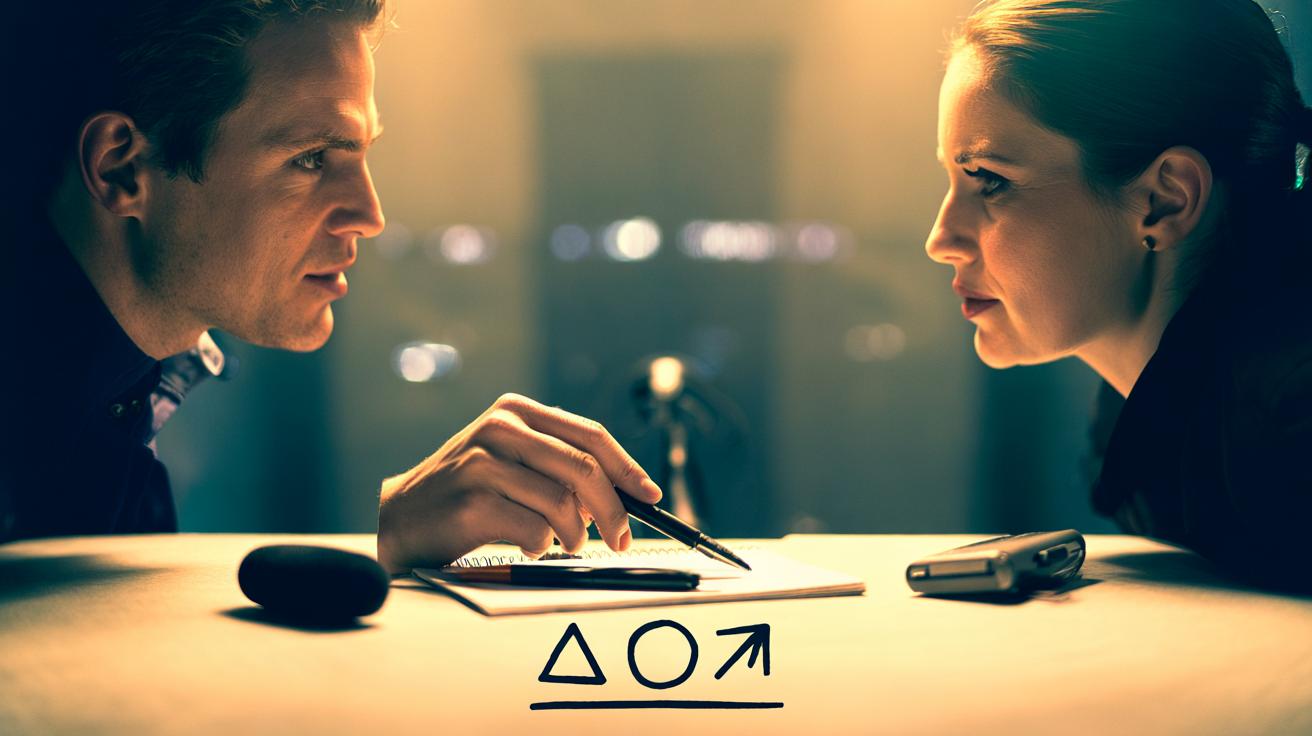
Start with simple, repeatable actions. A subtle finger tap for each cost figure. A micro-sketch in your notebook to represent a timeline. A unique phrase—“blue door”—attached to a name so it stands out from generic chatter. Gestural anchors keep your head up; verbal tags slot cleanly into dialogue; visual marks help later reconstruction. The trick is to choose cues you can trigger again without looking contrived. In a lively Q&A, you might anchor three themes—budget, risk, deadline—by tapping thumb, index, and middle finger as each arises, then replay the sequence before you respond.
| Anchor Type | How to Set | Best Use | Recall Cue |
|---|---|---|---|
| Gestural | Assign a finger tap to each point | Live interviews, panels | Repeat tap pattern |
| Verbal Tag | Attach a quirky phrase to a fact | Names, numbers, quotes | Say or think the tag |
| Visual Mark | Draw a shape for each theme | Complex timelines | Glance at the shapes |
| Spatial | Place items along an imaginary route | Lists and sequences | Walk the route mentally |
Journalists in Westminster, GPs in a packed surgery, or founders meeting investors can deploy these anchors without breaking flow. The payoff is speed: you retrieve, verify, and respond while staying present.
Designing a Personal Anchoring Toolkit
Build your toolkit around situations you face most. Start with two resilient anchors: one covert gesture and one verbal tag. Test them in low-stakes chats, then scale up. If you often cover technical briefings, add a visual code: triangles for risks, circles for costs, arrows for timelines. If you negotiate, pair each concession with an anchor tied to your BATNA, so you never concede past your line. Consistency beats novelty—use the same cue for the same category until it becomes automatic.
Next, refine triggers. Choose gestures you can repeat while holding a coffee or a mic. Keep tags short, concrete, and unusual—“violet clock” works; “important point” does not. Finally, layer anchors. Combine a tag with a position on your notepad margin (top-left for urgent, bottom-right for background). When the moment comes to summarize, you sweep the margin, run the finger taps, whisper the tag internally, and your recall clicks into place without drama.
Ethical Use and Limitations
Anchoring helps you remember; it must never be used to manipulate. Keep cues personal, not performative. If a technique risks misleading someone about your certainty, dial it back. Anchors support memory, but they can’t fix poor listening or sloppy verification. Treat them as scaffolding: they hold ideas in place while you check sources and confirm quotes. In sensitive interviews—bereavement, health, whistleblowing—choose unobtrusive anchors that keep attention on the speaker, not on your process.
There are limits. High cognitive load can crowd out anchors if you haven’t practiced. Emotional surges—anger, excitement—can override calm cueing. Mitigate by rehearsing under mild stress: rehearse a Q&A while walking, or role-play a contentious committee hearing. Pair anchoring with essentials: short micro-summaries aloud (“So that’s three delays?”), time-stamped notes, and clear follow-up questions. Used responsibly, anchors enhance accuracy and empathy, the twin pillars of trustworthy reporting and credible leadership.
Memory anchoring is not about tricks; it’s about designing deliberate cues that respect attention and accelerate recall when the room heats up. Adopt one gesture, one tag, and one visual today, then iterate until they feel instinctive. You’ll speak cleaner, ask better questions, and miss fewer threads when it matters. The real test is whether your anchors keep you present while sharpening detail. Which anchor will you pilot in your next live conversation, and how will you know it worked?
Did you like it?4.6/5 (27)