In a nutshell
- 🥬 Vinegar steam revives wilted lettuce in ~2 minutes by restoring turgor pressure; mild acetic acid improves wetting and freshness without cooking.
- ⚗️ Method: Mix 1 tbsp white vinegar with 250 ml hot water, steam leaves 15–20 cm above vapour for 90–120 seconds, then cold set and spin dry.
- 🛡️ Safety & flavour: Avoid steam burns, use white vinegar, ventilate; rinse briefly if flavours are delicate—this refreshes texture but isn’t a steriliser.
- 🌿 What works (and what doesn’t): Best for romaine, little gem, spinach, rocket; skip basil and baby leaves; bin slimy or foul-smelling greens.
- 🧺 Aftercare & storage: Chill on a towel-lined container, dress just before serving to keep crunch, and cut food waste with a reliable last-minute rescue.
Call it a chef’s cheat or a science-backed shortcut: a whisper of vinegar steam can jolt wilted lettuce back to life in as little as 2 minutes. Instead of soaking leaves for ages in icy water, a gentle mist of warm, mildly acidic vapour rehydrates the cells rapidly, refreshing texture and gloss without cooking them. The trick is finesse. Keep the heat low, keep the distance right, and stop the moment the leaves look perky. Then cool and dry. Handled carefully, this quick rescue turns yesterday’s limp salad into tonight’s crisp centrepiece. Here’s why it works—and exactly how to do it safely in a British kitchen.
Why Vinegar Steam Works in Minutes
Wilt happens when leaf cells lose water and turgor pressure drops. You feel it as floppiness, dullness, that “oh no” moment before guests arrive. Steam reverses the slump fast because condensing vapour forms tiny droplets that cling to the leaf surface and move water back across membranes. The warmth nudges permeability just enough to speed uptake without collapsing structure. The aim is moisture and elasticity, not cooking. That’s the key distinction.
Where does acetic acid—the business end of vinegar—fit in? A very dilute mist lowers surface pH. That discourages some spoilage microbes and can help loosen the biofilm that builds as leaves sit in the fridge, improving wetting so water spreads evenly. The result is more uniform rehydration and a brighter look. The acid level is tiny; we’re talking kitchen-safe, salad-friendly amounts that won’t perfume the room or overpower flavour when used correctly.
Texture matters, too. Lettuce crispness depends on water trapped within cell walls and the pectin network that holds them. Mild heat softens waxy cuticles just enough to allow better moisture exchange, after which a brief chill “sets” the refreshed snap. It’s a controlled reset of the leaf’s moisture balance—fast, simple, repeatable.
Step-by-Step: The Two-Minute Method
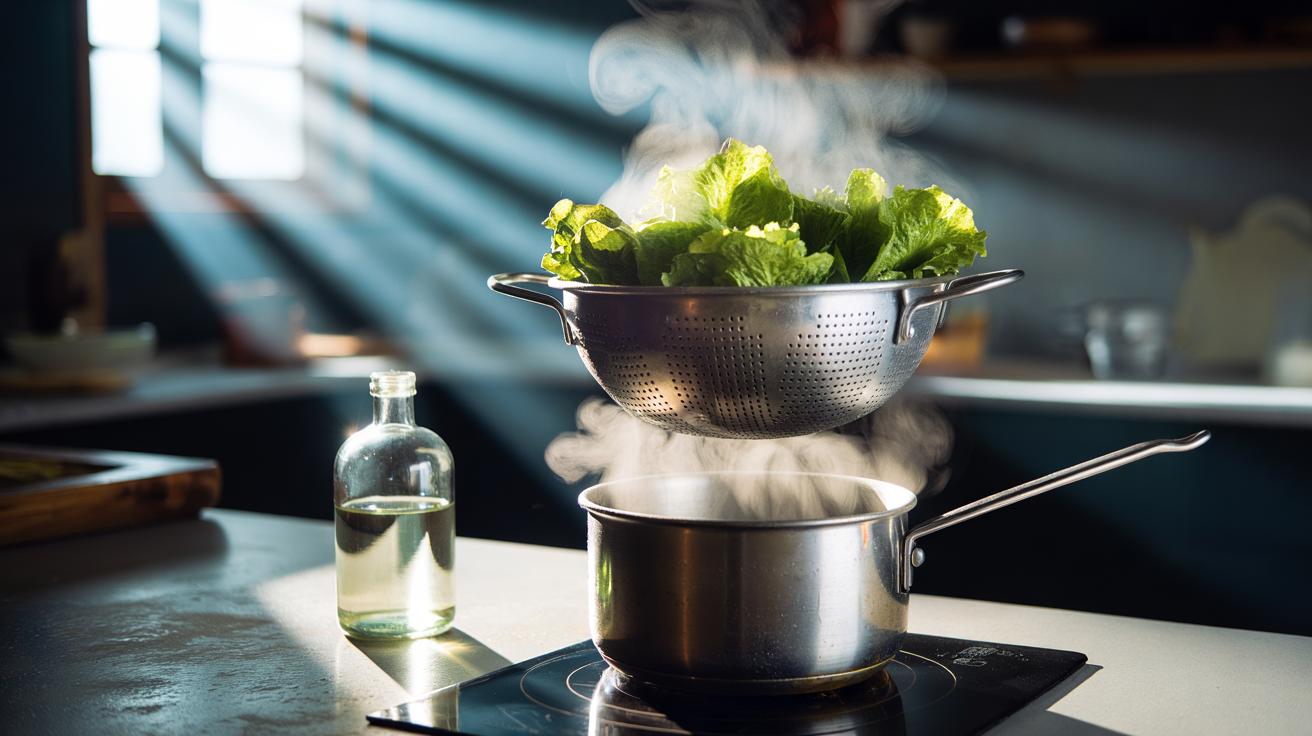
Make a dilute mixture: 1 tablespoon white vinegar to 250 ml hot water. Use a wide saucepan or a heatproof bowl in the sink. You want visible steam, not a rolling boil. Rinse your lettuce briefly to remove grit, shake dry, then place the leaves in a metal colander. Hold the colander about 15–20 cm above the vapour and gently toss for 90 seconds to 2 minutes as a gentle mist kisses the leaves. Stop the instant the leaves look glossy and springy.
Immediately cool. A 15–30 second rinse under cold water or a quick fan in front of an open window halts any softening. Spin thoroughly. Lay leaves on a clean tea towel and blot. If you’re salad-dressing later, chill them for 5–10 minutes to lock in that crisp snap. Worried about vinegar notes? A brief cold rinse removes any trace. Used lightly, you shouldn’t taste it at all.
| Element | Recommendation | Why It Matters |
|---|---|---|
| Vinegar ratio | 1 tbsp per 250 ml water | Mild acidity improves wetting; avoids strong odour |
| Distance | 15–20 cm above steam | Prevents cooking; ensures fine mist |
| Time | 90 seconds–2 minutes | Restores turgor without wilting |
| Finish | Cold set and spin dry | Fixes crispness; keeps dressing clinging |
This is a rescue, not a makeover for decay. If leaves are slimy or smell off, bin them. The method shines on romaine, little gem, and sturdy leaf lettuce that’s lost perkiness rather than integrity.
Safety, Flavour, and When to Skip It
Steam burns are no joke. Keep hands above, not in, the vapour trail. Use tongs to toss leaves in the colander. Work beside the hob with the extractor on or a window ajar; it keeps any vinegar odour brief and faint. Stick to plain white vinegar. It’s neutral and predictable. Malt vinegar can imprint a lingering note best saved for chips, not salad.
Flavour fears are largely overblown at these dilutions, yet taste differs. If you’re dressing leaves with a delicate oil and citrus, rinse for 15 seconds under cold water after steaming and spin dry; the acid assist has already done its job. For robust Caesar or anchovy dressings, no rinse is needed. If you can smell vinegar strongly, you’ve used too much or steamed too long.
And when to skip it? Baby leaves and soft herbs such as basil bruise easily; use an ice bath instead. Brown, water-soaked edges won’t revive; trim and compost. If the lettuce has been out at room temperature for hours, prioritise food safety. Vinegar steam refreshes texture but it is not a steriliser. Trust your eyes and nose—and the bin—when in doubt.
Beyond Lettuce: Other Greens and Gear
This gentle fix travels well across the salad drawer. Spinach, rocket, and lamb’s lettuce respond quickly, though they need less time—think 45–60 seconds. Herbs? Parsley and coriander perk up; mint can, too. But avoid chervil and basil. They discolour with heat. For cabbage slaw mix, a 60–90 second pass adds sheen that helps dressings cling while keeping crunch.
Gear is flexible. A mesh sieve doubles as a steam basket. A large heatproof bowl in the sink plus kettle steam is safer if you’re nervous about the hob. You can also spritz with a spray bottle filled with warm dilute vinegar water, then cover loosely for a minute to trap vapour. The principle remains: minimal heat, maximal micro-droplets, immediate cool-down.
To keep that freshness, store revived leaves in a lidded container lined with a dry paper towel. The towel traps excess moisture; the lid prevents dehydration. If serving later, dress just before plating. A pinch of salt draws moisture; add it at the table to maintain crunch. For the organised cook, revive mid-afternoon, chill, and you’ll plate an evening salad with a convincing market-day snap.
Done right, vinegar steam is quick, clever, and quietly transformative: a tiny tweak that rescues lunch and saves money by reducing waste. It doesn’t replace good storage or a weekly wash-and-spin, but it gives you a reliable fallback when plans change and greens sulk. Two minutes, a pan, and a splash of vinegar—then crispness. Will you try the mist method on your next droopy romaine, or do you have a different go-to rescue that deserves a place in the salad-saving hall of fame?
Did you like it?4.6/5 (27)