In a nutshell
- 🥂 Restore clarity fast: vinegar cuts through limescale and soap scum, turning cloudy glasses crystal clear in about five minutes—especially when used warm.
- ⚗️ The science: acetic acid dissolves calcium carbonate into soluble salts and frees soap residues; a quick spot test distinguishes removable deposits from permanent etching.
- ⏱️ Method that works: warm white distilled vinegar, submerge for ~5 minutes, wipe with a microfibre cloth, rinse hot then cold, and polish dry—no abrasives, no scratches.
- 🧪 Choose wisely: use white distilled vinegar (5–8%) for routine haze, cleaning vinegar (6–10%) for stubborn scale; avoid coloured vinegars and limit contact on decorated glass.
- ⚠️ Safety and prevention: never mix vinegar with bleach, skip lead crystal and gilt rims, and prevent re-haze with rinse aid, soft water settings, and a 1:1 vinegar spray for maintenance.
In hard-water Britain, cloudy pint glasses and dulled wine goblets are a familiar irritation. The culprit is almost always limescale and stubborn soap scum bonded to the surface, diffusing light and killing sparkle. A quick fix hides in the pantry: vinegar. Its active ingredient, acetic acid, targets mineral films that ordinary detergent leaves behind, cutting through residues without scratching. Warm it slightly, give it five minutes, and the transformation borders on theatrical. For light haze, a single soak is usually enough to restore crystal clarity. No special kit. No harsh fumes. Just chemistry doing what chemistry does best—fast, precise, and surprisingly gentle on glass.
How Vinegar Clears Cloudy Glasses in Five Minutes
The trick is targeted acidity. Household white distilled vinegar (typically 5–8% acetic acid) dissolves mineral deposits and loosens fatty films clinging to your glassware. When hard-water minerals dry after a dishwasher cycle, they leave microscopic ridges that scatter light; soap residues trap dust and oils, compounding the haze. Acetic acid breaks those bonds. Five minutes is plenty for fresh limescale and light scum, particularly on recently clouded glass. Heavier, older deposits may need a repeat soak or slightly stronger “cleaning vinegar” at 6–10%.
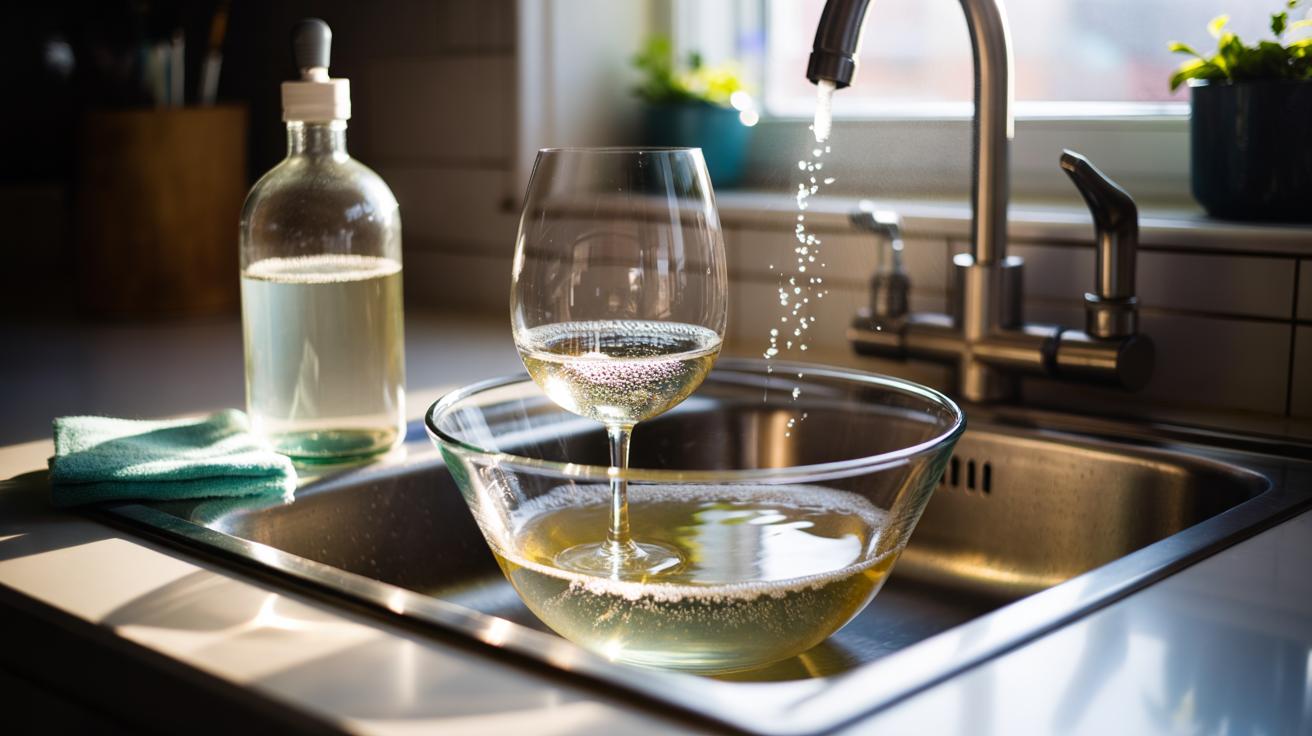
Process matters. Warmth speeds diffusion, so use vinegar comfortably warm to the touch. Submerge the glass fully, ensuring liquid reaches the lip and base where deposits collect. Agitate gently halfway through, then wipe with a microfibre cloth to dislodge softened residue. Rinse with hot water and polish dry. What you will notice immediately: sharper reflections, a truer ring when tapped, and an unmistakable, renewed brilliance under kitchen lights.
The Science: Acetic Acid Versus Limescale and Soap Scum
Cloudiness often comes from calcium carbonate (limescale) and calcium-bound soaps. Acetic acid reacts with carbonate to form soluble calcium acetate, water and carbon dioxide. That’s why you might see faint fizzing when vinegar meets a chalky rim. With soap scum, the acid breaks the bond between fatty acids and calcium/magnesium ions, freeing residues so they rinse away. Vinegar’s pH (around 2.4–2.6 for 5–8%) is low enough to dissolve these films quickly, yet mild enough for everyday glass when exposure is short.
There’s an important distinction: deposits versus etching. Deposits sit on the surface and wipe away after soaking; etching is actual glass corrosion, often from high-alkaline detergents and long, hot dishwasher cycles. Etched glass feels permanently silky or frosted, with no improvement after treatment. If a droplet of vinegar restores a clear “window” within a minute, you’re dealing with residue, not damage. That quick spot-test can save disappointment and unnecessary scrubbing.
Step-By-Step Method for Crystal Clarity
1) Choose white distilled vinegar (5–8%). Warm it slightly—hand-hot, not boiling. 2) For a quick bath, use it neat or dilute 1:1 with warm water for general haze. 3) Submerge the glass fully for five minutes. Rotate once or twice. 4) Remove and wipe the interior and exterior with a soft microfibre cloth or a non-scratch sponge; focus on the lip and base. 5) Rinse under hot running water, then cold, to shock off loosened residue. 6) Dry with a lint-free cloth to prevent fresh spotting, holding the glass by the stem or base.
For heavy buildup, extend to ten minutes or repeat the soak. Stubborn rims often yield to a paste of bicarbonate of soda dabbed on after the vinegar bath—let it fizz briefly, then rinse. Do not use abrasives—scratches scatter light and encourage future deposits. Finish with a short breath of steam from the kettle and a final polish: you’ll get that showroom sparkle, even on daily drivers.
Choosing the Right Vinegar and Contact Time
Not all vinegars are equal for glass. You want clarity without lingering odour or colour. White distilled is neutral and leaves nothing behind. “Cleaning vinegar” at 6–10% works faster, but rinse thoroughly. Flavoured vinegars can stain or smell; avoid them for delicate stemware. Use the guide below to match strength to the job and save time.
| Vinegar Type | Acidity | Best For | Typical Contact Time | Notes |
|---|---|---|---|---|
| White Distilled | 5–8% | Light haze, routine maintenance | 3–5 min | Neutral smell; food-safe |
| Cleaning Vinegar | 6–10% | Stubborn limescale | 5–10 min | Stronger; rinse well |
| Malt/Apple Cider | ~5% | General use if diluted | 5–7 min | May leave odour/colour |
| Balsamic/Coloured | Varies | Not recommended | — | Risks staining |
Shorter is safer for decorative finishes or painted logos—test first on the base. If you’re working on etched-looking fog that doesn’t respond in five minutes, accept it as permanent wear and avoid prolonged acid exposure that won’t help.
Safety, Caveats, and When Not to Use Vinegar
Vinegar is simple, but not universal. Never mix vinegar with bleach or chlorine-based cleaners; it can release toxic gases. Ventilate small kitchens and wear washing-up gloves if you have sensitive skin. Skip vinegar on lead crystal, opal glass, antique gilt rims, or metallic decals; acids can dull or loosen decorative layers. If in doubt, dab a hidden area and observe for a minute.
Remember that some “cloudy” glass is actually dishwasher etching; vinegar won’t fix that. Prevent future haze by using rinse aid, a soft water setting, or hand-washing prized stems. Store glasses lip-up to avoid dust settling in bowls, and keep a small spray of 1:1 vinegar and water near the sink for quick post-wash spritzes. For pub glasses and beerware, stick to unscented white vinegar to avoid flavour taint. The rule of thumb is simple: short contact, thorough rinse, gentle polish.
The appeal of vinegar is its elegance: an everyday acid that disarms the very minerals responsible for our glassware’s dullness, then vanishes with a rinse. Used warm, it restores brilliance in minutes, costs pennies, and saves glasses you might have written off. That said, knowing when residue ends and etching begins is the difference between a satisfying rescue and a futile scrub. Ready to try the five-minute soak on your cloudiest glass—and which piece will you put to the test first?
Did you like it?4.6/5 (29)