In a nutshell
- 🍋 A fresh lemon’s citric acid reacts with calcium carbonate limescale, producing CO₂ fizz and soluble calcium salts—dissolving light deposits in about 2 minutes.
- 🔧 Quick method: cut and press the lemon onto scale, leave for ~2 minutes, agitate with a soft brush, then rinse and dry; bag-and-soak shower heads or aerators for targeted descaling.
- ⚠️ Works brilliantly on glass, ceramic, and chrome, but avoid natural stone (marble, limestone) and be gentle with old chrome; never mix acids with bleach.
- ⚖️ Versus vinegar and commercial descalers: lemon matches everyday jobs with cleaner scent and control; vinegar is slower, descalers are faster but harsher—always check surface compatibility.
- 💷 Low-cost, low-odour, and eco-minded; maintain results by drying surfaces, fitting tap aerators, and doing a weekly pass—ideal for hard-water UK homes.
Hard water leaves its calling card on British bathrooms: chalky rings in the loo, cloudy shower screens, crusted tap aerators. You could reach for harsh chemicals, but a kitchen staple can outplay them. A single lemon. Its secret is citric acid, a gentle yet effective agent that attacks limescale fast. Cut, rub, wait two minutes, rinse. It’s oddly satisfying. That bright wedge can shift fresh deposits in the time it takes to brew tea, and it does so without choking fumes or pricey bottles. Here’s why it works, when to use it, when not to, and how to get the best results in just 120 seconds.
How Lemon Juice Attacks Limescale Chemistry
Limescale is mostly calcium carbonate. It’s stubborn because it’s insoluble in water, clinging to taps, tiles, and shower glass. Lemon juice contains roughly 5–8% citric acid, with a pH near 2, which is significantly more acidic than neutral water. When that acid meets calcium carbonate, an acid–base reaction kicks off: the carbonate is neutralised, carbon dioxide fizz appears, and the calcium is bound into soluble salts such as calcium citrate. The visible bubbles aren’t theatre; they are proof the scale is being dismantled.
Acids dissolve scale by donating protons that break the carbonate structure apart, and that’s why two minutes can be enough on light, fresh buildup. Contact matters. So does coverage. Pressing a juicy lemon half directly onto a crusted tap floods the mineral with acid, while the peel gives your fingers grip. Temperature nudges the kinetics too: a warm surface or warm rinse speeds things slightly. Heavier, older deposits are denser and may need repeat passes or a longer dwell, but the underlying chemistry doesn’t change. It’s fast, targeted, and surprisingly thorough.
Two-Minute Method: Step-by-Step Cleaning Playbook
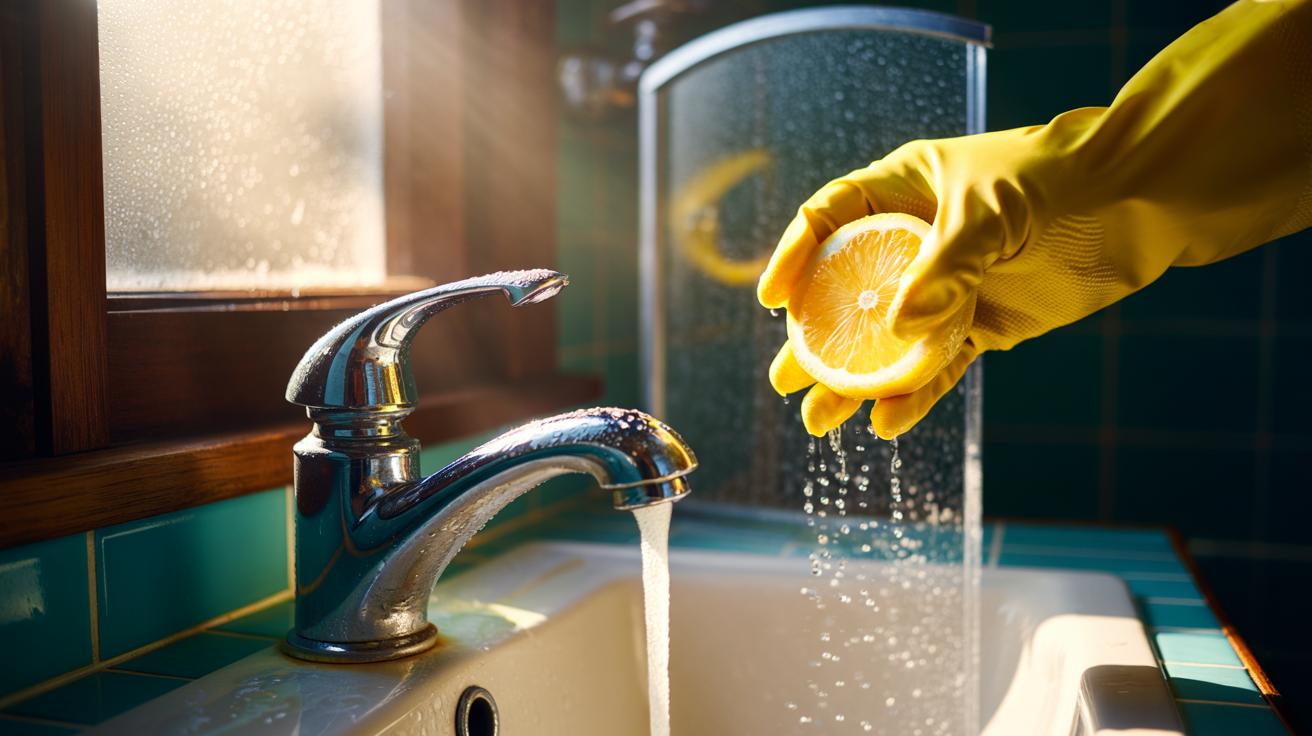
Start with a fresh lemon. Roll it on the counter to loosen the juice, then cut in half. For taps, shower heads, and chrome fittings, press the cut face onto the scale and twist gently, letting the juice soak the deposit. On vertical glass, squeeze juice onto a microfibre cloth and wipe slowly to avoid drips. For tiny crevices—around tap bases or the shower door frame—use a cotton bud dipped in juice for precision. Leave the surface visibly wet with juice for around two minutes. You should see fizzing on heavy spots.
After the wait, agitate. A soft toothbrush breaks up loosened crusts without scratching. Re-wet with more juice if it dries mid-scrub. Rinse thoroughly with warm water to wash away loosened minerals and sticky residues. Dry with a clean cloth to prevent new spots forming as water evaporates. For stubborn scale on removable parts like aerators, unscrew and soak them in lemon juice for 10–15 minutes, then brush and rinse. Avoid abrasives or salt on polished chrome—they can mark the shine. Never mix lemon (or any acid) with bleach: it can release hazardous gases. Keep it simple and safe.
Where It Works and Where It Doesn’t
Lemon excels on glass shower screens, ceramic basins, porcelain loos, stainless-steel drains, and most modern chrome-plated taps. It’s brilliant for white halo marks around plugholes and the chalky crust that narrows tap flow. On shower heads, the trick is to bag-and-soak: pour juice into a small bag, slip it around the head, and secure with a rubber band for a targeted bath. The results are quick and visible—clearer spray patterns, brighter metal, less draggy glass.
There are limits. Do not use lemon on natural stone such as marble, limestone, or travertine; acids etch and dull those surfaces. Be cautious with unsealed grout, enamel that’s already chipped, and bare metals like raw brass or aluminium, which can tarnish. Painted fixtures? Patch test. Older, pitted chrome may spot if scrubbed aggressively—use a softer touch. Around rubber seals and silicone, brief contact is fine, but avoid long soaks that can swell materials. If in doubt, apply on a cloth rather than pouring, and always rinse well. The rule of thumb: acid on mineral deposits, never on acid-sensitive materials.
Quick Comparison: Lemon vs Vinegar vs Commercial Descalers
How does the humble lemon stack up against the usual suspects? It’s not a contest of bravado, but of chemistry, contact time, and safety. Vinegar brings acetic acid at similar strength. Commercial descalers might use stronger acids (like sulfamic or formic) and wetting agents for speed on thick scale. But odour, cost, and surface risks differ. Here’s a snapshot to guide your choice for everyday bathroom jobs in hard-water UK homes.
| Option | Active | Typical pH | Light-Scale Contact Time | Pros | Cautions |
|---|---|---|---|---|---|
| Lemon | Citric acid | ~2.0 | ~2 minutes | Fresh scent; food-safe; great control | Avoid natural stone; rinse sticky residue |
| Vinegar | Acetic acid | ~2.4 | 3–5 minutes | Cheap; effective soak | Pungent smell; can mark some rubbers |
| Descaler | Sulfamic/formic blends | ~1–2 | 1–3 minutes | Fast on heavy scale | Stronger acids; check surface compatibility |
Lemon shines for routine, light-to-moderate bathroom scale where you want speed without harsh chemistry. For kettle elements or thick crusts, a dedicated descaler may save time. For everything else—taps, glass, tiles—the lemon wins on fragrance, control, and the pleasure of seeing the fizz do the work.
Safety, Smell, and Savings
The economics are simple. One lemon can descale a whole set of taps and still leave enough for the shower screen, costing pennies per job. The scent? Clean, bright, fleeting—no throat-catching whiff. That matters in small, steamy bathrooms where aerosols linger. Ventilate, wear washing-up gloves if you have sensitive skin, and never mix acids with bleach or ammonia. Store cut halves in a jar in the fridge for a day or two; they still work. For eco-minded households, the peel can deodorise the sink disposal or be zested for baking—minimal waste, maximum utility.
To prevent the return of chalky rings, wipe and dry surfaces after showers, and fit a cheap tap aerator that reduces splashing. Consider a water softener if you live in hard-water hotspots like London, Kent, or East Anglia. But even without gadgets, a weekly two-minute pass keeps fixtures bright. The result is cumulative: less scale, less scrubbing, longer life for fittings. That’s the quiet magic of citric acid—modest, reliable, and relentlessly effective.
In the end, a lemon is a tiny chemistry set disguised as fruit, and its two-minute strike on limescale is the kind of household win that sticks. It’s quick. It’s cheap. It’s kinder to your lungs and your chrome. Used smartly, it turns the battle against hard water into a routine you barely notice. Ready to test the wedge on your dull tap or cloudy screen today—and which bathroom trouble spot will you tackle first?
Did you like it?4.6/5 (29)