In a nutshell
- 🧪 Science that shines: tea’s tannins (polyphenols) gently tighten surface fibres, reduce micro-scratches, and even light reflection for a quick polish in seconds—no lacquer, just subtle chemistry.
- 🍵 How-to in brief: brew strong black tea, use a damp (not dripping) bag, patch-test, wipe along the grain, then buff with a lint-free cloth; finish with a touch of beeswax if desired.
- 🌳 Best and worst fits: shines on sealed finishes and woods like oak and walnut; go cautious on pine, raw or chalk-painted pieces, and avoid damaged coatings, water rings, or flaking finishes.
- ♻️ Budget and eco win: a used tea bag costs pennies, boosts sustainability by reducing aerosols, and slots into a quick maintenance routine—weekly buffs, quarterly wax.
- 🧼 Pro tips: keep liquid minimal (thin, even passes), re-buff if clouding appears, use clean microfibre, and store used bags (max 24 hours) before discarding; wipe dry for pets and allergy concerns.
There’s a homespun trick doing the rounds in British households: rub a used tea bag across dull wood and watch the surface revive. It sounds like folklore. Yet the science is surprisingly sound. A quick swipe introduces tannins and gentle moisture that tighten the grain, mellow light scuffs, and add a whisper of colour. Results appear fast. Seconds, not hours. It’s a tidy, low-cost fix that favours chemistry over cosmetics. From dining tables marked by life’s daily scrapes to sideboards that have lost their glow, this simple brew-led polish offers a credible, sustainable first response before you reach for commercial cleaners.
Why Tannins Make Wood Shine
Tea is rich in polyphenols, notably tannins. These molecules are mildly astringent: they bind to proteins and tighten fibres. On wood, that translates into a subtle “drawing together” of the grain at the surface, visually reducing the appearance of micro-scratches. A little moisture lifts compacted dust; then evaporation leaves a crisper surface. Add a hint of natural pigment and you get warmth, depth, and a soft sheen — a quick, convincing refresh without silicones or heavy waxes. It looks polished because the surface is tidier at a microscopic level.
Chemically, two things matter: pH and evaporation rate. Tea is slightly acidic, which can neutralise soap residues and tame cloudy films left by alkaline cleaners. As the dampness flashes off, aligned fibres reflect light more evenly. This is not a lacquer. It is a micro-finish tweak. On darker timbers — think oak, walnut, sapele — the effect reads as richer colour and improved contrast; on pale woods, it can gently amber the tone, lending a lived-in patina.
It works best on lightly worn, sealed furniture that isn’t water-sensitive. Varnishes, oils, and waxes form the stage; tea supplies the spotlight. It’s not magic; it’s manageable, repeatable chemistry. If a surface is deeply abraded or the finish is failing, no brew will replace sanding and refinishing. But for touch-ups and newsstand-ready shine before guests arrive, this humble method earns its column inches.
How to Use a Tea Bag on Tired Timber
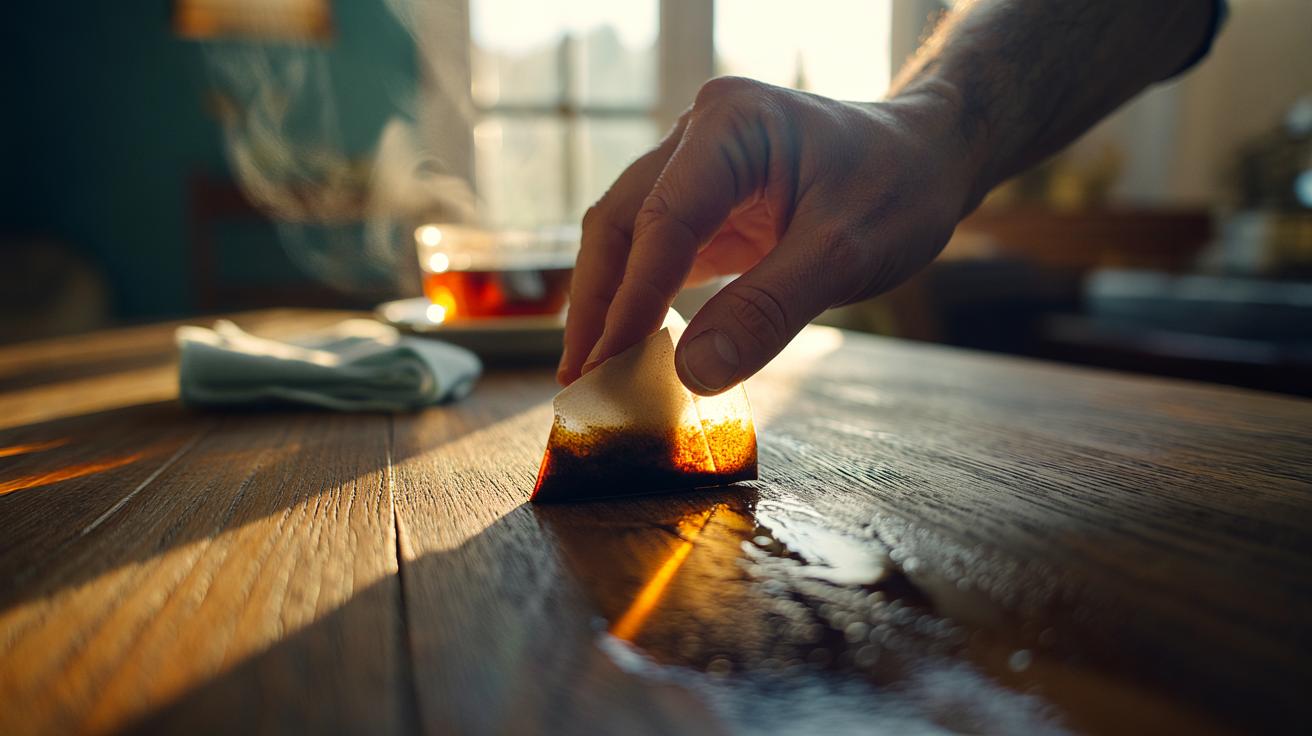
Brew a strong cup: one black tea bag per 150–200 ml, steeped 3–5 minutes. Let the bag cool until warm, then squeeze lightly — damp, not dripping. Always patch-test under a chair seat or at the back edge first. Wipe along the grain with light, even strokes. No circles. No scrubbing. Give it 30–60 seconds to settle, then buff with a lint-free cloth. For extra glow, repeat once. If you like, finish with a fingertip of beeswax or a clear furniture polish to lock in the look.
Control is key. On sealed finishes, you’re working with the topcoat, not bare timber, so a little goes far. Keep liquid away from joints and veneer edges. For raw, oil-rubbed, or chalk-painted pieces, be cautious: capillary action can draw moisture into end grain, raising fibres. In those cases, use a nearly dry bag and buff promptly. No varnish? Go gently, and keep a hairdryer on cool to speed evaporation.
| Tea Type | Tannin Level | Visible Effect | Best For |
|---|---|---|---|
| Black (Assam, English Breakfast) | High | Stronger warmth, better scratch-masking | Oak, walnut, dark-stained finishes |
| Green | Medium | Subtle clarity, minimal colour shift | Ash, beech, light lacquers |
| Rooibos (Herbal) | Low | Gentle glow, faint reddish tone | Test pieces, sensitive finishes |
Household tip: save a cooled, used bag to avoid waste. If the bag tears, decant a teaspoon of tea onto the cloth instead. Less liquid, more buffing — that’s the safe formula.
What It Works On—and When to Avoid It
Expect the best results on sealed, lightly worn furniture with a clear lacquer, shellac, or oil-wax blend. Oak responds handsomely; its natural tannins harmonise with the tea, deepening tone. Walnut glows. Mahogany takes on a museum-soft lustre. On pine and other pale, resinous woods, proceed carefully: the colour shift can be patchy, and knots may darken faster than surrounding grain. Veneers are safe if edges are intact and you keep moisture minimal.
There are red flags. Water rings, heat blushing, or finish whitening indicate trapped moisture in the coating. Tea won’t fix that. Silicone-heavy polishes can cause streaking; strip them first with a manufacturer-approved cleaner. If the finish is flaking or the topcoat is crazed, you need abrasion and a fresh finish, not a brew. When in doubt, patch-test — and stop if the surface dulls or drags. Remember that tea adds faint pigment; on very light Scandinavian finishes, even a small amber shift might be unwelcome.
Allergies and pets? The residue is minimal, but wipe thoroughly and let surfaces dry before use. Avoid antique marquetry where water can creep into joints. And never flood tabletops: use a barely damp bag and immediate buffing. Common sense keeps this zero-cost trick clever rather than risky.
From Kitchen Cupboard to Care Routine
The biggest win is sustainability. A spent tea bag is a free, biodegradable tool that extends the interval between heavy polishes. It’s also fast. Two minutes per side table can reset a room before guests arrive. Little effort, disproportionate reward. Make it part of a five-minute Friday tidy: dust, dab with tea, buff, done. For maintenance, use once every few weeks on high-traffic tops, less on cabinets. Follow quarterly with a whisper of beeswax for slip and protection.
Consistency beats zeal. Store a couple of used bags in a lidded jar in the fridge for a day if you’re doing several pieces; discard after 24 hours to avoid odour. If a finish clouds, you’ve used too much liquid — re-buff dry and space out passes. Keep microfibre cloths clean; residues from old polishes can smear the result. The mantra: thin, even, and along the grain.
Economics matter in British homes. This trick costs pennies and reduces reliance on aerosol polishes. It yields a news-camera-ready sheen that flatters old workhorses without pretending they’re new. For renters protecting deposits, it’s a smart, reversible uplift. And for the sentimental heirloom that shouldn’t be sanded, it’s a respectful nudge toward renewed character.
Sometimes the smartest fix is already brewing in the kettle. A gentle sweep of tannins tidies the surface, softens scuffs, and restores a believable glow without choking the grain in silicones. It won’t resurrect wrecked finishes, but it will make good furniture look loved again in the time it takes to sip a cuppa. Simple, frugal, effective. Will you try the tea-bag touch-up on a single side table first, or line up the whole room and turn maintenance into a weekend ritual?
Did you like it?4.5/5 (27)