In a nutshell
- 🫖 Tea bags tame fridge odours fast: tannins (polyphenols) bind volatile sulphur compounds and amines via adsorption, softening smells in about 60 seconds.
- ⏱️ Practical use: place 1–2 dry, unscented bags on a dish near the source, notice quick relief, then leave for hours; replace every 3–7 days for consistent odour control.
- 🧪 Tea types: black tea is the strongest all-rounder; green tea and oolong work well but can be slower; avoid scented/herbal blends if a neutral aroma is needed.
- 🧼 Safety & hygiene: keep bags off food surfaces, ensure they stay dry to prevent mould, and pair with routine cleaning using warm water and bicarbonate of soda; investigate any persistent chemical smells.
- 🌱 Sustainable routine: rotate tea bags with activated charcoal and bicarbonate, compost fully dried spent bags, and prevent odours by sealing pungent foods and wiping gaskets and drains.
It sounds implausible until you try it: a humble tea bag taming the stale fug in your fridge. Yet the chemistry is simple and swift. Tea is rich in tannins, naturally occurring polyphenols that latch onto smelly volatile molecules and dull their bite. The result is a cleaner, softer aroma profile almost instantly. In everyday kitchen trials, lingering onion, fish, and cheese notes fade within about a minute, buying time until a deeper clean or filter change. It’s cheap. It’s quiet. And it repurposes what you already have in the cupboard. Here’s how the science, and the practice, stack up.
Why Tannins Neutralise Fridge Odours in 60 Seconds
Tea tannins are large, reactive polyphenols. They excel at adsorption (binding molecules to a surface) and at forming gentle hydrogen bonds and hydrophobic interactions with troublesome compounds such as volatile sulphur compounds from onions and brassicas, and amines from ageing fish or cheese. Because a tea bag is a porous web of dried leaf and paper, it exposes a surprisingly big surface area to the air. That means more landing sites for misbehaving molecules, and faster relief.
Speed matters in a busy household, and tannins act fast: within about 60 seconds the worst notes are muted, with further improvement over the next hour as equilibrium builds. The bag doesn’t “eat” odours; it attenuates them by trapping or complexing a portion of the volatiles, much like a soft-focus filter for smells. Humidity inside the fridge helps, too, encouraging odorous compounds to partition into the tea’s slightly damp matrix.
Another bonus: tea contains other aroma-active compounds, subtle and neutral in black and green varieties. They don’t perfume your food, but they can smooth edges. Think of it as a bias towards “clean and quiet” rather than scented cover-up. For stubborn funk, a tea bag can complement an open tub of bicarbonate of soda, sharing the load between acid–base buffering and polyphenol binding.
How to Use Tea Bags in the Fridge
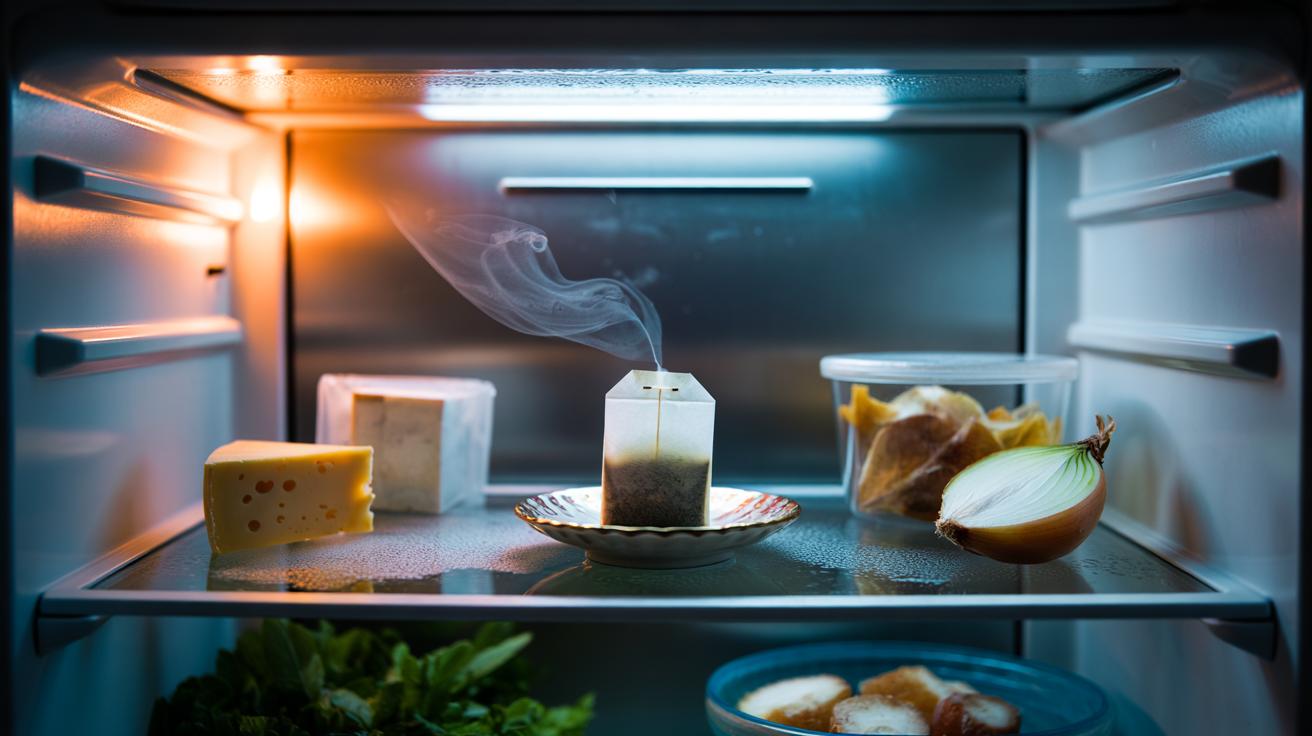
Start with one or two dry tea bags. Black tea is the efficient all-rounder, but green works, too. Place the bags on a small saucer to keep them off shelves and away from condensation channels. Position near the odour source—cheese drawer or veg box—without direct contact with food. You’ll notice a quick softening of the smell in about a minute; leave the bags in place for several hours to deepen the effect.
Used tea bags can be excellent if handled right. After brewing, squeeze gently and let them dry fully until crisp; moisture invites mould and can transfer tannin stains. Keep them unscented—no Earl Grey, no chai—unless you want bergamot or spice notes mingling with last night’s leftovers. Replace every 3–7 days, or sooner if they darken, feel tacky, or the odour returns quickly after door openings.
Maintenance matters. Wipe any visible spills in the fridge first; tannins are not magic bullets for rotting produce or sour milk leaks. Pair the tea with routine hygiene: empty the salad drawer weekly, check packets for air leaks, and keep strong cheeses double-wrapped. For deep cleans, dissolve lingering films with a solution of warm water and a teaspoon of bicarbonate per half litre, then reintroduce the tea bags as passive guardians.
Which Teas Work Best for Different Smells
All true teas contain tannins, yet their profiles differ. Black tea tends to have higher, more polymerised tannins, bringing robust adsorption. Green tea leans lighter and fresher; still effective, sometimes slower. Oolong sits between, while heavily scented blends can perfume the compartment—great for some, distracting for others. For a neutral fridge, choose unscented black or green bags and avoid smoky styles like Lapsang Souchong that may imprint on uncovered foods.
| Tea Type | Relative Tannin Level | Best For | Notes | Suggested Time |
|---|---|---|---|---|
| Black (Assam, English Breakfast) | High | Onion, garlic, strong cheese | Fast acting; neutral aroma | 60 sec to 24 hrs |
| Green (Sencha, Gunpowder) | Medium | Fish, leafy veg | Gentle profile; keep dry | 2–24 hrs |
| Oolong | Medium–High | Mixed leftovers | Balanced; avoid floral types | 2–24 hrs |
| Herbal (Peppermint) | Low (non-tannin) | Short-term masking | Scent-forward; not neutral | 30–120 mins |
If you’re sensitive to any aroma carry-over, err on the side of black tea and keep foods covered. A single bag treats a small under-counter fridge; go to two or three for a family-sized unit. Swap positions occasionally to chase hotspots, such as the door shelves where egg and sauce smells accumulate.
Safety, Hygiene, and Sustainability Tips
Never place tea bags directly on produce or raw meat trays. Use a dish, egg cup, or jar lid to prevent drips and keep fibres away from fans and vents. If condensation builds, dry or replace the bag; dampness can encourage microbial growth and dull performance. Avoid perfumed teas around open dairy; they can mingle in unwanted ways. If you notice persistent chemical smells—coolant or plastic—stop and investigate; tea is for food odours, not appliance faults.
For a greener routine, rotate: day one tea bags, day two a small open pot of bicarbonate of soda, day three a puck of activated charcoal if you have it. Each tackles odours differently—acid–base buffering, micro-porous adsorption, and polyphenol binding. Together, they extend intervals between big cleans and reduce waste. Spent, fully dried tea bags can go into home compost (paper and leaves break down readily) or be used to deodorise bins and shoe cupboards.
Don’t forget prevention. Store pungent foods in airtight containers, wipe gasket folds monthly, and keep the drain hole clear to avoid stagnant water smells. After holidays, do a five-minute reset: remove old condiments, clean shelves, then deploy fresh tea bags as a finishing touch. This tiny habit costs pennies and keeps that first door-open sniff reassuringly clean.
For a tactic so simple, tea bags punch above their weight: swift relief, little effort, a nod to science. By exploiting the tannin–odour marriage, you gain an almost instant buffer while better storage and cleaning do their slower work. It’s the domestic equivalent of a newsroom quick fix—effective, frugal, elegant. Will you try a neutral black tea bag on your fridge’s worst hotspot tonight, or will you test a side-by-side comparison with bicarbonate and charcoal to see which wins in your kitchen?
Did you like it?4.5/5 (30)