In a nutshell
- 🧂 Snail-killing mechanism: sugar drives osmotic pressure and desiccation, pulling water from soft tissues; results are weather-dependent and less predictable than salt.
- 💸 Pros and cons: cheap and familiar but risks non-target effects, attracts ants/rodents, boosts microbes, and becomes ineffective in wet conditions, encouraging overuse.
- ⚖️ Ethics and policy: desiccation likely causes prolonged distress; UK’s metaldehyde ban and RHS guidance favour selective, wildlife-friendly controls; sugar is not officially recommended.
- 🛠️ Better options: deploy copper barriers, morning watering, spacing and covers, hand collection, Phasmarhabditis hermaphrodita nematodes, and sparing use of iron phosphate baits.
- 🌿 Ecosystem thinking: aim for crop protection with biodiversity in mind — encourage predators, use barriers, and mix methods for a resilient, integrated approach.
Gardeners swap all manner of folk fixes, but few are as stark as the claim that a light dusting of sugar will dispatch snails. The idea sounds quaint, even cosy. It is not. Granulated sugar can act like a desiccant on soft-bodied molluscs, pulling water from their tissues until vital functions fail. That blunt mechanism, driven by simple chemistry, explains both its apparent effectiveness and its ethical baggage. In British gardens where slugs and snails shred hostas overnight, the temptation is obvious. Yet a solution that seems tidy at dawn can carry hidden costs by dusk — for soil life, for non-target creatures, and for the conscience of the person who scattered it.
Why Sugar Desiccates Snails
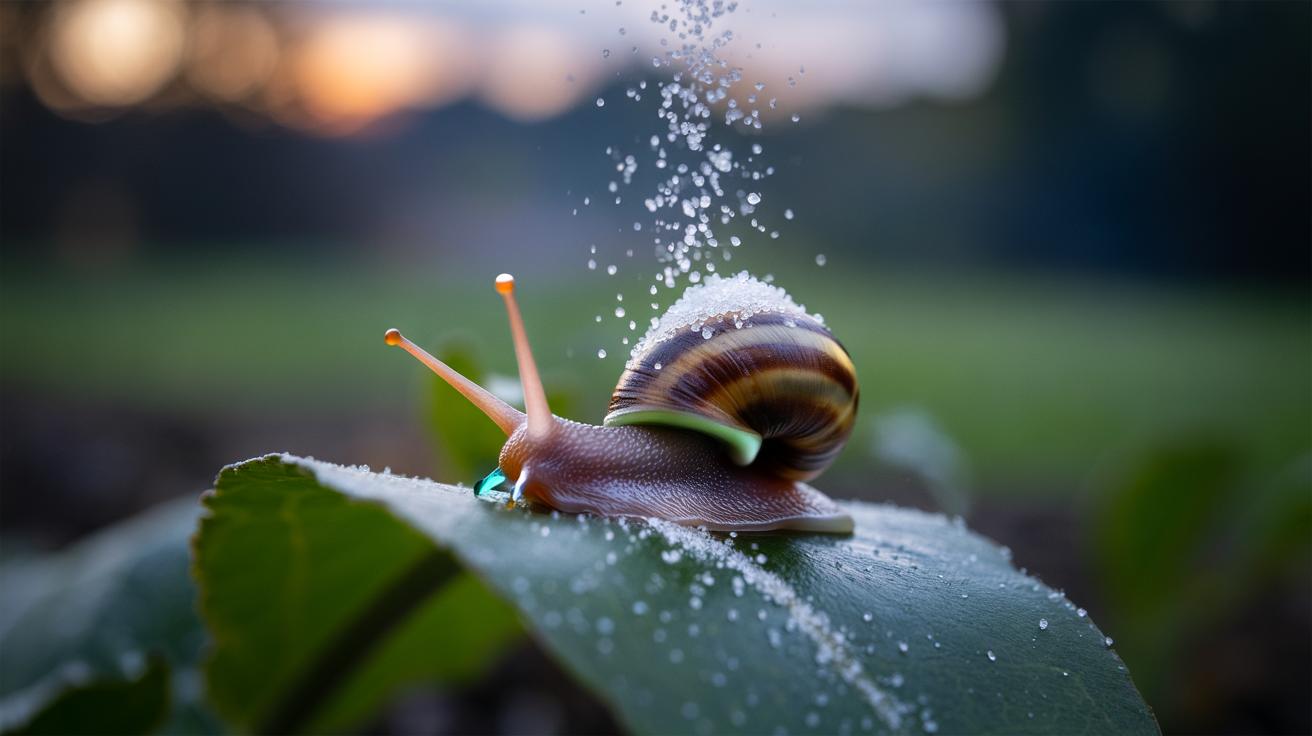
Snails are mostly water wrapped in a thin, permeable skin. Their protective slime is water-rich. Sprinkle granulated sugar on that surface and osmotic pressure kicks in: water moves from a dilute solution (within the snail) to a concentrated one (around the grains). This is desiccation made visible, as a slick of mucus swells and the animal weakens. It is the same principle that makes table salt notorious, only less rapid and often less predictable because sugar dissolves differently and is less caustic.
Two features amplify the effect. First, hygroscopic crystals attract moisture from the air and from the snail’s body, extending the drying action. Second, the animal’s reflex is to secrete more mucus to escape the irritant; that emergency response costs even more water. In warm, dry conditions the process can be deadly. In damp weather the sugar dissolves swiftly, diluting its punch.
Speed matters. Salt can kill in minutes; sugar may take longer, sometimes hours, and may fail if dew or rain intervene. That variability fuels both the myth and the misuse. Gardeners see one dramatic success and assume certainty. The science says otherwise: it is an osmotic gamble, heavily influenced by humidity, temperature, and where the crystals land on the body.
Practical Use in the Garden: Pros, Risks, and Limits
The apparent advantages are straightforward. Sugar is cheap, familiar, and already in the cupboard. It leaves no synthetic residue and, unlike banned metaldehyde pellets, won’t poison hedgehogs or birds outright. In a dry spell, a targeted dusting on individual snails can be lethally effective. For desperate growers watching seedlings vanish, that can feel like a controlled, local intervention rather than carpet-bombing the bed with chemicals.
But the risks multiply on inspection. Sugar on soil feeds microbes and can attract ants, wasps, and rodents. Dissolved sugar may encourage mould on mulch. A wind-blown scatter risks contacting pollinators or beneficial beetles; stickiness is indiscriminate. Crucially, efficacy collapses in wet weather, pushing users toward repeated applications that sweeten the whole microhabitat. Non-target effects are then more likely, without much added snail control.
There is also the horticultural “edge case”: pots, paths, and greenhouse staging. Hard surfaces allow precise placement and easier cleanup, but run-off can pool and ferment. On beds, it is messy. A rule of thumb: if you cannot retrieve it, you probably should not spread it. Use spot treatments only, if at all, and never around blossom-heavy plants where visiting insects might land. The tidy option — lifting snails by hand — is slower yet dramatically more selective.
Ethics, Welfare, and UK Guidance
Even if sugar seems “natural,” its mode of action raises welfare concerns. Desiccation is not a gentle end. Reports from animal ethics discussions describe osmotic killing as likely to cause prolonged distress in soft-bodied invertebrates. The UK’s Animal Welfare Act focuses on vertebrates, and while snails are not afforded the same statutory protections, the spirit of responsible gardening still applies. Just because you can does not mean you should.
Policy is tilting toward wildlife-friendly practice. The sale and use of metaldehyde slug pellets have been banned in Great Britain for environmental reasons, pushing attention to safer controls such as iron phosphate baits and non-chemical methods. Organisations such as the Royal Horticultural Society recommend a toolbox approach: habitat tweaks, barriers, and hand collection first; baits only where necessary and in line with label guidance. Sugar, notably, is not on any official list because its performance is erratic and its welfare impact is poor.
There is also the broader ethic of the garden as an ecosystem. Snails recycle decaying matter and feed thrushes, frogs, and beetles. Eradication is rarely achievable, and seldom desirable. The goal is crop protection with minimal collateral damage, not a sterile patio. That framing changes what “success” looks like: fewer bites on lettuces, more predators in residence, and a conscience untroubled by avoidable suffering.
Alternatives That Respect Biodiversity
Start with habitat and timing. Water in the morning so soil is drier by nightfall, when snails roam. Raise seedlings under cover until robust, then plant out. Space plants for airflow; fewer damp crevices mean fewer molluscs. Copper tape on pots can deter crossings via mild electrical sensation. Wool pellets create a prickly, moisture-wicking barrier that many slugs avoid. Night patrols with a torch and a bucket — relocate to a distant compost heap or wild corner — remain remarkably effective.
Where pressure is severe, biological control helps. The nematode Phasmarhabditis hermaphrodita (sold in the UK) targets slugs in the soil, thinning populations before they reach foliage. Iron phosphate pellets, used sparsely and according to instructions, pose lower risks to pets and wildlife than old-school poisons. Beer traps capture some, though they lure others; site them well away from prized beds. Mixing methods beats any single silver bullet.
| Method | Mechanism | Speed | Welfare Impact | Notes |
|---|---|---|---|---|
| Sugar sprinkle | Osmotic desiccation | Variable | High concern | Weather-sensitive; attracts insects |
| Salt | Rapid desiccation | Fast | Very high concern | Damages soil; not recommended |
| Iron phosphate bait | Interrupts feeding | Moderate | Lower concern | Use sparingly; follow label |
| Copper barriers | Contact deterrent | Immediate deterrence | Low concern | Best on pots and raised beds |
| Nematodes | Biological parasitism | Weeks | Low to moderate | Soil temp and moisture dependent |
Combine barriers with planting choices. Sacrificial hostas or marigolds can divert attention from lettuces. Tough, waxy-leaved varieties suffer fewer bites. Encourage predators: a small wildlife pond, a log pile, an untidy corner for beetles. The more allies you recruit, the less you’ll reach for quick fixes. Control becomes a steady state, not a series of midnight crises.
So, can sugar slay snails? Yes, by drying them to death through osmotic pressure. Should you use it? That is the knotty part. It is inconsistent, ethically fraught, and messy in living soil. British gardens thrive when methods are selective and sustainable — barriers, biology, better timing, and a touch of tolerance. The sweet solution is rarely the wisest one. If the aim is fewer holes and more harmony, what mix of gentle tactics will you try first this season?
Did you like it?4.4/5 (25)