In a nutshell
- 🧺 Use the 10-second dryer sheet trick: swipe a fresh sheet over both sides of a clean, dry towel to cut friction and calm static for instant softness; for thicker terry, try a quick air-fluff/no-heat tumble.
- 🔬 Why it works: cationic surfactants transfer a thin layer to towel fibres, reducing electrostatic charge and friction, so loops feel smoother and the towel folds without rasping.
- ⚖️ Mind the trade-off: overuse can reduce absorbency; reserve frequent swipes for display or hand towels and periodically reset performance with a hot wash, bicarbonate of soda, or a vinegar rinse.
- 🧭 Choose the right method: quick swipe (fastest refresh), air-fluff for even coating, deep clean for odours or residue, or everyday softening with wool dryer balls to boost airflow without residue.
- ♻️ Safety and sustainability: pick unscented sheets for sensitive households, avoid treating flame-resistant fabrics and performance microfibres, store towels fully dry, and rotate in low-impact alternatives to balance softness with eco goals.
In bathrooms from Bristol to Belfast, the search for shockingly soft towels can feel endless. Wash cycles pile up. Tumble-dry times creep higher. The result often stays the same: fibres that feel tired and a bit scratchy. Here’s the hack that’s stirring laundry chat groups—using a simple dryer sheet to revive fabric in roughly 10 seconds flat. It’s a miniature intervention, not a full wash-day overhaul. You glide, you smooth, and the towel shifts from stiff to strokable. No magic wand. Just a tiny square soaked in fabric-conditioning science and a quick technique that helps reset texture when time is tight and softness matters.
The 10-Second Dryer Sheet Trick
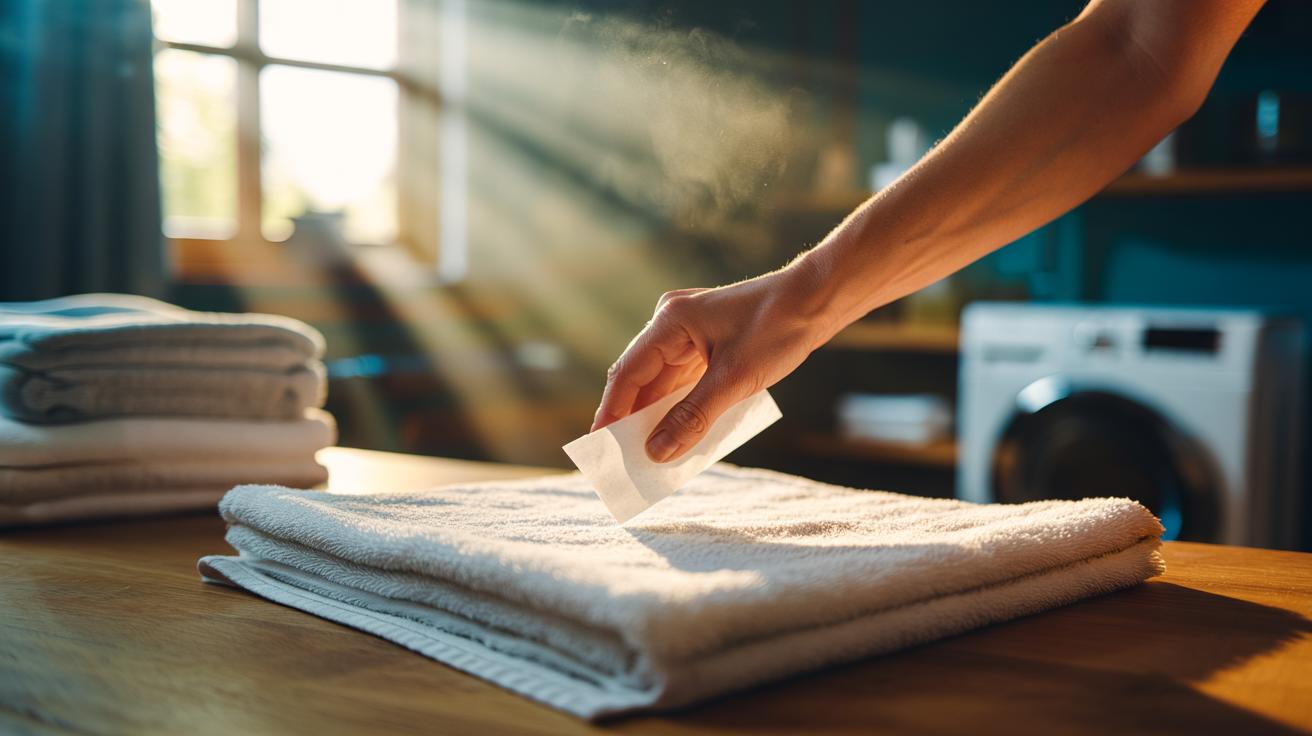
Take a clean, dry towel—fresh from the airer or a cupboard—and lay it flat. Grab a new dryer sheet and sweep it across the fabric, using long, steady strokes. Work both sides. Edge to edge. Ten seconds is enough for a midweek refresh. If the towel is especially crunchy, add another 10 seconds, focusing on the ends where stiffness concentrates. You’re not saturating the fibres or masking odours; you’re lightly coating the loops to cut friction and calm static. The difference is tactile and immediate. The towel flexes. It folds without rasping. It feels ready for skin again.
Prefer a quick tumble? Pop the towel and one dryer sheet into the machine on an air-fluff/no-heat setting for two or three minutes. No heavy heat, minimal energy, swifter result. That micro-dose of conditioning compounds spreads more evenly in the drum, which can be handy for thicker cottons or ribbed jacquards. It’s still a stopgap, not a substitute for proper laundering. But for guest towels before arrival or a post-gym rescue, the 10-second sweep delivers a convincing softness boost with almost no effort, no water, and barely any time.
Why It Works: The Science of Softness
Dryer sheets are coated with cationic surfactants—positively charged molecules that cling to the negatively charged fibres in cotton. When you swipe the sheet over a towel, a whisper-thin layer transfers onto the loops, reducing electrostatic charge and lubricating the surface. Less charge means the fibres stop grabbing each other. Less friction means your fingertips read “soft” instead of “stiff.” It’s simple tribology translated into laundry. You’re smoothing the microscopic snags that make towels feel harsh after line drying, hard-water rinses, or detergent build-up.
There’s a trade-off. Those same compounds can slightly inhibit absorbency if overused, because they sit on the fibre surface. Use sparingly on bath sheets you rely on for heavy drying. Reserve the quick-swipe trick for hand towels or linens used for display where plushness matters more than maximum soak-up. If you notice water sliding rather than sinking, pare back. Towels crave a periodic deep clean to reset performance—think a hot wash with a detoxing dose of bicarbonate of soda or a vinegar rinse. Softness is a feel; absorbency is function—striking the balance is the real craft.
Step-By-Step And Quick Comparisons
Start with a clean towel. If it’s damp, let it air for a few minutes so the surface is dry to the touch. Hold a fresh dryer sheet flat, then sweep it in overlapping passes from top to bottom. Flip. Repeat. For thick terry, press a little firmer to reach the inner loops. Fold, smooth the edges, then give the towel a brisk shake. That shake helps stand the pile and redistribute the conditioning layer. Done. Time spent: roughly 10–20 seconds. Result: a softer hand, less crackle, an easy fold. For show towels, this quick pass keeps them photo-ready.
If you want guidance at a glance, use this simple table to choose the right tactic for your towel’s condition and your schedule:
| Method | Time | When to Use | Notes |
|---|---|---|---|
| 10-second swipe | 10–20 sec | Clean but stiff towels | Fastest; slight residue possible if overdone |
| Air-fluff with sheet | 2–3 min | Thicker terry, ribbed towels | Even coating; no heat; low energy |
| Deep clean wash | 1 cycle | Loss of absorbency, odours | Restores performance; use vinegar or bicarb |
| Wool dryer balls | 1 cycle | Everyday softening | No residue; boosts airflow; reusable |
Safety, Sustainability, and Smart Alternatives
Fragrance-sensitive household? Choose unscented or hypoallergenic dryer sheets, and test on a corner first. Keep sheets away from flame-resistant kids’ sleepwear and high-performance microfibres; conditioning layers can compromise intended finishes. Store towels fully dry to deter mildew—the softest towel in the world fails the sniff test if it’s musty. For eco-leaning routines, rotate in wool dryer balls, a tablespoon of white vinegar in the rinse (not with bleach), and the occasional hot wash to purge detergent residue. These moves protect absorbency while preserving the cloudlike hand you want.
Remember, the 10-second trick is a refresher, not a cure-all. It shines when guests are minutes away or after line drying has left towels feeling board-stiff. If you notice waxy feel or water beading on the surface, pause the sheets and reset: launder with a stripped-back detergent dose, add bicarbonate of soda, and skip fabric softener for a few turns. Then reintroduce the quick swipe sparingly, focusing on hand towels and decorative stacks. Softness, speed, sustainability—you can have all three, so long as you tweak the mix for your home.
A humble dryer sheet, thoughtfully used, can coax life back into tired terry with startling speed. The technique is tactile, almost meditative—sweep, flip, sweep—and the payoff is immediate. Your towels fold finer. They caress instead of catch. Use it lightly, respect the fibres, and keep an eye on absorbency, and you’ll enjoy that hotel-luxe feel without the hotel bill. The next time a towel feels like cardboard, will you reach for a dryer sheet, try a quick air-fluff, or go for a deep clean reset to perfect your personal softness-to-performance ratio?
Did you like it?4.2/5 (24)