In a nutshell
- 🧂 Salt + Osmosis: A simple brine sets a concentration gradient that pulls tannins, polyphenols, and melanoidins out of glaze micro-pores overnight, aided by ionic disruption and capillary action—minimal effort, no bleach.
- ⏱️ Overnight Method: Add 1–2 tsp coarse salt, fill with warm water, leave 6–10 hours, then swirl remaining crystals for gentle abrasion, rinse, and dry; repeat or extend to 12 hours for stubborn rings.
- 🔬 Science in Brief: Salt raises ionic strength, weakens electrostatic adhesion, and boosts solubility; diffusion moves pigments out. Not bleaching—works best on ring stains; mineral scale may need a quick vinegar pre-clean.
- ⚖️ How It Compares: Salt is cheap, quiet, and odourless; bicarbonate offers alkaline abrasion, vinegar dissolves mineral film, oxygen cleaners oxidise pigments—choose the mechanism that matches the stain.
- 🛡️ Practical Limits & Cautions: Avoid long brine contact on scratched stainless steel or chipped rims; protect unglazed bases, be gentle on decals, keep soaks reasonable, and always rinse thoroughly.
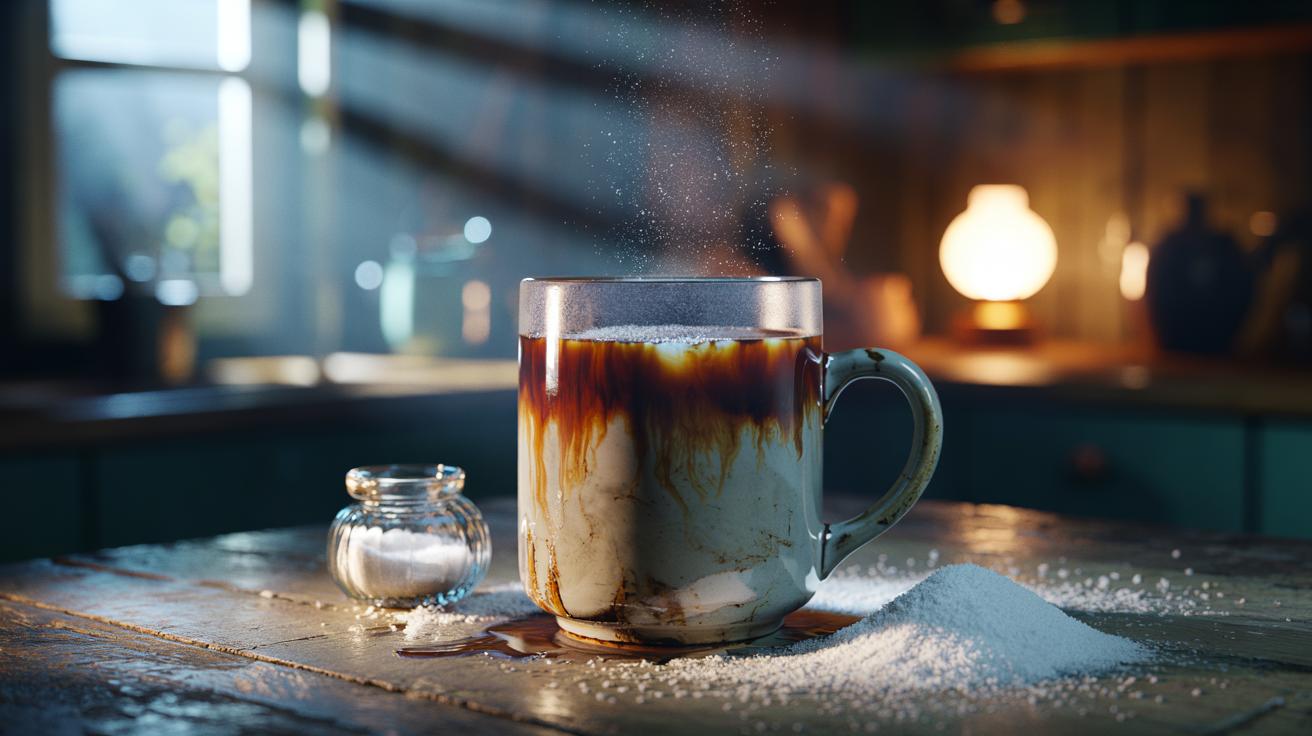
Every tea-stained mug tells on us. The late-night deadlines. The early-morning scrambles. Those brown crescents cling, even after a good wash, because coffee pigments are stubborn, complex, and deeply embedded. Here’s the quiet fix: a handful of salt, a splash of warm water, and time. As you sleep, osmotic action goes to work, coaxing color out of the ceramic’s micro-texture without bleachy fumes or elbow grease. The crystals dissolve, pull moisture, and unsettle residue that dish soap leaves behind. In the morning, a quick swirl and rinse. Simple chemistry beats scrubbing every time, and your favourite mug looks like itself again.
Why Salt Pulls Stains Out Overnight
The secret is osmosis and ionic strength. Coffee stains are a cocktail of polyphenols, tannins, and melanoidins that lodge in microscopic pores and craze lines in ceramic glazes. When you dissolve salt in warm water inside the mug, you create a concentrated solution that changes the local water activity at the surface. The system wants equilibrium. Water migrates from the wetter, stain-laden layer in the pores toward the saltier solution, carrying pigment molecules along. Salt sets up a relentless concentration gradient that tugs color outward while you sleep.
There’s more in play. Sodium and chloride ions disrupt weak bonds that help pigments cling, while coarse crystals provide gentle, non-scratching abrasion if you swirl them before rinsing. Capillary action assists, lifting the brine into micro-crevices and back out again as temperature drifts overnight. You’re not bleaching or etching; you’re using physics to move molecules. That’s why the method is safe for glazed ceramics and glass, and why it excels on rings and tide marks where pigment density is highest. It’s patient cleaning. Invisible, but potent.
How to Use Salt for Stained Mugs
Start with a clean slate: tip out any leftover coffee and give the mug a quick rinse. Add 1–2 teaspoons of coarse salt (fine will do, but coarse works better for a gentle scrub later). Pour in warm water to cover the stain line, swish until some crystals dissolve, then top up to the brim. Leave it on the counter for 6–10 hours. Overnight is ideal because slow diffusion does the heavy lifting. In the morning, swirl the remaining grains against the stain, rinse thoroughly, and dry.
For heavy, long-set marks, repeat with fresh salt or extend the soak to 12 hours. A drop of mild washing-up liquid can help wet the surface, but keep the hero ingredient as salt. Avoid vigorous scouring on delicate decals. If your mug has an unglazed base, stand it on a saucer to contain drips. Stainless-steel travel cups require care: salt brine can encourage corrosion on damaged steel. Do not leave salty water sitting on exposed or chipped metal rims for more than 12 hours. When in doubt, limit contact time and rinse promptly.
Comparing Salt With Other Fixes
Salt is cheap, quiet, and kind to most glazes. But you might wonder how it stacks up against the cupboard classics. The difference lies in the mechanism. Salt relies on osmotic draw and ionic disruption; bicarbonate of soda shifts pH and adds mild abrasion; vinegar dissolves mineral film that can lock stains in; oxygen-based stain removers oxidise chromophores in the pigments themselves. Choose based on your mug and the nature of the mark. If you see a chalky film as well as brown tint, tackle the mineral first; if it’s pure coffee, salt’s slow pull often wins without odour or fizz.
| Method | Mechanism | Best For | Overnight Time | Cautions |
|---|---|---|---|---|
| Salt + Warm Water | Osmosis, ionic disruption | Brown rings, light-to-moderate stains | 6–10 hours | Avoid long contact with bare steel |
| Bicarbonate of Soda Paste | Alkalinity, mild abrasion | Spot cleaning stubborn patches | Not typically soaked | Rinse well; can cloud glass if overused |
| Vinegar Soak | Acid dissolves mineral film | Hard-water haze trapping stains | 1–4 hours | Odour; avoid on porous stoneware |
| Oxygen-Based Cleaner | Oxidation of pigments | Severe, old stains | 2–8 hours | Follow label; test decals |
For routine rings, salt remains the least intrusive, most economical option, and it doubles as a gentle scrub in the morning—no specialised products required.
Science Notes: Pigments, Porosity, and Practical Limits
Coffee’s colour comes from large, brown melanoidin complexes and smaller polyphenols. These latch onto microscopic roughness and micro-cracks in glaze, particularly on matte or crazed finishes. Salt water doesn’t “bleach” them; it changes the thermodynamic landscape. By raising ionic strength, the brine weakens electrostatic attractions and increases solubility for loosely bound pigments. Diffusion does the rest, especially across hours when the solution remains still and the molecular push-and-pull can proceed unhindered. Think of it as a low-energy conveyor belt moving colour out of hiding.
There are limits. High-gloss, non-porous glazes release stains quickly; heavily crazed vintage ceramics may hold fast without oxidation. Hard-water scale can lock pigments in place until the mineral dissolves. That’s why pairing salt with a quick pre-rinse in warm water—or a short vinegar pass if you see chalky haze—can speed results. On stainless steel, passivation usually protects the surface, but chloride-rich brines can exploit scratches. Keep soak times reasonable and rinse. Respect those edges, and the method remains safe, repeatable, and quietly effective.
By turning the tap and tipping a spoon, you enlist elegant chemistry instead of brute force. Salt changes the conditions at the mug wall, invites moisture to migrate, and escorts clinging pigments into solution—while you get eight hours’ rest. No harsh smells. No shredded sponges. Just a calmer sink in the morning. It’s the sort of domestic science that feels like a small life upgrade. Will you try the overnight salt soak tonight—and if you do, which beloved, tea-brown mug gets the first, satisfying reveal?
Did you like it?4.4/5 (28)