In a nutshell
- 🧪 Rust thrives in drawers where warm air cools, raising humidity and, with salts or fingerprints, accelerates corrosion on exposed steel.
- 🌾 Dry rice acts as a desiccant, lowering local relative humidity and gently abrading loose oxides, which helps halt oxidation and restore surface shine.
- 🛠️ Follow the overnight method: wipe blades, add a light coat of mineral oil, bury fully in bone-dry rice, then buff clean and re-oil for protection.
- ⚖️ Rice vs. Silica Gel: rice is cheap and handy for quick fixes, while silica gel offers stronger, rechargable drying; calcium chloride is powerful but best for rooms, not loose drawers.
- 🔒 For long-term protection, pair clean, oiled blades with ventilated storage and rechargeable desiccants; treat rice as a fast, accessible stopgap when rust appears.
Open any neglected knife drawer and you’ll often find a bloom of surface rust dulling once-bright steel. An old kitchen hack claims that burying tools in dry rice can lift the orange film overnight. It sounds like folklore, yet there’s solid physics behind it. Rice acts as a mild desiccant, stripping moisture from the microclimate around blades and easing off the clingy oxide that makes metal look tired. In a closed space, drying the air interrupts active oxidation, letting you wipe back a surprising shine in the morning. The secret isn’t alchemy, it’s absorption and a nudge of gentle abrasion. The result? Cleaner edges, less drag, and a drawer that smells faintly of the store cupboard rather than the shed.
Why Rust Blooms in Knife Drawers
Rust is chemistry in a hurry. When iron in steel meets oxygen and water, it forms hydrated iron oxides that spread across the surface. Kitchen drawers are ideal incubators: warm home air loads up with water vapour, then cools in closed spaces, creating micro-condensation on metal. Add everyday contaminants—salt spray from cooking, acidic fingerprints—and you have a ready-made electrolyte that accelerates corrosion. Once relative humidity creeps above roughly 55%, ordinary carbon steel will corrode far faster, and salty residues can push the threshold lower still.
Wooden drawer boxes also “breathe” slowly, releasing and absorbing ambient humidity, which keeps the microclimate unstable. Knives stored unprotected will often have small scratches from sharpening or use; these micro-crevices trap moisture and ions, creating tiny galvanic cells. That’s why the same blade that looks fine on a magnetic strip can haze over in a drawer within days. In short, it’s not neglect—it’s physics amplified by cramped air, temperature swings, and everyday kitchen chemistry. Interrupt the water pathway, and you interrupt the reaction.
How Dry Rice Acts as a Desiccant
Dry rice contains starch granules and a porous structure that makes it mildly hygroscopic. It’s not as thirsty as silica gel, but in a confined volume—like a drawer—it can pull enough moisture from the air to drop local relative humidity below the rusting “comfort zone.” The grains wick vapour into their outer layers, and the sheer surface area of a bowl or bed of rice creates a large contact interface for air exchange. Lower the humidity around steel, even temporarily, and the corrosive circuit breaks—no water, no reaction.
That drying has a second benefit. The thin liquid film that helps oxides adhere loosens, and some lightly bonded rust can be wiped or brushed away. When a blade is plunged into rice and later removed, the grains provide gentle, quasi-abrasive contact that helps lift friable oxide without sanding the metal. Think of it as a very soft, food-safe polishing medium paired with passive dehumidification. Do note the limits: rice won’t chemically reverse heavy corrosion or pitting. It halts ongoing oxidation and lets you reclaim superficial shine, buying time for better storage habits.
A Simple Overnight Method That Works
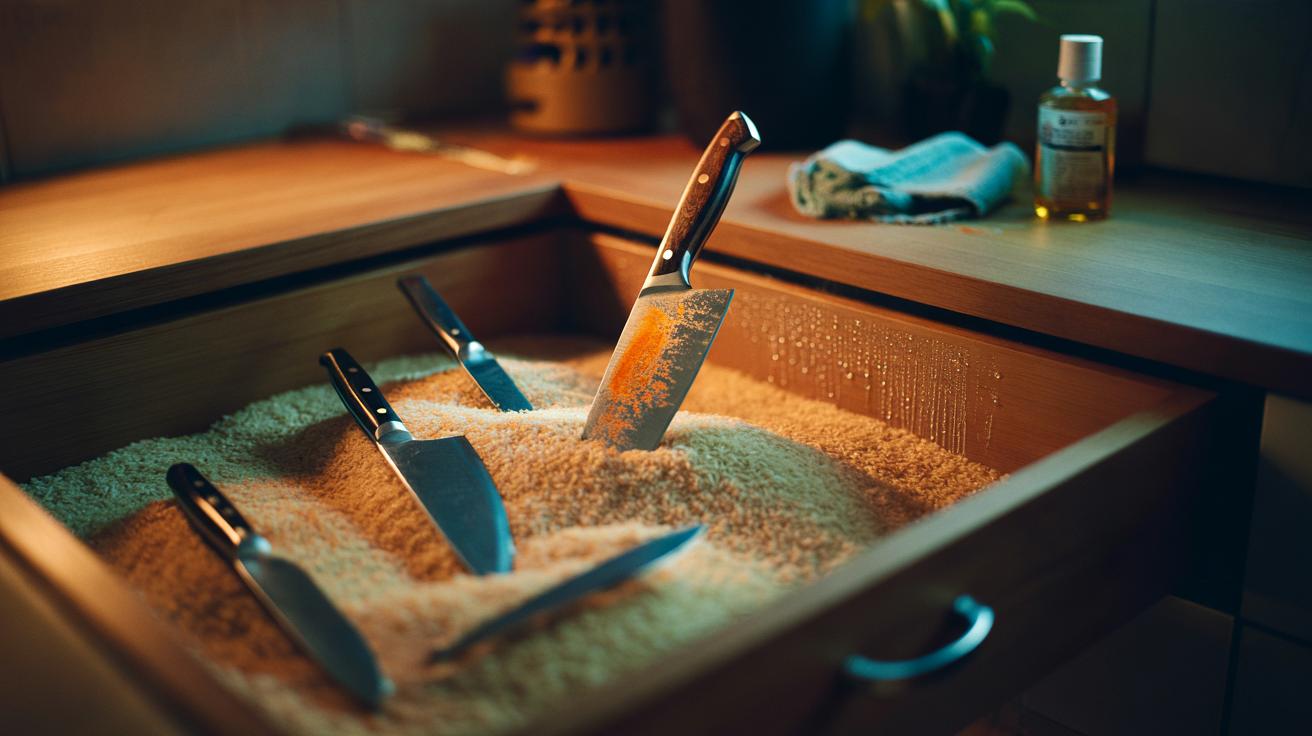
Start clean. Wipe the blade or tool with a dry cloth to remove loose debris and any oily grime. If you see powdery orange rust, a few passes with a soft nylon brush help. Then apply a whisper-thin coat of food-safe mineral oil to knives used on food, or a light machine oil for utility tools. Pour a deep bed of bone-dry rice into a tray or the drawer itself and nestle the items so they’re fully covered. The combination of mild oil displacement and steady moisture absorption does most of the overnight magic.
By morning, lift the tools out and buff with a clean microfiber cloth. You’ll often see a brighter, less tacky surface and a sharper tactile “bite” on edges. For stubborn freckles, a few more minutes rest in the rice followed by a brush usually clears the film. Finish with a protective wipe of oil and store the blades off bare wood if possible—simple sleeves or a cork-lined rack curb scratches that seed corrosion. Heavy, scaly rust? Step up to citric-acid baths or dedicated rust erasers, then adopt rice or purpose-made desiccants as your everyday shield.
How Rice Compares With Silica Gel and Other Options
Rice is practical, cheap, and available in every UK cupboard. But it sits mid-pack for drying power. Here’s a quick comparison to help you choose the right tool for your toolbox—or cutlery drawer.
| Material | Moisture Capacity | Speed | Pros | Cons | Best Use |
|---|---|---|---|---|---|
| Rice | Low to moderate | Moderate | Inexpensive, food-safe, available | Less efficient, needs dry storage | Short-term drying in drawers |
| Silica Gel | Moderate to high | Fast | Rechargeable, indicator options | Costs more than rice | Long-term tool and knife storage |
| Calcium Chloride | Very high | Very fast | Powerful, good for damp rooms | Deliquescent, can form brine | Rooms, cupboards, not loose drawers |
| Baking Soda | Low | Slow | Odour control, safe | Poor desiccant | Supplement, not primary dryer |
For reliable, long-term protection of steel, a ventilated drawer plus a couple of rechargeable silica gel packs beats any home hack. Still, rice wins for speed and simplicity when you notice rust and want a fix before guests arrive for Sunday roast. The trick is containment: keep the drawer closed so the grains can dry the small air volume efficiently, and change or “refresh” the rice periodically. If the kitchen runs damp, think bigger—move blades to a magnetic strip away from steam, fit a moisture trap nearby, and normalise a brisk wipe and oil after washing. Small habits; big gains.
Rice won’t transform a neglected blade into a mirror-polished heirloom, but it will stop moisture in its tracks and help you restore a working shine fast. Treat it as a pragmatic bridge between cleaning and proper storage. Use it to halt the slide, lift the haze, then step up to silica gel or better organisation for lasting protection. In short, absorption curbs corrosion, and a gentle grain-on-steel kiss finishes the job. If you tried the rice method tonight, which tools in your home—from garden shears to chef’s knives—would you rescue first, and how would you keep them bright tomorrow?
Did you like it?4.5/5 (30)