In a nutshell
- 🫖 Black tea tannins bind lightly to fibres, acting like a gentle mordant that subtly deepens blacks and navies without a full re-dye.
- 📝 Method: wash first, brew strong (2–4 bags/500 ml, 10–15 min), dilute in cool water, patch test, soak 10–20 minutes, minimal rinse, air-dry out of sun.
- ⚠️ Pitfalls: avoid whites/pastels, synthetics show limited change, wool/silk need cool handling; treat stains first and consider hard water effects—wear gloves.
- 💷 Cost & sustainability: costs pennies, extends garment life, lowers waste; use reactive dye for severe fading and oxygen-based brightener for whites.
- 📊 Alternatives snapshot: tea soak = low-risk enrichment; reactive dye = permanent, medium risk; oxygen brightener = for lights; vinegar rinse = odour/softening only.
Forgotten jumpers. Faded jeans. That once-brilliant black dress turned an apologetic charcoal. In homes across Britain, we often consign such pieces to the charity pile or the back of the wardrobe. There’s a gentler fix hiding in the cupboard: a single bag of black tea. Steeped strong, it lends tired fibres a subtle richness, coaxing depth back into dulled shades without drama or dye baths. It’s quick. It’s inexpensive. And it can be surprisingly effective on dark garments that have lost their edge. One humble bag can refresh tired fibres and boost perceived brightness on darker tones, handing you a low-effort, low-waste way to extend the life of clothes you already love.
Why Black Tea Revives Colour
At the heart of the method is chemistry you can smell. Black tea contains tannins, plant-derived polyphenols that bond lightly with textile fibres. This gentle, mordant-like action doesn’t behave like a permanent dye; instead, it imparts a faint warm cast that makes blacks look inkier and navies steadier. Think of it as a cosmetic filter rather than a repaint. Faded denim, cotton tees, viscose dresses, and mixed dark prints benefit most. The result is subtle but visible: increased richness, slightly smoother-looking surfaces, fewer chalky highlights catching the light. It does not replace professional re-dyeing, and it will not rescue bleached or heavily sun-damaged fabric. Yet for garments that have softened to a tired grey, tea’s astringency can reduce the look of fuzz and lift perceived saturation by a notch, enough to make an old favourite feel new again.
There are caveats. Whites and pale pastels can pick up a tea tint—often unwanted. Blends heavy in polyester or acrylic respond weakly because synthetic fibres resist natural tannins. Protein fibres (wool, silk) accept tea well but demand care: cooler temperatures and gentle handling are essential. Always begin with a small patch test on an inside seam to preview the shift.
Step-by-Step: The Tea Bag Treatment
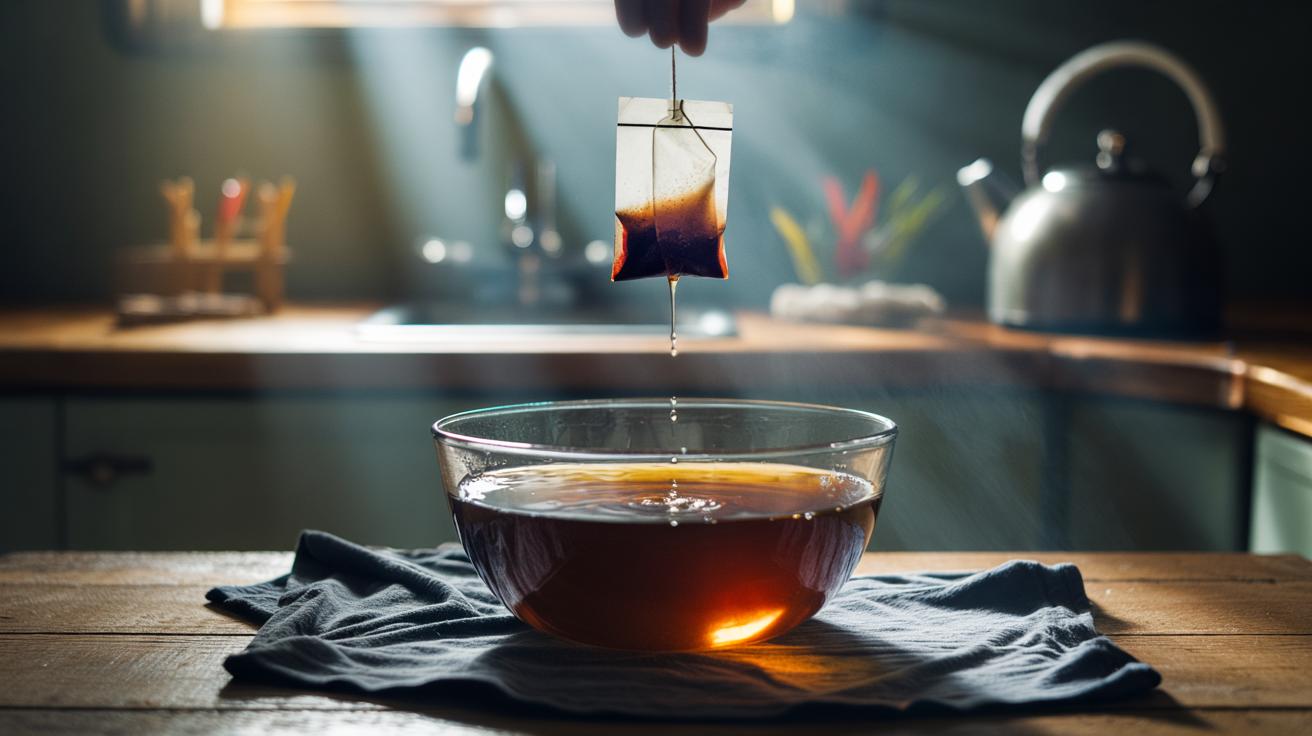
First, clean the canvas. Wash the garment as usual to strip oils and detergent residue, then spin out excess water. Boil a kettle and steep 2–4 bags of black tea (Assam, English Breakfast, or any robust blend) in 500 ml of water for 10–15 minutes. You want a strong, almost inky brew. Remove the bags and allow the liquid to cool until warm, not hot. In a basin or bucket, dilute the brew with 2–3 litres of cool water. Perform a quick patch test on an interior seam.
Submerge the garment fully, agitating gently to ensure even coverage. Soak for 10–20 minutes, turning occasionally. For very faded blacks, repeat with a fresh, stronger brew or extend the soak. Lift out, press—don’t wring—to remove excess. Rinsing is optional: a very quick, cool swish can even the finish, but a full rinse will reduce the effect. Air-dry flat or on a hanger out of direct sun. Add the strained brew to the machine’s final rinse compartment for a hands-off version, but avoid mixing with chlorine bleach or oxygen-based brighteners. Expect a soft, natural-looking deepening rather than a dramatic transformation.
What to Expect and Common Pitfalls
Results are modest by design. You’ll see a gentle enrichment—blacks feel less dusty, navies steadier, dark prints more coherent. Multiple light treatments beat one heavy-handed soak; they build tone without blotches. Tea can accentuate existing stains, so treat marks first. Avoid hard water if possible, or soften with a splash of distilled water, as minerals can muddy the finish. Never use on whites you want to keep pristine; even a whisper of tan can read dingy. For silks and wools, keep the bath cool and the handling minimal to prevent distortion.
Watch for uneven absorption around cuffs and collars where wear is heaviest. Agitation helps. If you overdo it and the fabric skews warm, a brief rinse can dial it back. Synthetics may barely change; accept their limits. Always dry away from direct sunshine to prevent fresh fading. And yes, your hands will pick up colour—gloves are wise. With these small safeguards, the method stays safe, predictable, and genuinely useful for everyday wardrobes.
Costs, Sustainability, and Smart Alternatives
Part of the charm is frugality. A couple of bags of supermarket tea cost pennies and turn kitchen scraps into wardrobe care. Compared with commercial dye baths—messy, pricier, and often excessive for a light refresh—tea is low-risk and low-waste. It won’t fix catastrophes, but it will extend a garment’s wearable life, delaying replacement and lowering your fashion footprint. For whites, choose an oxygen-based brightener instead. For a decisive colour return on deep blacks, a proper reactive dye remains the gold standard. Think of tea as the middle path: less than a dye job, far more than wishful thinking.
| Method | Best For | Approx. Cost (UK) | Risk Level | Key Note |
|---|---|---|---|---|
| Black tea soak | Faded darks (cotton, viscose, wool) | £0.05–£0.20/use | Low | Subtle enrichment, not a full re-dye |
| Reactive dye | Severely faded blacks, uniform colour | £6–£12/use | Medium | Permanent, prep and care required |
| Oxygen brightener | Whites and pale colours | £0.30–£0.60/use | Low | Not suitable for dark garments |
| Vinegar rinse | Softening, odour reduction | £0.05/use | Low | Does not deepen colour |
Choose the gentlest tool that achieves your aim; it’s kinder to fabric and the planet.
The black tea trick won’t replace a tailor or a dyer, but it offers a satisfying, fuss-free tune-up for tired darks. It saves money, cuts waste, and delivers results you can see in a single afternoon. Brew strong, test first, keep expectations realistic, and you’ll likely be pleasantly surprised by the quiet revival. Clothes that looked ready for retirement can step back into rotation, and that’s good news for your wardrobe—and your wallet. Will you try a tea bag revival on your next faded favourite, or is there another low-cost clothes-care hack you swear by and would recommend instead?
Did you like it?4.6/5 (30)