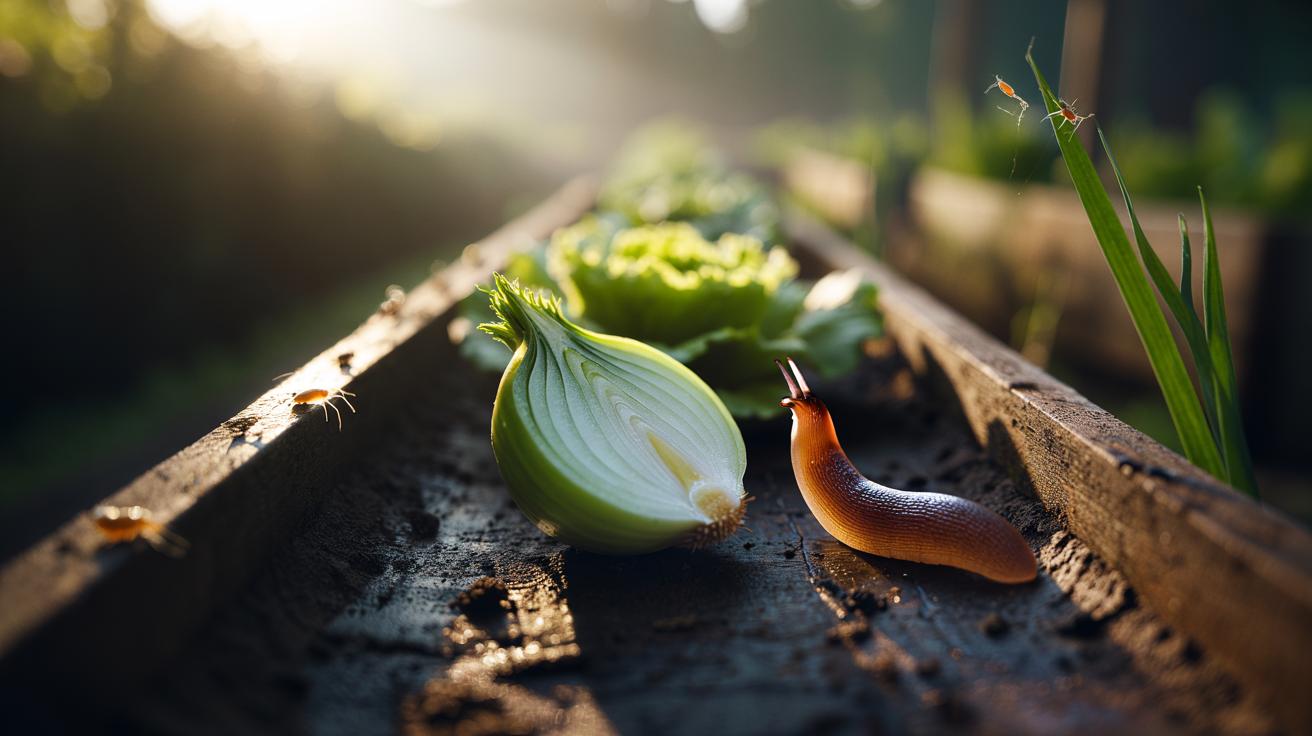
In a nutshell
- 🧅 Onions emit volatile sulphur compounds (e.g., syn-propanethial-S-oxide) that mask host-plant scents, delivering non-lethal deterrence against slugs, aphids, and even cats, fitting neatly into integrated pest management (IPM).
- 🌿 Smart placement matters: use 5–8 mm slices 3–5 cm from stems, position on the windward side, and refresh every 48–72 hours or after rain; combine methods with copper rings, grit, fleece, and sticky traps.
- 🐌 Typical results: slugs/snails often detour, aphids show reduced settling, and carrot fly attraction drops, while pollinators and earthworms continue unharmed.
- ⚠️ Know the limits: slices won’t stop surges and can draw vinegar flies as they decompose; practice pet safety (onions are toxic if eaten) and stay aligned with the UK’s Wildlife and Countryside Act.
- 💷 Big upsides: a low-cost, biodegradable, low-tech tactic that cuts reliance on sprays and pairs well with companion planting (chives, garlic) for a season-long Allium signal.
It sounds unlikely: a humble onion slice tucked beside a seedling that suddenly stops nibbling damage overnight. Yet keen UK gardeners have long whispered about Allium’s bite as a quiet shield against slugs, aphids, and even curious cats. The science isn’t magic, it’s chemistry and behaviour. Onions release punchy volatile sulphur compounds that scramble a pest’s sense of direction and appetite. Cheap, biodegradable, and easy to deploy, onion slices become a low-tech line of defence when sprays feel excessive. This is deterrence, not poison. The trick is placement, timing, and realism: onions help, but they don’t do everything. Here’s how to make them work in your beds and pots.
Why Onion Slices Repel Pests
Cut an onion and your eyes water. That same sharp signal—driven by syn-propanethial-S-oxide and related thiosulfinates—broadcasts a “do not enter” message to many small herbivores. The odour cloud masks host-plant scents, blunting the chemoreceptors that slugs, beetles, and some sap feeders use to find dinner. The result is simple: confused pests waste time and move on. Unlike baits or broad-spectrum insecticides, an onion slice does not kill; it shifts behaviour. For householders uneasy about chemicals, that distinction matters. It’s also why onions play well with integrated pest management, slotting alongside barriers, traps, and beneficial insects.
Not all pests respond equally. Slugs and snails often detour around a fresh slice, though hungry individuals still gamble. Some gardeners report fewer aphids on nearby stems, suggesting olfactory disruption. Ground-dwelling mammals vary: mice may avoid sharp odours, while urban foxes usually ignore them. Set expectations: onions deter; they rarely eliminate. The upside is collateral kindness. Earthworms aren’t harmed. Bees keep foraging. Soil life carries on, while your lettuce gets breathing space. In short, the onion’s strength lies in its targeted irritation, not in toxicity.
From Kitchen Scraps to Garden Shield
Rummage in the veg basket. One medium onion yields several usable discs. Aim for 5–8 mm slices: thin enough to release a strong plume, thick enough to last beyond a dew-soaked night. White and yellow onions deliver a clean, pungent hit; red onions work too and may linger slightly longer. Spring onions provide a lighter touch. Freshly cut slices perform best. If you’re short on time, pre-slice and freeze a few; they’ll still flare with scent as they thaw, though endurance drops. Pair them with companion planting—chives, garlic, leeks—for a broader Allium “halo”.
Use scraps strategically. Tuck a slice at the windward side of susceptible crops, press gently into mulch, or set two slices to form a corridor barrier. Combine with physical methods for resilience: a copper ring for slugs, a collar for cabbage stems, sticky traps for whitefly. Costs are trivial. Waste is minimal. After two to three days, compost the spent slices and refresh. Where cats dig, scatter several pieces across the bed; most dislike the odour and step elsewhere. Keep slices out of reach of pets that might chew them—onions are toxic if ingested by dogs and cats.
| Pest | Observed Response | Notes |
|---|---|---|
| Slugs/Snails | Frequent detours | Best when fresh; reinforce with barriers in wet spells |
| Aphids | Reduced settling | Odour masking; monitor undersides of leaves |
| Carrot Fly | Lower attraction | Allium scent disrupts host-finding; companion planting helps |
| Cats | Avoidance | Deterrence only; remove slices before pets roam if prone to chewing |
Where and How to Place Onion Slices
Think like a pest. Slugs cruise from damp edges; aphids alight on tender tips; cats patrol open soil. Place onion slices where pathways begin and where damage shows. For seedlings, set one slice 3–5 cm from stems to avoid moisture wicking onto delicate tissue. In raised beds, anchor slices near corners, plus one mid-bed on the prevailing wind side. Pots benefit from a half-slice resting on the compost surface, tucked away from direct stem contact. Refresh every 48–72 hours or after heavy rain. Scent fades fastest in warm, wet weather.
Layer tactics. A ring of coarse grit, a copper band, then an onion slice outside the perimeter creates a multi-sensory gauntlet for molluscs. For leafy greens, combine with a light fleece to reduce aphid landings while the onion masks plant volatiles. If birds peck the slices out of curiosity, pin them with a small twig or bury half the thickness. Never pile slices against bark or crowns; rot invites trouble. On allotments, mark placements with a plant label so you remember to remove or replace. Consistency wins: scattered, stale slices are decoration; fresh ones are deterrence.
Limits, Risks, and Ethical Considerations
No single trick protects a garden. Onion slices have blind spots. They struggle during population surges or in lush, irrigated plots where slugs are relentless. Some insects rely more on visual cues and ignore odours. In warm spells, decomposing slices can attract vinegar flies; swap them promptly into the compost. Trial first on a small bed and keep notes. If results are marginal, scale back and prioritise barriers, netting, and habitat for predators such as ground beetles and hoverflies. Treat onions as a nudge, not a fix-all. They shine when damage is sporadic, not catastrophic.
Safety matters. While slices are non-lethal as used, onions are toxic when eaten by dogs and cats; avoid use where pets dig and chew. For wildlife, deterrence is preferable to harm. The UK’s Wildlife and Countryside Act protects many species; non-injurious deterrents are acceptable, lethal methods are not. Soil health? A few slices won’t shift pH or microbiology, but don’t blanket beds; excess decomposing material can invite moulds around seedlings. Keep it tidy, keep it targeted. If you’d rather a planted option, weave chives or garlic through beds for a season-long Allium signal and fewer slices to manage.
Gardening thrives on small, clever adjustments. A simple onion slice harnesses scent to redirect pests, buys plants time, and reduces reliance on sprays. Used thoughtfully—with smart placement, regular refreshes, and backup barriers—it can be the quiet difference between nibbled leaves and a harvest that looks the part. It won’t stop every invader, and that’s fine; the goal is balance, not sterility. Try it beside your most vulnerable seedlings this week and watch what changes. What pests give you the biggest headache right now, and where might a sharp Allium note tip the odds in your favour?
Did you like it?4.6/5 (25)