In a nutshell
- 🌙 Night-time advantage: Applying onion essence lets its sulphur compounds work with the skin’s overnight repair cycle, enhancing penetration, calming inflammation, and gently resurfacing acne scars.
- 🧪 How it works: Organosulphur compounds act as mild keratolytics, anti-inflammatory, and antimicrobial agents, while quercetin provides antioxidant support—helping fade redness, blotchy tone, and surface roughness.
- 🧅 Smart routine: Patch test, use 3–5 nights weekly, apply a thin layer then moisturiser, pair with niacinamide or azelaic acid on alternate nights, and avoid stacking with strong retinoids/acids.
- 📊 Evidence and limits: Research is modest but encouraging for colour and texture; expect improvements in post-inflammatory marks—not a fix for deep, pitted scars.
- 🛡️ Non-negotiables: Daily SPF 30+ to prevent darkening of marks, consistent photos to track progress, and patience—subtle changes by 4 weeks, clearer gains by 8–12.
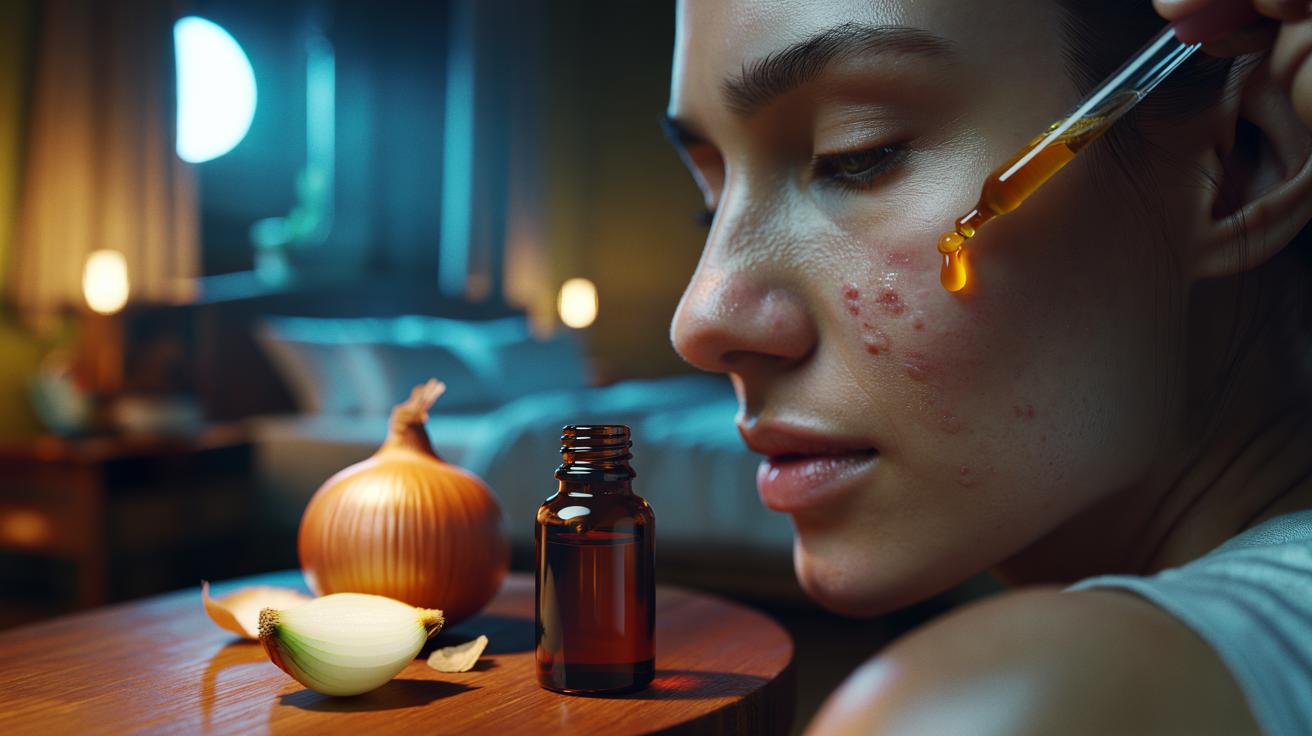
There’s a curious skincare hero sitting in the greengrocer’s aisle: the humble onion. Distilled into onion essence, its natural sulphur compounds promise a quiet, nocturnal nudge against acne scars. While you sleep, biology gets busy—barrier permeability rises, inflammation dips, and the skin’s housekeeping systems clock on. That’s the window this pungent botanical aims to exploit. Not as a miracle, but as a measured, nightly ally. Think subtle fades in blotchy post-blemish marks, calmer redness, and a soft lift in surface texture. Used well, onion essence can support complexion recovery without fanfare, just steady, cumulative gains. Here’s how sulphur makes its play, and how to make the most of it.
Why Sulphur in Onion Essence Targets Acne Scars
Onion essence is rich in organosulphur compounds—thiosulfinates, sulfoxides, and related derivatives—that behave like gentle keratolytics and modulators of inflammation. In plain English: sulphur helps loosen built-up cells, discourages the bacterial mischief that prolongs breakouts, and tamps down redness that lingers after spots have gone. This trio of actions is exactly what shallow, discoloured acne scars and post-inflammatory marks need to look less obvious. Antioxidants such as quercetin add extra ballast against oxidative stress, which can fuel pigmentation and slow repair.
There’s also a collagen angle. While deep, pitted scars require in-clinic interventions, onion-derived extracts (famously used in scar gels) have been studied for their influence on abnormal collagen in raised scars and for smoothing irregularities at the surface. Evidence in acne specifically is modest but practical: regular application can help refine tone, reduce blotchiness, and soften the look of uneven patches. The key is consistency over weeks, not days.
| Component | Proposed Action | Notes |
|---|---|---|
| Allium cepa extract (sulphur compounds) | Keratolytic; anti-inflammatory; antimicrobial | Targets redness and roughness; helps post-blemish marks |
| Quercetin | Antioxidant; reduces oxidative stress | Supports even tone and recovery |
| Polysaccharides | Humectant properties | Offsets potential dryness from sulphur |
Night-Time Action: How Skin Heals While You Sleep
Night is when the skin goes into repair mode. Transepidermal water loss rises, meaning actives may penetrate more readily, and microcirculation to the skin improves. That’s why applying onion essence before bed can dovetail with natural overnight repair, letting sulphur work while inflammatory pathways are quieter. The aim isn’t to strip or sting; it’s to nudge turnover, calm redness, and discourage the post-spot cascade that locks in colour changes.
There’s also a hormonal and neurological rhythm to consider. Cortisol tends to dip at night, which can reduce inflammatory signalling, while growth factors involved in barrier renewal tick upward. The right vehicle—a light gel or lotion—keeps the active in contact without smothering pores. For combination or oily skin, this is crucial: you want glide, not grease. Pairing onion essence with a bland moisturiser can buffer potential dryness. And remember the morning sequel: sunscreen. UV exposure is a chief culprit in making post-breakout marks hang around, so daily SPF is non-negotiable if fading is your goal.
How to Use Onion Essence Safely and Effectively
Start simple. Choose a cosmetic product listing Allium cepa or onion extract among its key actives, ideally in a gel or light serum. Patch test behind the ear or along the jawline for 48 hours. If you feel persistent burning, stop—irritation can darken marks rather than fade them. On clean, dry skin at night, apply a thin layer to the areas with acne scars or lingering discoloration. Wait a minute, then follow with a gentle moisturiser to seal in hydration without clogging.
Frequency matters. Three to five nights a week suits most; sensitive types might prefer alternate nights. Team it with compatible allies: niacinamide for tone and barrier support, azelaic acid on alternating evenings for pigment-prone skin, and a broad-spectrum SPF 30+ each morning. Skip harsh scrubs and don’t stack too many actives in one go—less chaos, more consistency. Expect gradual shifts: subtle softening in four weeks, better uniformity by eight to twelve. For deeper, pitted scars, think of onion essence as a supportive player, not the star—microneedling or chemical reconstruction may be needed for structural change.
What Science Says: Evidence, Limits, and Expectations
Research on onion extract and scars skews toward surgical and burn scars, where findings show mixed but encouraging improvements in colour and texture with diligent use. Acne-specific evidence is thinner, yet the mechanistic rationale—anti-inflammatory, keratolytic, antioxidant—fits the needs of post-inflammatory erythema and hyperpigmentation. The honest takeaway: onion essence is unlikely to erase deep depressions, but it can help mottled tone and fine textural roughness look more even over time.
Safety is generally good, though fragrance components and sulphur chemistry can irritate some skins. Those with known allium allergies should steer clear. Keep it off broken skin, and avoid the eye area. If you’re already using potent actives (retinoids, strong acids), rotate rather than layer to minimise over-exfoliation. Track progress with consistent lighting and fortnightly photos; small changes are easy to miss day to day. Set the bar sensibly: a realistic goal is a softer edge to marks, not a total vanishing act. When expectations are aligned, the routine feels sustainable—and results, however modest, feel meaningful.
In the end, sulphur-rich onion essence earns its place as a quiet helper for stubborn post-blemish marks, especially when used at night and paired with SPF by day. It’s accessible, modestly priced, and surprisingly versatile, provided you respect its limits and your skin’s tolerance. Small, consistent steps will outperform overzealous experiments every time. What would your ideal night routine look like if you built it around gentle fades—one thoughtful layer at a time—and which supporting actives would you invite onto the stage next?
Did you like it?4.6/5 (20)