In a nutshell
- 🧪 Baking soda’s mild base chemistry rapidly neutralises acidic volatiles and adsorbs smells, delivering a noticeable reduction in the first 30 seconds.
- ⚙️ For fast results, maximise surface area: use a shallow, wide dish near the odour source, stir weekly to refresh, and replace every 30–60 days.
- 🧰 Know the limits: it’s weaker on amines and some aldehydes; pair with activated charcoal or zeolite, and use silica gel to manage humidity.
- 🧼 Good hygiene multiplies the effect: double‑wrap pungent foods, clean gaskets and drip trays, keep airflow clear, and set the fridge to 3–5°C.
- 💡 The winning formula is chemistry + cleanliness + placement—a low‑cost, safe method that keeps fridges odour‑free without gimmicks.
Open your fridge and you’ll know instantly if last night’s curry has staged a coup. The fix many Britons swear by sits quietly on a shelf: a little open dish of baking soda. The claim sounds bold — odours tamed in “30 seconds” — yet the science behind that near-instant relief is surprisingly solid. Volatile molecules rush from food surfaces into the chilled air; powdered sodium bicarbonate creates a hungry interface that meets them head‑on. When you expose a fresh layer of fine particles, the first seconds deliver the biggest win. Here’s how that humble white powder turns chaotic smells into silence — quickly, safely, and cheaply.
The Chemistry Behind Baking Soda’s Rapid Deodorising Power
At heart, baking soda (sodium bicarbonate, NaHCO₃) is a mild base with a talent: it reacts with many acidic volatiles that dominate fridge odours, from vinegar-like acetic acid to the sulfur-tinged notes escaping from ageing cheese. When these airborne molecules collide with the powder’s expansive surface, they are neutralised into less smelly salts or temporarily adsorbed onto crystal faces. The first collisions happen fast. Within half a minute, the air nearest an open pile of fresh powder can feel noticeably cleaner, because local concentrations drop before diffusion replenishes them.
Think of bicarbonate as a reactive sponge. It doesn’t vacuum every smell — neutral molecules such as some aldehydes persist longer — but it knocks out the loud acidic offenders early, changing the perceived odour profile almost immediately. Powdered form matters: more surface area, more hits per second. Chilled air helps too, slowing down molecule movement and keeping them near the reactive field instead of dispersing through your kitchen.
| Odour Source | Key Volatiles | Bicarbonate Action | Typical Time to Notice |
|---|---|---|---|
| Spilled pickle brine | Acetic acid | Acid-base neutralisation | ~30 seconds to 5 minutes |
| Soft cheese | Short-chain fatty acids | Surface adsorption, partial neutralisation | Minutes to an hour |
| Fish leftovers | Amines, sulfur compounds | Adsorption; limited for non-acidic amines | Several minutes; may need refresh |
How to Deploy Baking Soda in Your Fridge for Fast Results
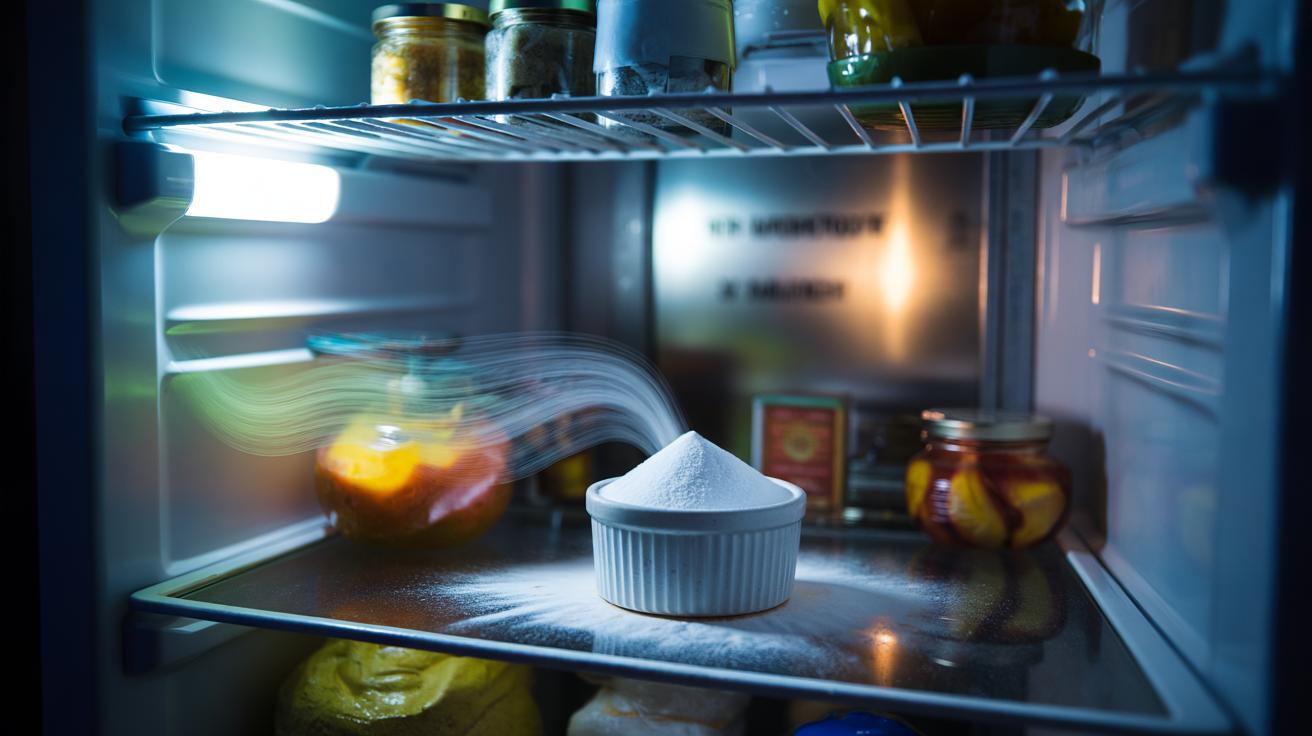
Expose as much fresh surface as possible. Tip 3–4 tablespoons of new baking soda onto a shallow, clean saucer or ramekin. Spread it thinly; a wide layer beats a deep heap. Place it on the shelf that hosts the problem food, because proximity shortens the diffusion path for those first precious seconds. If your fridge is tall or packed, consider two shallow dishes: one on the door, one near the back wall. Keep them away from spills and vents to prevent clumping or blow-off.
Refresh the surface weekly by stirring to expose unreacted crystals; replace entirely every 30–60 days. For a speed boost when the door opens and odours billow, pair bicarbonate with airflow: clear crowded shelves so air can move, and wipe seals so the door closes snugly. Do not seal baking soda in a lidded tub with pinholes; you’ll throttle the contact that makes it work quickly. Label any open baking soda used for odour control — once it’s absorbed smells, it’s not for baking. A small ritual, big payoff: clean spills promptly, then let bicarbonate handle the lingering air.
Myths, Limits, and Smarter Upgrades
Let’s puncture a myth: baking soda does not erase every odour at once. It excels with acidic volatiles; it’s less decisive with amines and some aldehydes. If fishy notes linger, add a second agent. A palmful of activated charcoal in a breathable pouch provides high-surface-area adsorption for non-acidic compounds, complementing bicarbonate’s chemistry. Zeolite granules do similar work and tolerate moisture well. For humidity spikes that amplify mustiness, slip in a small silica gel sachet away from food contact.
Space and hygiene still rule. Double-wrap pungent foods, store onions and cut garlic in sealed containers, and give the drip tray and door gaskets a monthly clean with warm water and a teaspoon of bicarbonate dissolved per cup. If odours persist despite clean habits and fresh soda, check the temperature (keep it at 3–5°C) and airflow; blocked vents trap smells. As a final polish, a coin-sized splash of vanilla on cotton near the door can mask traces temporarily, though neutralising beats perfuming every time. The smartest upgrade? Combine chemistry, cleanliness, and placement for a fridge that smells of nothing at all.
In the age of expensive gadgets, the most elegant solution is often the simplest: a cheap, inert powder that sprints into action the second you open the door. Those early 30 seconds matter because they reset the air your nose first encounters, while the rest of the reaction plays out quietly over hours. Baking soda wins by being available, reactive, and safe. It’s not magic; it’s surface area and acid-base savvy wrapped in a kitchen staple. How will you set up your own odour shield this week — single dish, double stations, or a hybrid with charcoal for stubborn smells?
Did you like it?4.5/5 (25)