In a nutshell
- 🍋 Lemon steam science: hot steam plus citric acid and aromatic limonene loosens grease, softens crust, and deodorises—delivering a two-minute grime melt.
- 🕒 Two-Minute Method: 250 ml water + juice and halves of half a lemon, prick rind, heat 2 minutes, rest 30 seconds, then wipe; add a wooden skewer to reduce superheating and use the warm lemon water for corners.
- ⚠️ Safety, sustainability, and cost: choose a microwave-safe bowl, open away from face, avoid sealed containers; eco-friendly, extends coating life, and costs about £0.20 per clean.
- 🧽 Troubleshooting: repeat a steam cycle for stubborn splatters, apply a warm bicarbonate of soda paste, avoid metal scouring pads, and tackle odours with overnight baking soda plus gasket and roller cleans.
- 📊 Results and comparison: faster, cheaper, and lower-impact than spray-and-scrub; citrus-fresh finish and a full reset—usually under five minutes.
Sticky splatters, burnt-on sauces, and lingering curry fumes: the humble microwave can harbour more grime than its glossy door lets on. A simple kitchen hack is racing through UK homes, promising swift relief without chemicals or elbow grease. It is the microwave cleaning trick powered by lemon steam. Two minutes. One bowl. Gleaming walls and a clean, citrus scent. The science is sound, the method is easy, and the results are startlingly consistent. Two minutes can reset a filthy microwave. Here’s how the two-minute method melts grime, why it works so fast, and how to adapt it for stubborn stains and persistent odours.
Why Lemon Steam Works in the Microwave
Inside your oven, steam is the secret weapon. Water heats quickly in a microwave, vapour swells into every corner, and condensation softens crusted splashes so they wipe away. Add lemon and you get more than heat. You get chemistry. The fruit’s citric acid lowers pH, helping to break down mineral films and loosen fatty deposits, while aromatic compounds from the peel—particularly limonene—lift greasy residues and deodorise. The pairing of heat plus acidity is what makes the method so fast. In effect, you’re turning a bowl into a targeted vapour cleaner, tailored for food mess.
There’s a hygiene bonus too. Studies show acidic environments reduce microbial survival on surfaces, and hot condensate carries that acidity directly onto the splatters you want gone. Crucially, microwaves agitate polar molecules—water—rather than the oven walls, so the steam forms right where residue sits. That means minimal scrubbing and less risk of scratching coatings. The result feels almost unfair: sticky rings surrender, cheese flecks slide off, and yesterday’s tomato sauce stops clinging and starts rinsing.
The Two-Minute Method, Step by Step
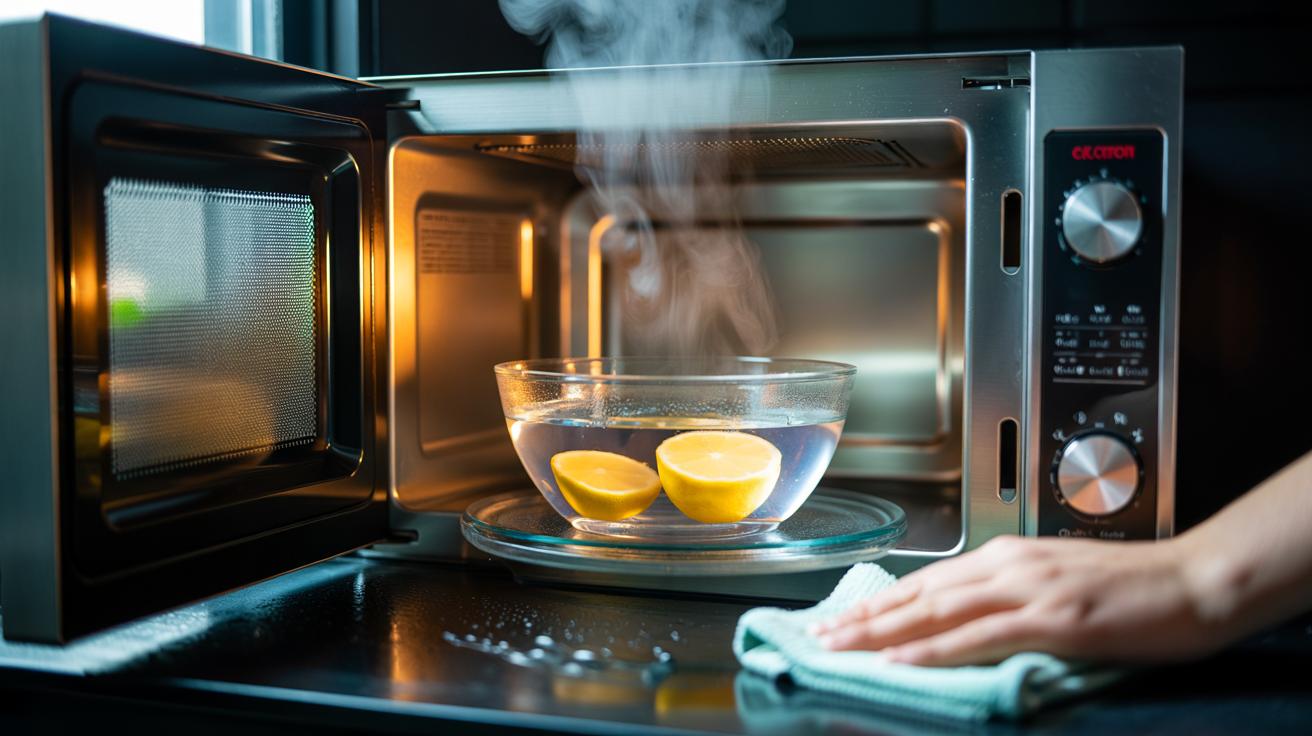
Use a wide, microwave-safe bowl. Add 250 ml of water and the juice of half a lemon, dropping the squeezed halves into the bowl. Prick the lemon rind with a fork. This releases oils into the steam and helps prevent sudden bubbling. Heat on high for two minutes; vigorous simmering is fine. Wait 30 seconds before opening the door so the vapour can settle on the walls. Always handle hot bowls with care. Remove the turntable, wipe every surface with a damp microfibre cloth, and use the warm lemon water for any stubborn corners. For heavy mess, repeat once.
To reduce any risk of superheating, pop a wooden skewer or bamboo toothpick in the bowl as a nucleation site. If you prefer measurements, a tbsp of bottled lemon juice works in a pinch, though fresh peel amplifies the deodorising effect. A gentle circular wipe is enough—no scouring pads. Do not use sealed containers. Finish by drying the cavity and the door gasket with a clean cloth so odours don’t linger in the seal. The whole reset, including wipe-down, typically takes under five minutes.
| Method | Time | Cost | Odour Removal | Environmental Impact |
|---|---|---|---|---|
| Lemon Steam | 2–5 minutes | ~£0.20 per clean | Strong, citrus-fresh | Low; food-grade ingredients |
| Spray Cleaner + Scrub | 8–15 minutes | £0.40–£1.00 | Variable; scent-heavy | Moderate; chemicals and wipes |
Safety, Sustainability, and Cost
Microwave safety is simple. Choose a microwave-safe bowl, keep metals out, and let steam settle before opening the door. The lemon halves help, but adding a wooden stirrer further reduces the chance of abrupt boiling. If your oven has a humidity sensor, two minutes at high is usually right; older units might need 30 extra seconds. Open the door away from your face to avoid a rush of hot steam.
On sustainability, the case is compelling. Lemon steam replaces harsh sprays, cuts plastic waste from single-use wipes, and leaves only compostable peel and grey water. The economics are attractive too: a single lemon can serve two cleans, and bottled juice stretches even further. You also extend the life of the appliance by avoiding abrasive scouring. That’s less wear on the interior coating and less micro-scratching where grease can re-accumulate. For renters and busy families, it’s a fast, low-cost habit that keeps deposits—and disputes—at bay.
Troubleshooting Stubborn Stains and Smells
Some messes dig in. Caramelised sugar, splattered cheese, or day-old sauces can cling, especially on the ceiling and door corners. Run a second cycle with fresh water and the same lemon halves; dwell time matters as much as heat. For baked-on patches, apply a warm paste of bicarbonate of soda and water after steaming, leave five minutes, then wipe gently. Only light pressure is needed once the crust is hydrated. Avoid metal scouring pads, which can scuff enamel and invite future staining.
Odours tell a story. Burnt popcorn, fish, and garlic can linger in vents and the door seal. After your two-minute method, set a bowl of dry bicarbonate of soda inside the cool oven overnight to absorb smells. Check the turntable rollers and hub cap; grease hides there. Wipe the gasket with the remaining lemon water, then dry thoroughly. For persistent issues, ventilate the kitchen and run a one-minute plain water steam the next day. The combination of acidity, heat, and airflow clears the last traces of yesterday’s dinner.
What begins as a hack ends as habit. The microwave cleaning routine powered by lemon steam replaces an entire shelf of sprays with a zesty bowl and two minutes of heat. It’s quick, cheap, and kinder to your appliance and the planet. Most importantly, it turns a dreaded chore into something you can do while the kettle boils. Your microwave looks newer, smells fresher, and runs cleaner. Ready to squeeze the most out of a lemon and claim back your weeknights—what will you steam-clean first?
Did you like it?4.6/5 (28)