In a nutshell
- 🍋 Lemon’s citric acid dissolves pigments and mineral films, while peel oils like d‑limonene cut grease, lifting stains and odours from wood and plastic boards.
- 🧽 Simple method: wash, add coarse salt, scrub with a lemon half, allow 2–5 minutes contact time, scrub again, rinse, and dry; use the water sheeting test to confirm a residue‑free surface.
- 🪵 Material matters: porous wood benefits from post‑clean mineral oil; HDPE plastic holds colour in knife scars; baking soda fizz neutralises acid; lemon freshens but is not a disinfectant.
- ⚗️ Natural acids compared: lemon for grease‑bound stains, vinegar for mineral films, oxalic acid for stubborn iron/tannin marks—always match the acid to the job and control contact time.
- ✅ Keep hygiene first: use hot soapy water, separate boards for raw and ready‑to‑eat foods, and a food‑safe sanitiser when risk is higher—lemon is a revealer, not a cure‑all.
In British kitchens, a small ritual is staging a quiet comeback: cutting a lemon in half and dragging it across a stained chopping board until the grain brightens and the air smells sharp and clean. It looks like magic. It isn’t. It’s chemistry you can smell and see. The humble citrus slice mobilises natural acids and fragrant oils to loosen pigments, lift grease, and carry away the grime that dish soap sometimes leaves behind. A lemon doesn’t sterilise a board, but it can brilliantly reveal a truly clean surface. Here’s why the trick works, when it doesn’t, and how to read the results with confidence.
Why Lemon Works on Stains
At the heart of the trick is citric acid, a weak organic acid with a pH typically near 2.2 in lemon juice. That acidity helps dissolve mineral films and breaks the bonds that hold colourful tannins and anthocyanins to the surface of wood or plastic. Citric acid also acts as a mild chelating agent, grabbing metal ions that can set stains, especially after knife work introduces microscopic steel particles. Acid softens the stain’s grip so that simple rubbing can finish the job.
The rind contributes too. Lemon peel is rich in d‑limonene, a citrus solvent that loosens oils from garlic, fish, and roasted meats. Those oils often anchor pigment and odour, so stripping the grease undercuts the stain’s staying power. Sprinkle coarse salt and the effect improves: the crystals add micro‑abrasion, speeding mechanical removal without gouging kitchen timber. Short contact time matters. One to five minutes is typically enough; longer can dry out wood.
There’s also an optical payoff. When grime and film are gone, the board stops scattering light in patchy ways. The surface looks brighter because a cleaner, more uniform texture reflects light evenly. That visual snap isn’t an illusion; it’s the absence of residue.
Wood Versus Plastic: What Changes
Wooden boards are porous, with capillaries that wick in juices and the colourful molecules of beetroot, berries, and turmeric-heavy curry. Citric acid migrates a little way into those pores, loosening pigments so they can be coaxed back out. Because wood loses moisture with acid exposure, follow with a rinse, thorough dry, and a light coat of food‑grade mineral oil to keep fibres supple. Left dry, wood fibres raise and roughen, making future stains grab faster. The lemon’s scent masks odours immediately, but what matters more is that oils are actually displaced, not perfumed away.
Plastic boards, usually HDPE, don’t absorb much, but they scratch easily. Those knife scars act like canyons where paprika, tomato lycopene, and tea pigments lodge. The lemon’s acid cuts fatty films that trap colour, yet some stains are purely physical, wedged into cuts. For these, combine a salt rub with a nylon scrubber. If you enjoy the fizz of baking soda plus lemon, know the science: the reaction neutralises acid and creates CO₂ bubbles. Fun, but less bite. The UK’s FSA still recommends hot soapy water after raw meat and, when needed, a sanitiser safe for food prep. Lemon restores appearance, but it is not a full disinfectant.
Step-by-Step Method and How to Read the Results
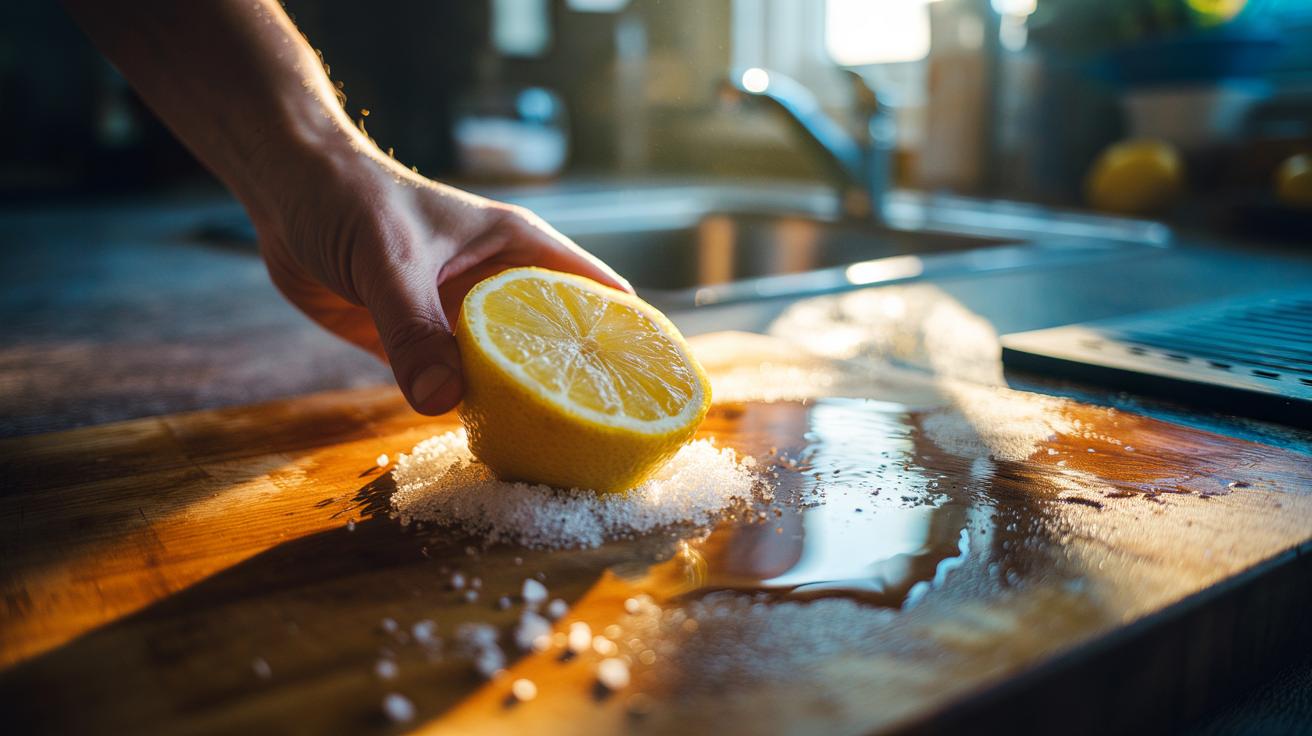
– Wash the board with hot, soapy water and rinse. Pat dry. Cut a fresh lemon in half. Sprinkle coarse salt over the stained zones. Now scrub with the cut face, pressing the pulp into the grain or scars. Give stubborn spots 60–90 seconds of focused work. Let the juice rest for two to five minutes for contact time, then scrub again and rinse well with warm water. Dry upright to allow airflow. For wood, finish with a thin oiling after it’s fully dry.
How do you know it’s clean? Start with the water sheeting test. Rinse and watch the flow: if water sheets in a continuous film rather than beading in islands, you’ve likely removed grease and residue. Second, the smell test: a neutral, slightly woody or plastic scent is promising; lingering garlic or fish notes signal trapped oils and more work to do. Third, the visual check: bright, even grain and fewer dark halos around cuts suggest success.
For persistent stains, cycle the process once more or park a lemon slice on the spot for ten minutes, then scrub. If colour remains in deep plastic scars, consider planing the surface with a purpose-made scraper or retiring the board. When hygiene is critical, pair the lemon clean with a food-safe sanitiser after rinsing and drying.
Natural Acids Compared for Kitchen Boards
Lemon is versatile, but it isn’t the only player. Vinegar (acetic acid) excels at mineral film removal and odour control, though it’s less effective on oily residues without a surfactant or abrasion. Oxalic acid, found in rhubarb leaves and sold in wood brighteners, can lift grey from weathered chopping blocks, yet it’s harsher and demands careful rinsing and protective gloves. For everyday stain duty, the lemon’s blend of acid plus citrus oils is a practical sweet spot. Choose the mildest agent that does the job, and let time and friction help.
Use the quick guide below to match the stain to the acid. Keep the focus on contact time, abrasion, and a proper rinse, then apply oil to wooden boards to slow future staining.
| Acid | Typical pH | Best For | Cautions | Contact Time |
|---|---|---|---|---|
| Lemon (citric) | ~2.0–2.5 | Grease-bound pigments, odours | Drying on wood; rinse well | 2–5 minutes |
| Vinegar (acetic) | ~2.4–3.0 | Mineral films, general deodorising | Sharp smell; avoid on stone | 5–10 minutes |
| Oxalic (wood brightener) | ~1.5–2.0 | Greying, iron/tannin marks | Use gloves; thorough rinse needed | 3–10 minutes |
A lemon slice won’t replace good habits, but it will spotlight them. By stripping oils, loosening pigments, and bringing back an even sheen, it makes cleanliness visible and repeatable. The technique is frugal, fast, and oddly satisfying. Still, keep basics in play: hot soapy water, separate boards for raw meat and ready-to-eat foods, and a periodic sanitise when risk is higher. Think of the lemon as a revealer, not a cure‑all. Next time your board looks tired, will you reach for a citrus half and test the water sheeting rule, or try a different natural acid to compare the results?
Did you like it?4.5/5 (21)