In a nutshell
- 🧪 Lemon juice’s citric acid (pH ~2) chelates minerals, dissolves limescale, and disrupts biofilm, making mould and soap scum release almost instantly on contact.
- 🧴 Method: spray undiluted or 1:1 lemon juice, allow a 5–10 minute dwell, agitate with microfibre or a soft brush, then rinse, squeegee, and dry—never mix with bleach.
- 🧼 Surfaces and safety: safe for glass, ceramic, and stainless with short contact; avoid natural stone and patch-test coloured grout; wear gloves, and note lemon may not remove every spore in deep silicone or porous grout.
- ⚖️ Comparison: lemon vs vinegar, bicarb, peroxide, and bleach—use acid first to descale, then an oxidiser like hydrogen peroxide for residual staining; reserve bleach for targeted whitening with strong ventilation.
- 🌬️ Prevention: boost ventilation, squeegee after showers, and dry seals; a light citrus routine is low-cost, biodegradable, and extends that clear, mould-resistant shine.
Britain’s bathrooms fight a constant battle with black spots, milky film, and that stubborn sour smell clinging to grout. Armed with nothing more than a lemon, homeowners claim an instant transformation: a sharp spritz, a quick scrub, and the grime seems to melt away. This isn’t folklore. It’s chemistry you can smell. The high citric acid content in lemon juice strips minerals, disrupts biofilm, and leaves glass radiant. Used correctly, it’s fast, cheap, and kinder to the planet than harsh bleaches. Yet it’s not a silver bullet for every surface or infestation. Here’s how the “lemon juice blast” really works, why it dazzles on contact, and when to deploy it safely.
The Science: How Citric Acid Attacks Mould and Grime
Lemon juice owes its bite to citric acid, typically 5–8% by volume, delivering a low pH of around 2. On shower glass and tiles, that acidity dissolves limescale (calcium carbonate) that often shelters mould and traps soap residue. By removing the mineral scaffold first, you strip away the protective crust that lets grime cling. The chemistry is elegant. Citric acid forms complexes in a process called chelation, binding metal ions and loosening their grip on surfaces. Result: deposits soften, smear, then rinse away.
There’s more going on with the black stuff. Many domestic moulds are embedded in a biofilm—a slimy extracellular matrix that resists water and mild detergents. Acid shocks this layer, destabilising proteins and polysaccharides so bristles and microfibre can lift it off. That’s why results feel “instant” the moment the juice meets the stain: the matrix begins to break as soon as the pH plummets. You see it first as a wet sheen. Then edges recede as the film releases.
Important caveat. Citric acid helps remove visible mould staining and the mineral bed it lives on, but it doesn’t always eliminate every spore or deeply rooted hyphae in porous grout or silicone. Heavier infestations may demand a follow-up with an approved biocidal cleaner or professional remediation. Think of lemon as a rapid striker: brilliant at opening the game, sometimes needing a finisher to secure the win.
The Lemon-Juice Blast: Step-by-Step for Showers
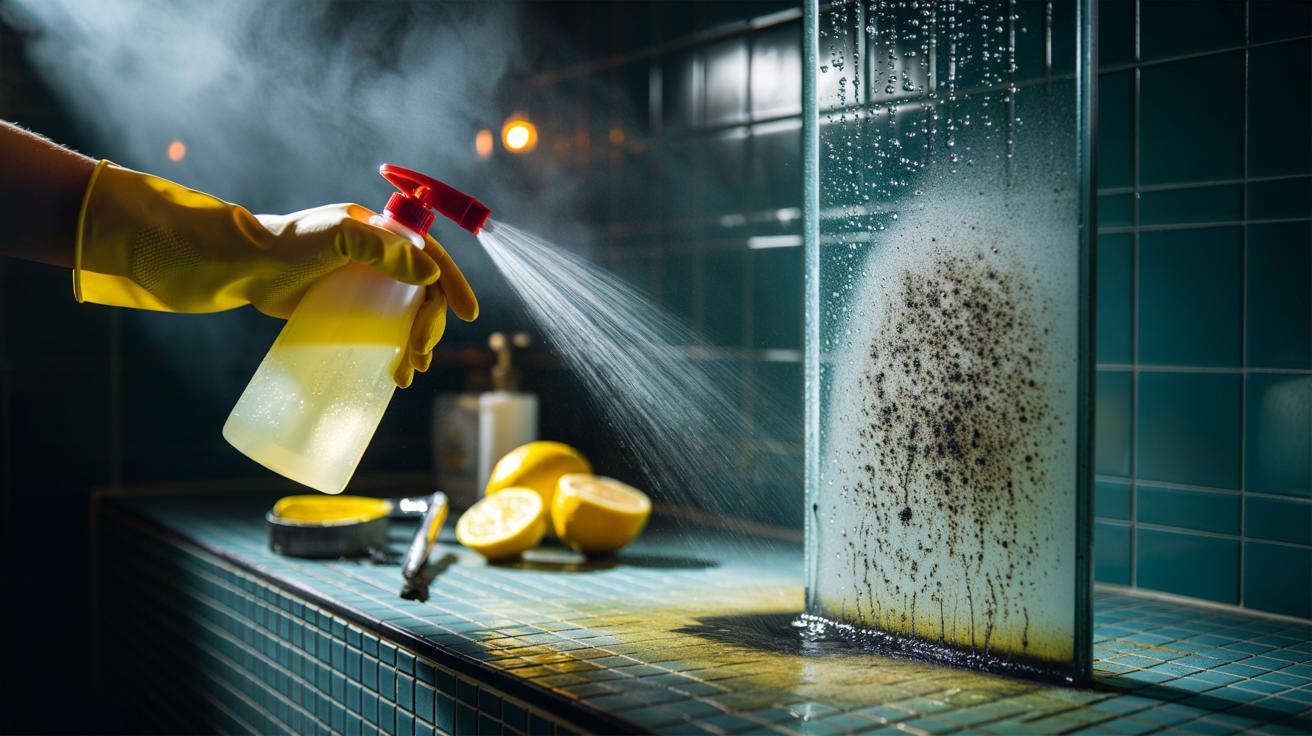
Prep matters. Open the window or run the extractor. Put on gloves. Decant freshly squeezed lemon juice—or bottled, unsweetened juice—into a sprayer. For stubborn deposits, use it undiluted; for routine shine, a 1:1 mix with warm water works. Never mix lemon juice with bleach or any chlorine-based cleaner. Start at the top of the screen so drips work for you, not against you. Mist until the surface glistens without running.
Now the dwell. Leave the solution on the glass, tiles, and chrome for 5–10 minutes to let citric acid dissolve limescale and loosen biofilm. On tough grout lines, dab extra with a cotton pad to keep it wet. Agitate with a non-scratch pad or a soft toothbrush along seals and corners. For soap scum on glass, a microfibre cloth folded into quarters gives bite and control. You’ll feel the drag drop as deposits release.
Rinse thoroughly with warm water. Squeegee the glass, then buff dry with a clean microfibre to prevent fresh spotting. If faint shadows persist in silicone seams, repeat once more or spot-treat. To deter quick return, finish with a very light mist of diluted juice, then dry. A regular post-shower squeegee and better ventilation extend the clean. Ventilation is the cheapest mould prevention there is—use it every time you shower.
Surfaces, Safety, and What Not to Do
Acid is powerful. Respect it. Lemon juice is generally safe for ceramic tile, tempered glass, stainless steel, and most chrome fixtures with short contact times. Avoid prolonged exposure on natural stone—marble, limestone, and terrazzo—because acids etch calcium-rich surfaces. Painted trims and anodised aluminium may discolour if left wet. Always patch-test an inconspicuous spot and keep dwell times short on sensitive finishes.
Grout and silicone are mixed terrain. Glazed tile grout often tolerates acids well, but coloured cement grout can lighten if abused. Silicone seals can stain from within if mould has colonised deeply; lemon lifts surface marks but may not cure the core. Rinse well, then dry with airflow to slow regrowth. If you need to neutralise residual acidity on metal trims, rinse and wipe with a mild bicarbonate solution, then rinse again—never mix acid and alkali in a closed bottle.
Safety basics count. Wear gloves to avoid skin irritation. Don’t spray into the wind; citrus aerosols sting eyes. Keep the juice away from natural-bristle brushes, which can degrade, and don’t leave acid soaking on rubber seals for long periods. If you spot extensive black mould on porous walls or a spreading musty odour, stop and seek professional advice—there may be a moisture problem behind the tiles.
How Lemon Compares to Other Household Cleaners
Lemon juice isn’t the only cupboard contender, but it’s uniquely versatile: it descales, cuts soap scum, and leaves a fresh scent. Still, different jobs reward different chemistries. Here’s a quick comparison for bathroom triage.
| Cleaner | Active Compound | Typical pH | Best For | Caveats |
|---|---|---|---|---|
| Lemon juice | Citric acid | ~2 | Limescale, soap scum, light mould staining | Avoid natural stone; short contact on metals |
| Distilled white vinegar | Acetic acid | ~2.5 | Mineral deposits, glass shining | Odour; slower on heavy scale |
| Bicarbonate of soda | Sodium bicarbonate | ~8.3 | Deodorising, gentle abrasion | Alkaline; poor on limescale alone |
| Hydrogen peroxide | H2O2 oxidiser | ~6 | Mould discolouration, sanitising | Light-sensitive; patch-test fabrics |
| Household bleach | Sodium hypochlorite | ~12 | Disinfecting, whitening grout | Corrosive; never mix with acids |
Think sequence. Use acid first to remove scale, then deploy an oxidiser like hydrogen peroxide if stains persist in porous spots. This one-two punch—descale, then sanitise—usually beats shower mould without resorting to harsh fumes. Reserve bleach for targeted whitening where ventilation is excellent and instructions are followed to the letter.
Used smartly, a lemon can be a tiny yellow powerhouse. It strips the mineral armour, loosens the slime, and helps your cloth lift away the residue that makes showers dull and dank. Add patience, good airflow, and a squeegee, and you’ll see mould lose its grip day by day. The best part? It’s low-cost and biodegradable, yet surprisingly technical in effect. Ready to test the citrus trick in your own bathroom—or will you build your own routine by pairing lemon with a second cleaner for a tailored, longer-lasting shine?
Did you like it?4.4/5 (26)