In a nutshell
- 🧪 The science: cutting onions releases sulphur-rich volatiles (thiosulfinates, sulphides) that disrupt insect olfactory receptors, deterring rather than killing.
- 🛠️ How-to: bury a half onion 2–3 cm deep, 8–12 cm from stems, replace every 3–7 days, and space at 40–60 cm along rows for an overlapping scent barrier.
- 🎯 Targets vs limits: effective for aphids, carrot fly, and fungus gnats; limited impact on slugs/snails and rodents—treat as a perimeter, not a cure-all.
- 🧩 Benefits: low-cost, chemical-free deterrence that’s friendly to beneficial insects and soil life; caveats include variable release, decomposition management, and pet safety.
- 🌿 Alternatives: onion teas/sprays, skins as mulch, and companion planting with chives/spring onions; best results within integrated pest management.
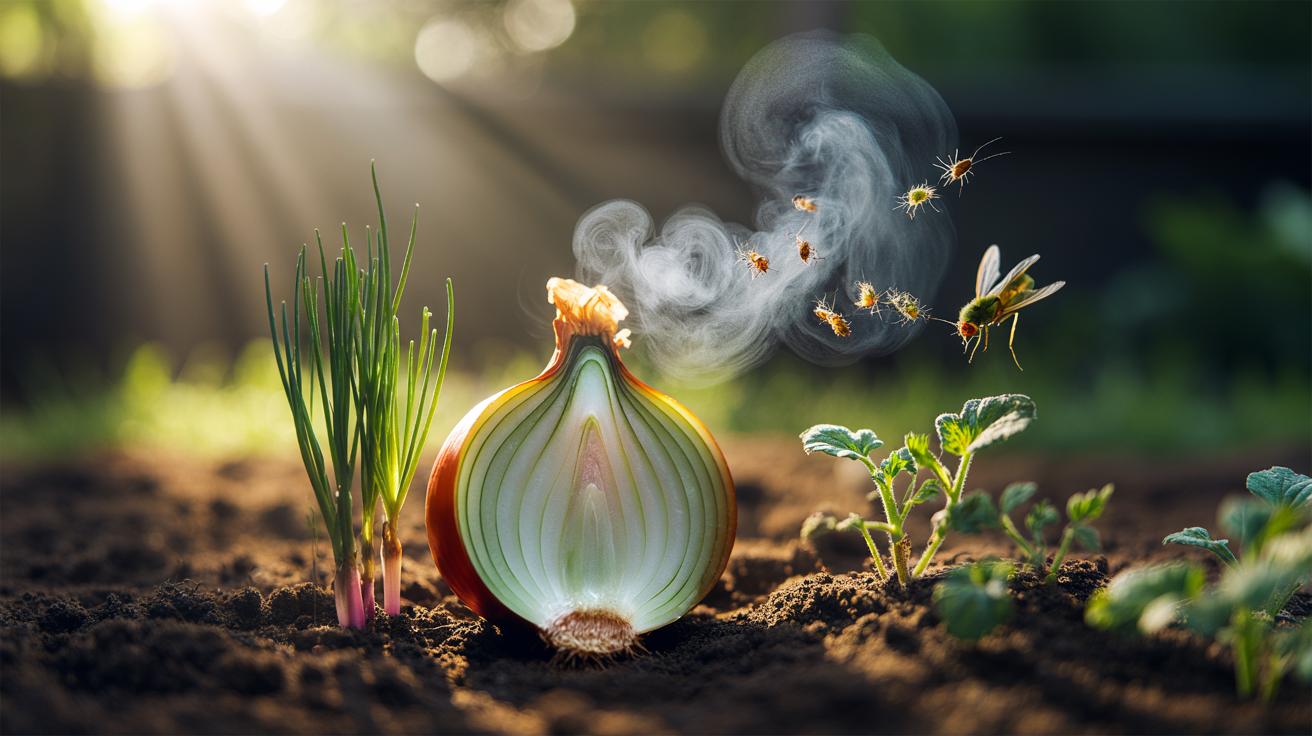
Slip half an onion into the soil and you’ve got a quietly effective, low-cost deterrent working on your behalf. No sprays. No residues. Just the pungent chemistry of an everyday bulb, radiating a thin plume of sulphur-rich volatiles that many insects loathe. Gardeners have used this trick for generations, but the method has fresh relevance as households seek chemical-free pest control that respects soil life and pollinators. The physics and biology are simple: moisture and warmth drive odour release, while the soil moderates intensity and extends the effect. It’s a shield, not a sledgehammer, and that restraint is exactly the point. Here’s how the science stacks up and how to deploy it with confidence around crops you care about.
The Science: Sulphur Compounds That Send Pests Packing
Cut an onion and you unleash a cascade. Cells rupture, alliinase enzymes meet their substrates (S-alk(en)yl-L-cysteine sulfoxides), and a micro-second chemistry set springs into action. The result is a bouquet of thiosulfinates, sulphides, and the infamous lachrymatory factor, syn-propanethial-S-oxide. These volatile sulphur compounds (VOCs) don’t merely smell strong to humans. They scramble the olfactory receptors of many plant-feeding insects, masking host cues, overloading antennae, and sometimes signalling a hostile environment they’d rather avoid.
When you tuck half an onion into moist soil, the bulb becomes a slow-release cartridge. Vapours seep through pore spaces at ground level, where aphids, carrot fly and other low-flying nuisances patrol. Research on Allium volatiles shows consistent repellent effects against sap-suckers and some dipterans, especially when the odour is close to the plant. Crucially, the mechanism is behavioural deterrence, not toxicity. That distinction matters: bees foraging at flowers above are unaffected, and beneficial predators can still operate. The plume’s strength tapers as compounds oxidise and microbes feast, which is why timely replacement keeps the defence line intact without drenching your patch in scent.
How to Use Half an Onion in Soil, Step by Step
Pick a pungent bulb. Standard yellow or red onions are ideal; their higher sulphur content gives more mileage. Halve the onion across the equator, then score the cut face in a shallow criss-cross to boost exposure. This simple scoring increases the initial “burst” of odour while the buried half continues to off-gas steadily.
Place the half onion cut-side up, 2–3 cm beneath the soil surface and 8–12 cm from the plant stem. That offset keeps roots safe yet positions the VOC plume where pests roam. Cover lightly so the soil breathes. In warm, dry weather, expect useful release for 3–5 days; in cool, damp conditions it can extend to a week. Replace before it turns mushy. For a row of carrots or lettuce, station halves at intervals of 40–60 cm to create an overlapping barrier.
Keep the bed evenly moist, not sodden, and remove decomposed pieces to avoid fungus gnat breeding. If pets visit your garden, add a mesh cloche or small stone to deter nibbling—onions are toxic to dogs and cats if eaten. Don’t overdo it: a few strategic placements deter; a glut simply wastes bulbs. If you’re short on onions, use trimmings from the kitchen and rotate positions to maintain coverage.
What It Works For—and What It Won’t
The onion-in-soil tactic shines against pests guided heavily by scent near the ground. It distracts aphids at seedling height, discourages egg-laying by carrot fly, and can unsettle fungus gnats in potting mixes. Some gardeners also report fewer thrips on nearby leaves when the soil is scented. Yet expectations matter. Slugs and snails rely more on moisture trails than odour, so results are mixed. Rodents? Unimpressed. And if you’re growing alliums, note that onion fly behaviour differs; your target is non-allium crops such as carrots, lettuce, brassicas, and herbs.
| Pest | Effect | Placement Tip | Replace After |
|---|---|---|---|
| Aphids | Good deterrence at seedling stage | One half between every 2–3 plants | 3–5 days (warm) / 5–7 days (cool) |
| Carrot fly | Reduces landings and egg-laying | Halves along row edges | 5–7 days |
| Fungus gnats | Disrupts adults near soil surface | Shallowly buried in pots | 3–5 days |
| Slugs/snails | Limited; use traps/hand pick | N/A | N/A |
Think of onion halves as a perimeter, not a silver bullet. In breezy plots, anchor the tactic with low mesh or hedging to hold the scent zone. Pair it with good hygiene—swiftly remove infested leaves, water at the base to keep foliage drier, and plant at proper spacing—so pests face multiple small hurdles rather than one grand wall.
Benefits and Limits Compared With Sprays and Traps
Cost is tiny, impact immediate. A halved onion delivers chemical-free deterrence right where pests decide to land, without coating leaves or leaving residues. It is friendly to beneficial insects, because you’re not deploying a kill agent. Soil microbes cope well with the inputs, and the organic matter returns to the bed as it breaks down. Neighbours won’t get a noseful because the odour is mostly ground-hugging and short-lived.
Limits exist. The release rate fluctuates with heat and moisture, so consistency requires upkeep. Heavy infestations may overwhelm the plume; use physical barriers, targeted soaps, or timing strategies alongside it. There’s a minor risk of nitrogen “tie-up” during rapid decomposition—offset with a light compost dressing. If you’re managing a precious pollinator corridor, onion halves let you push back on pests without collateral damage. But be pragmatic: if damage is surging, switch to an integrated pest management plan that layers netting, varietal choice, and spot treatments.
Onion-Based Alternatives: Teas, Mulches, and Companion Planting
Kitchen trimmings become assets. For a quick spray, blitz one onion with a litre of water, steep for 12–24 hours, strain, then dilute 1:5. Mist the underside of leaves at dusk to avoid leaf scorch. This cold extraction preserves alliinase-driven chemistry better than a hot boil. Always test on a small patch first. Dried onion skins also make a light mulch; as they weather, they leach faint sulphur notes that discourage sap-suckers near the soil line.
Prefer a set-and-forget approach? Thread an allium border through your beds: chives, spring onions, and shallots create a semi-permanent odour curtain around carrots and brassicas. Space them closely for effect, and harvest through the season to refresh the scent. If beans sulk beside strong alliums in your garden, give them a respectful gap and observe. The goal is synergy: gentle, persistent cues that nudge pests away while keeping predators and pollinators in play. Use whichever onion tactic fits your time, climate, and palate—nothing goes to waste.
In the end, half an onion in the soil is a small act with outsized influence: simple, frugal, and grounded in plant chemistry that insects can’t easily ignore. It won’t rewrite the rules of pest control, yet it can tip the balance back in your favour and buy seedlings the week they need to get strong. Layer it with tidy gardening, smart spacing, and vigilant scouting for best results. What mix of scent barriers, physical protection, and planting companions will you trial in your beds this season to build a resilient, chemical-light defence?
Did you like it?4.7/5 (20)