In a nutshell
- 🥚 Ground eggshells rich in calcium carbonate act as a gentle micro‑abrasive, burnishing grime and fine scratches to create a warm patina without adding a film.
- ⚙️ Quick buffing method: rinse and dry shells, grind to a fine powder, apply a light slurry or misted powder, buff in circles then with the grain, wipe and dry—always patch test first.
- 🔒 Safety and suitability: ideal for satin/matt polyurethane and hardwax oil; avoid on flaking varnish and be cautious on high‑gloss lacquer or soft wax; use minimal moisture and conduct a 24‑hour test.
- 🆚 Versus shop polishes: eggshells provide mechanical burnishing that’s reversible, low‑cost, and eco‑friendly, while many commercial options use acrylics/silicones that can build up—yet they’re useful for uniform shine and slip control.
- 📊 Finish guide: Polyurethane (good), Hardwax oil (excellent), High‑gloss lacquer (limited), Traditional soft wax (patch test only) for targeted, trouble‑free results.
Britain loves a tidy floor, and few things delight like a gleam that looks hand-rubbed, not plastic. Enter an unlikely hero: the humble eggshell. Home cooks tossing breakfast leftovers may be binning a secret polish, because ground eggshell, rich in calcium carbonate, can coax tired boards into a subtle, warm shine. The trick is quick buffing, just enough to mobilise microscopic particles without scratching finishes. It’s thrifty. It’s tactile. And when done sensibly, it’s remarkably effective. Used correctly, eggshell can leave a lustrous, low-sheen finish that celebrates the wood rather than smothering it. Here’s how it works, how to do it, and when to leave it on the plate.
Why Eggshells Make Floors Shine
Eggshell is mostly calcium carbonate (CaCO3), the same mineral used in many commercial polishes as a gentle abrasive. On the Mohs scale it sits around 3, hard enough to abrade grime and micro-oxidation, but softer than most floor finishes. That makes it a micro-abrasive: it burnishes rather than gouges, blending fine scratches and evening out high spots left by foot traffic. The process creates a soft patina, a glow formed by compacting the finish at the surface, not laying a plastic layer on top.
There’s more. Eggshells carry traces of proteins from the membrane. When ground and slightly moistened, these proteins act like a weak binder, helping the calcium dust stay where you buff. The mix doesn’t form a film; it simply polishes. This is why the shine can look authentically “wooden” rather than glassy or slick. Mild alkalinity also helps neutralise acidic marks—think muddy footprints or spills—so the floor looks cleaner before you even reach for soap.
Step-by-Step: From Breakfast to Buffed Boards
Start by rinsing shells and letting them dry thoroughly; moisture invites odours. Blitz the shells to a fine powder using a clean coffee grinder or crush in a mortar. Sieve out sharp fragments; you want talc-like dust. Mix a teaspoon of powder with a tablespoon of warm water and a drop of neutral soap to form a thin slurry. Alternatively, sprinkle dry powder and mist lightly with water as you work. Always test in an inconspicuous corner first.
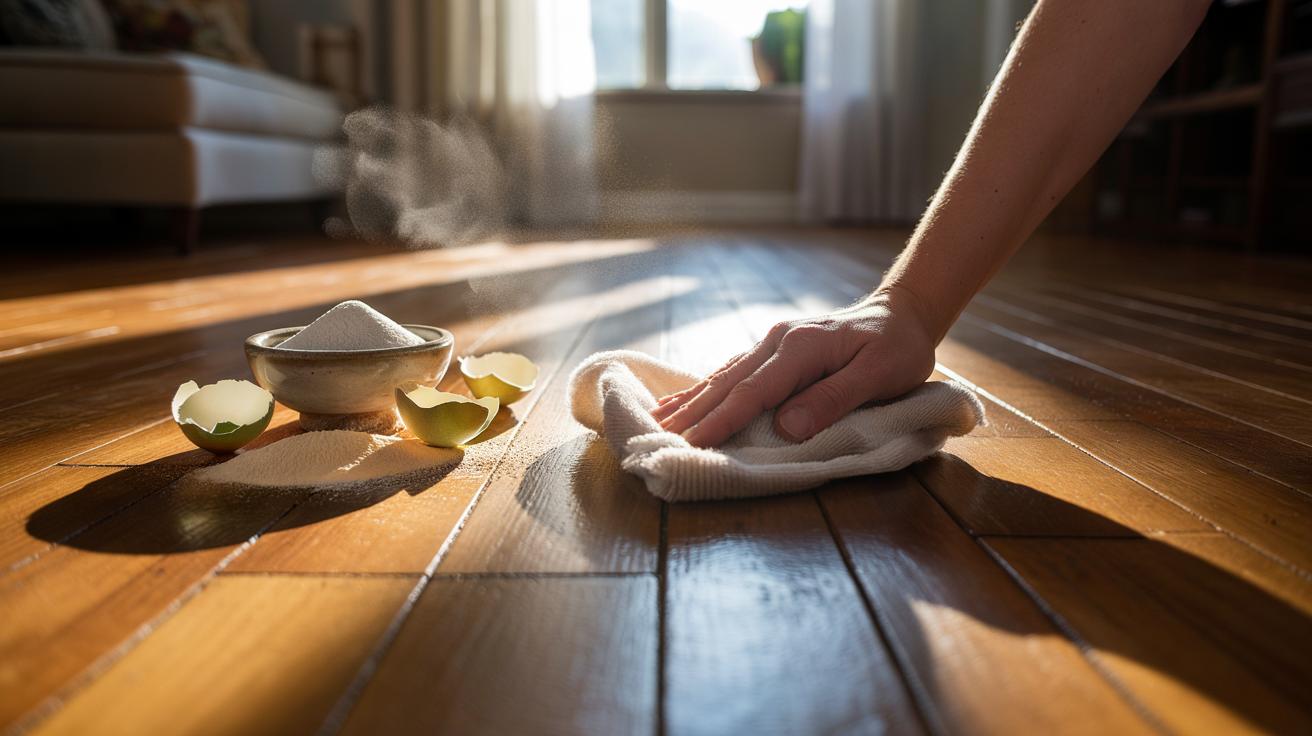
Apply sparingly to a small section. With a soft white pad or an old cotton T‑shirt, buff in tight circles, then with the grain. Light pressure, quick strokes. Aim for 30–60 seconds per patch; this is quick buffing, not sanding. Wipe residue with a barely damp cloth, then immediately dry with a clean towel. Stand back. You should see a refined sheen, not a shiny patch. If dulled soil lines remain, repeat once, then finish with a few drops of mineral oil on very dry boards to deepen colour.
Safety, Suitability, and When to Skip It
Most modern floors are coated with polyurethane or hardwax oil. Both tolerate eggshell’s gentle abrasion, but the technique shines on dull, mildly scuffed areas rather than glossy, factory-fresh finishes. Do not use on soft, wax-heavy antique finishes without a patch test. Avoid if you see flaking varnish—buffing can lift loose edges. Keep particles off rugs; shake or vacuum afterwards to stop gritty transfer.
Humidity matters. Excess water can leave raised grain on unsealed boards. Use minimal moisture and dry immediately. Pets? Fine—eggshell is non-toxic—but sweep thoroughly to remove residue. Hygiene is simple: wash hands, and use shells from freshly cooked eggs. If your floor carries deep scratches, or if it has a high-gloss lacquer, skip eggshell and reach for a dedicated polish to avoid visible halos. When in doubt, consult the finish manufacturer’s care guide and always perform a 24-hour test.
How It Compares With Shop-Bought Products
Commercial polishes promise instant shine, yet many rely on acrylics or silicones that can build up and later complicate professional refinishing. Eggshell offers a different route: mechanical burnishing rather than coating. It’s slower, yes, but rewarding and reversible. Cost is trivial, waste is minimal, and there’s a comforting transparency—you see what you’re putting down.
Think of eggshell as a maintenance trick for in-between cleans, particularly on traffic lanes that look tired by teatime. For whole-room uniformity or slip-resistance control, the shop-bought options still have a place. The table below sets out quick guidance.
| Floor Finish | Eggshell Suitability | Notes |
|---|---|---|
| Polyurethane (satin/matt) | Good | Gentle buffing restores lustre; avoid on peeling varnish. |
| Hardwax oil | Excellent | Enhances patina; follow with a tiny oil refresh if dry. |
| High-gloss lacquer | Limited | Risk of visible swirl marks; prefer gloss-safe polish. |
| Traditional soft wax | Patch test only | May haze; use a clean wool pad instead. |
There’s something cheering about turning a kitchen leftover into a floor-care ally. By harnessing calcium deposits and a minute of elbow grease, you can revive boards with a glow that feels earned, not sprayed on. It’s cheap, sustainable, and oddly satisfying. Treat it as a light polish between deeper cleans, and always listen to what the wood and finish are telling you. Will you save your next shells, try a careful patch test, and see how your own floor responds to a breakfast-born buff?
Did you like it?4.5/5 (21)