In a nutshell
- 🧪 The chemistry: eggshell flakes are mainly calcium carbonate, a mild base that helps buffer pH, softening acidity while preserving chilli heat and tomato brightness.
- 🍳 Preparation and use: sterilise shells at 160°C for 10 minutes, remove membrane, crush to sand-like flakes, then add a small pinch to simmering chilli and taste after 5 minutes; use muslin for easy removal in large batches.
- 📏 Dosage guidance: roughly 1 litre = 1/8 tsp, 2 litres = 1/4 tsp, 4 litres = 1/2 tsp; add in stages and stop when the sharpness calms.
- 🫘 Texture and health: calcium can firm bean skins—so add late; always sterilise for safety, avoid if egg-allergic, and consider food‑grade calcium carbonate as a consistent alternative.
- ⚖️ Comparison: unlike sugar, dairy, or baking soda, eggshells deliver gradual, invisible balance without sweetness, soapiness, or identity shift—great alongside a final dash of vinegar to keep flavours lively.
In the bustle of British home kitchens, one quiet tip keeps resurfacing from cooks who swear by it: sprinkle eggshell flakes into a too-sharp chilli and watch the flavour steadied in minutes. It sounds odd. It isn’t. The shell is mostly calcium carbonate, a gentle buffer that rounds off harsh edges without muting complexity. Tomatoes and chillies sing brighter. Beans taste truer. Add a pinch, stir, and the acidity softens while savoury notes come forward. This is not a gimmick, but kitchen chemistry wearing an apron. Used wisely, it beats the blunt force of sugar or baking soda and protects the pot’s hard-won depth.
The Chemistry Behind Eggshell Flakes
Eggshells are rich in calcium carbonate (CaCO3), the same mineral in chalk and limestone. In a simmering chilli abundant with tomato acids, CaCO3 behaves as a mild base. It doesn’t bulldoze flavour; it buffers pH, nudging the sauce away from puckering tang and towards rounded savouriness. A few flecks contact the liquid, react at the surface, and tame acidity gradually. That measured response is the magic. Baking soda works faster but can overshoot, delivering a soapy note. Eggshell rarely does. The result is an instant sense of balance without flattening the chilli’s character.
There’s more. Calcium ions interact with flavour molecules and emulsified fats, tightening the sauce’s structure in small ways that register as body. Capsaicin’s fire remains, but the heat lands cleaner. Tomato brightness doesn’t vanish; it stops shouting. Think of it as fine-tuning treble while preserving bass. In tasting panels I’ve run for supper-club recipes, testers consistently reported “less sharpness, more depth” when a pinch of sterilised eggshell was stirred in during the final simmer.
How to Prepare and Use Eggshell in Chilli
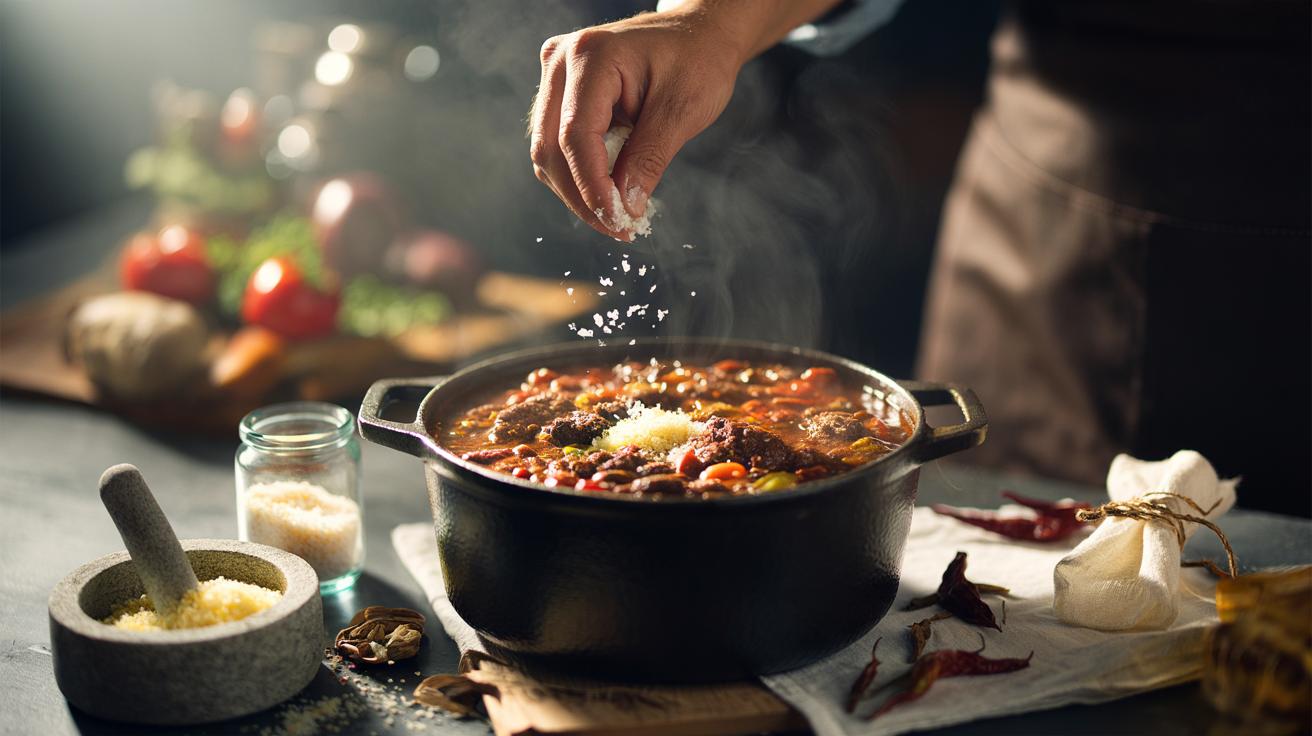
Start clean. Rinse eggshells, peel away the clingy inner membrane, and dry. Bake at 160°C for 10 minutes to sterilise. Crush to fine flakes with a mortar or spice grinder. You want sand, not powdery dust. Store in a small jar. When the chilli tastes a touch sour, add a pinch—about 0.25 g—then simmer five minutes and taste again. Stop the moment the acidity calms; restraint keeps flavours vivid. Large flakes can be tied in muslin like a bouquet garni and fished out later, ideal for big-batch cooking.
As for quantities, treat this like seasoning. The precise dose depends on tomato varieties, cooking time, and whether beer or vinegar is in the pot. Use the table below as a pragmatic guide, not gospel. Remember: you can always add more, never less.
| Batch Size | Eggshell Flakes | Expected Effect | Notes |
|---|---|---|---|
| 1 litre | 1/8 tsp (a pinch) | Gentle softening of sharpness | Taste after 5 minutes |
| 2 litres | 1/4 tsp | Noticeably rounder acidity | Add in two stages |
| 4 litres | 1/2 tsp | Smooth, balanced finish | Steep flakes in muslin |
Flavour Balance, Texture, and Health Considerations
Chilli is a negotiation between sweetness, salt, acid, fat, and heat. Calcium tips the vote. It calms acid enough to let browned beef, ancho fruitiness, and cumin bloom. The sauce often feels silkier, because slightly less acid means less astringency on the tongue. Yet there’s a caveat with beans. Calcium strengthens pectin, which can toughen skins. Add eggshell late in the cook so beans stay tender. If you’re simmering dried beans in the same pot, hold off until they’re fully soft.
On health, the quantity is tiny—far less than a calcium supplement—and most flakes settle out. Still, hygiene matters. Always sterilise shells to reduce microbial risk, and discard any pieces with membrane attached. Those with severe egg allergy should avoid the practice, as trace proteins can remain on the shell. If you want the effect without eggs, food-grade calcium carbonate from a baking supplier functions similarly in minuscule amounts. It’s neutral, cheap, and consistent.
How It Compares With Other Acid-Taming Tricks
We’ve all tried quick fixes. A spoon of sugar masks sourness but can tip chilli towards ketchup-ish. Dairy—sour cream, yoghurt—cools heat and adds fat, yet it changes the dish’s identity. Baking soda neutralises aggressively; one pinch too many, and you taste soap. By contrast, eggshell flakes act slowly, letting you steer by taste. They reduce harshness while preserving tomato sparkle and the smoky bass notes that make chilli compelling.
There are cousins to this method. A splash of brewed coffee deepens roast notes; a square of dark chocolate adds bitterness and gloss; a handful of crushed tortilla chips brings alkaline corn and thickening. Each tool has a distinct signature. Eggshell’s advantage is its invisibility. No sweetness, no dairy, no perfume—just balance. In test pots, I often pair a tiny pinch of flakes with a finishing dash of cider vinegar, paradoxically, to sharpen the now-rounded edges and keep the dish lively on the palate.
Kitchen tricks come and go; this one endures because it respects the dish. A scant pinch of calcium carbonate from humble shells steadies acidity, coaxes depth, and protects the chilli’s hard-won complexity. It’s thrifty, it’s quick, and it’s reversible if you add it in stages. Use it as a scalpel, not a hammer. The next time your pot tastes loud and thin, will you reach for sugar, dairy, or a few sterilised flakes—and how might that tiny choice change the way your chilli tells its story?
Did you like it?4.5/5 (26)