In a nutshell
- 🌱 Eggshells deliver slow-release calcium (mostly CaCO₃), improving pH buffering and steadying nutrient balance for stronger plants.
- 🧰 Prep matters: rinse, dry/bake, then grind finely; finer particles release calcium faster and integrate better in beds, pots, and compost.
- 🧪 Calcium fortifies cell walls, stabilises membranes, and supports signalling—cutting risks of blossom-end rot, tip burn, and weak new growth.
- 📏 Practical dosage: apply 100–200 g/m² to beds and 1–2 tsp per 5 L pot; reduce in alkaline soils and pair with consistent watering.
- 🔍 Busting myths: shells aren’t instant slug barriers or miracle cures; use soil tests and favour small, regular doses over one-off dumps.
Crushed eggshells rarely make headlines. They should. In gardens across the UK, this common kitchen cast‑off is quietly returning vital calcium to tired soils, steadying pH and strengthening plants from root tip to fruit. Think of it as a slow, local mineral feed: a homegrown amendment that nudges biology, chemistry, and structure in the right direction. When shells are cleaned, dried, and ground to a fine crumble, their calcium carbonate dissolves gradually, feeding microbes as it buffers acidity. Results aren’t instant. They’re reliable. Stronger cell walls. Fewer distorted leaves. Less blossom‑end rot in tomatoes. Tiny changes. Big gains.
Why Eggshells Matter: The Calcium Story
The science is straightforward. Eggshells are roughly 95% calcium carbonate (CaCO₃), with traces of magnesium and phosphorus. In soil, that carbonate fraction reacts with organic and carbonic acids, releasing calcium ions (Ca²⁺) at a measured pace. This is a boon in UK gardens where rainfall can leach nutrients and nudge pH downward. Because calcium is largely immobile in plants, it must be continuously available in the root zone during periods of rapid growth. That’s precisely what a slow‑release source like eggshell crumble supplies. It doesn’t flood. It steadies.
Calcium’s role goes beyond “food.” It cross‑links pectins in cell walls, supports membrane integrity, and buffers toxic aluminium in acidic conditions. The payoff is structural: firmer fruit, resilient foliage, and roots that navigate compacted layers more confidently. In the rhizosphere, calcium helps balance cation exchange by tempering excesses of potassium and sodium, often improving crumb structure over time. Gardeners sometimes chase quick fixes; calcium is the quiet regulator. Expect seasons, not seconds. Expect better water relations, more balanced nutrient uptake, and fewer physiological disorders that masquerade as diseases.
From Kitchen Waste to Soil Booster: Preparing Eggshell Crumble
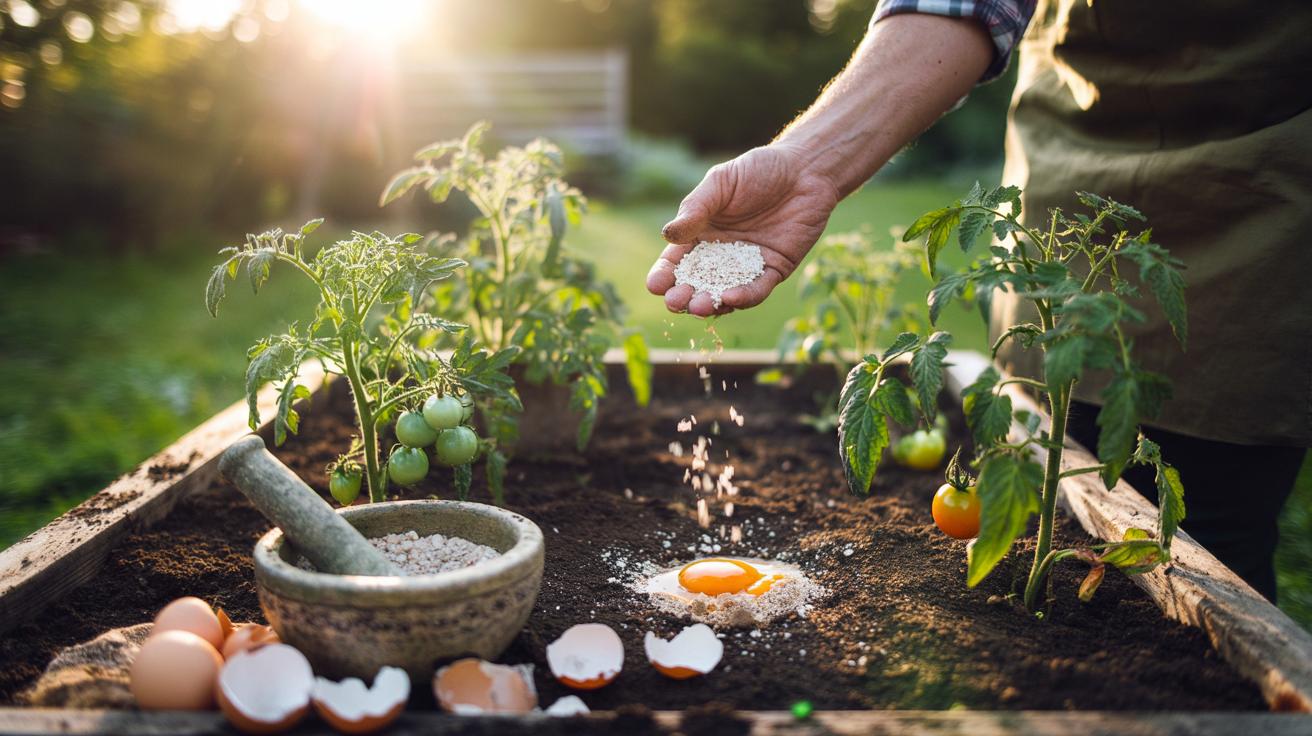
Preparation is simple, and it matters. Rinse shells, then dry thoroughly—either air‑dried for a week or baked at 120–150°C for 10–15 minutes. This reduces odour and breaks the inner membrane, making grinding faster. Crush with a rolling pin or blitz in a coffee grinder to a fine grit. The finer the grind, the faster the calcium becomes plant‑available. Powder behaves differently to shards: it integrates into pore spaces and meets soil acids sooner, speeding release without spiking pH.
For beds, aim for roughly 100–200 g of eggshell crumble per square metre incorporated into the top 5–10 cm ahead of spring planting. For containers, 1–2 teaspoons per 5‑litre pot mixed into fresh compost is adequate; top‑dress on established pots, then water in. Shells can also go into the compost heap, where acids and microbes pre‑condition the calcium before it returns to beds. Safety note: once dried or baked, shells are low risk; still, store the powdered material dry and away from pets. Think steady supplementation, not a cure‑all or a substitute for balanced fertiliser. No magic. Just mineral housekeeping.
How Calcium Enhances Plant Growth: Mechanisms and Evidence
Plants use calcium as both scaffold and signal. In walls, Ca²⁺ bridges pectates, stiffening tissues, reducing cracking, and slowing pathogen ingress. In membranes, it modulates permeability and drives signal transduction during stress. Tomatoes and peppers show this visibly: insufficient calcium plus irregular watering triggers blossom‑end rot. Lettuce gets tip burn; brassicas develop internal browning. Because calcium rides with the transpiration stream, uneven moisture or damaged roots can throttle supply to young tissues even when soil calcium is abundant. Solution: consistent watering and a modest, regular calcium source at the root interface.
| Role of Calcium | Plant Effect | Deficiency Symptom | Eggshell Benefit |
|---|---|---|---|
| Cell wall cross‑linking | Firmer tissues, stronger stems | Wilting new leaves, weak growth | Slow release strengthens structure |
| Membrane stability | Better nutrient balance | Leaf tip burn | Buffers swings, steadies uptake |
| pH buffering | Healthier microbes, improved crumb | Acid stress, aluminium toxicity | Gradual acidity moderation |
| Signalling | Faster stress response | Poor root hairs, distortions | Continuous Ca²⁺ availability |
Balance remains crucial. Excess potassium or magnesium can compete with Ca²⁺ at uptake sites; relentless liming can overshoot pH, suppressing iron and manganese. Eggshells act slowly, reducing these risks. Use soil tests or a simple pH kit to guide repeat applications. Pair with mulch to keep moisture even, and the physiology takes care of itself.
Practical Dosage, Timing, and Common Myths
How much is enough? For most vegetable beds, annual additions in the 100–200 g/m² range maintain a gentle trickle of calcium without jolting pH. Heavier feeders like tomatoes and courgettes appreciate a small pre‑plant dusting in the hole, then a top‑up mid‑season if watering is consistent. In alkaline soils (pH > 7.5), reduce rates or skip; focus on organic matter and even irrigation. Eggshells are best seen as insurance against physiological disorders, not as a primary N‑P‑K feed.
Three myths persist. First: “Eggshells instantly stop slugs.” The evidence is mixed; sharp grit helps a little, but moisture and hiding places matter more. Second: “One handful cures blossom‑end rot.” Not if drought or root damage is the driver. Third: “Shells raise pH like lime.” They do, but slowly, and often only near particles. That’s an advantage for container growers seeking micro‑buffering. Crush fine, apply modestly, monitor pH yearly, and combine with compost for biology‑led breakdown. Small, regular doses beat heroic dumps every time.
Eggshell crumble offers a thrifty, circular route to healthier crops: a steady calcium supply, gentle pH buffering, and sturdier plants less prone to stress. Results accumulate season by season, especially when paired with consistent watering and lively soil. It’s local, low‑waste, and quietly effective. The only real cost is the time spent drying and grinding. From breakfast plate to border, it’s practical alchemy. As you plan the next planting, where could a pinch of finely ground shells smooth out growth, stabilize fruit quality, and make the soil work a little smarter for you?
Did you like it?4.5/5 (28)