In a nutshell
- 🍋 Lemon’s citric acid dissolves mineral film and soap residue for instant streak-free glass; use a light mist and a tight-weave microfibre cloth.
- 🧪 Smart ratios: 1:8 (juice:water) for routine, 1:4 with 1 tsp vinegar for hard-water specks; always strain pulp to prevent drag and stripes.
- 🧼 Method that works: dust frame, mist lightly, wipe in overlapping S-shapes, then switch to a dry polish; avoid flooding edges to protect silvering.
- 🧰 Targeted fixes: a halved lemon with fine salt removes stubborn toothpaste splatters; follow with a re-mist and a final buff for mirror shine.
- 🌿 Eco and budget wins: citrus cleaning offers strong results without harsh fumes, a fresh scent, and a consistently low-cost routine.
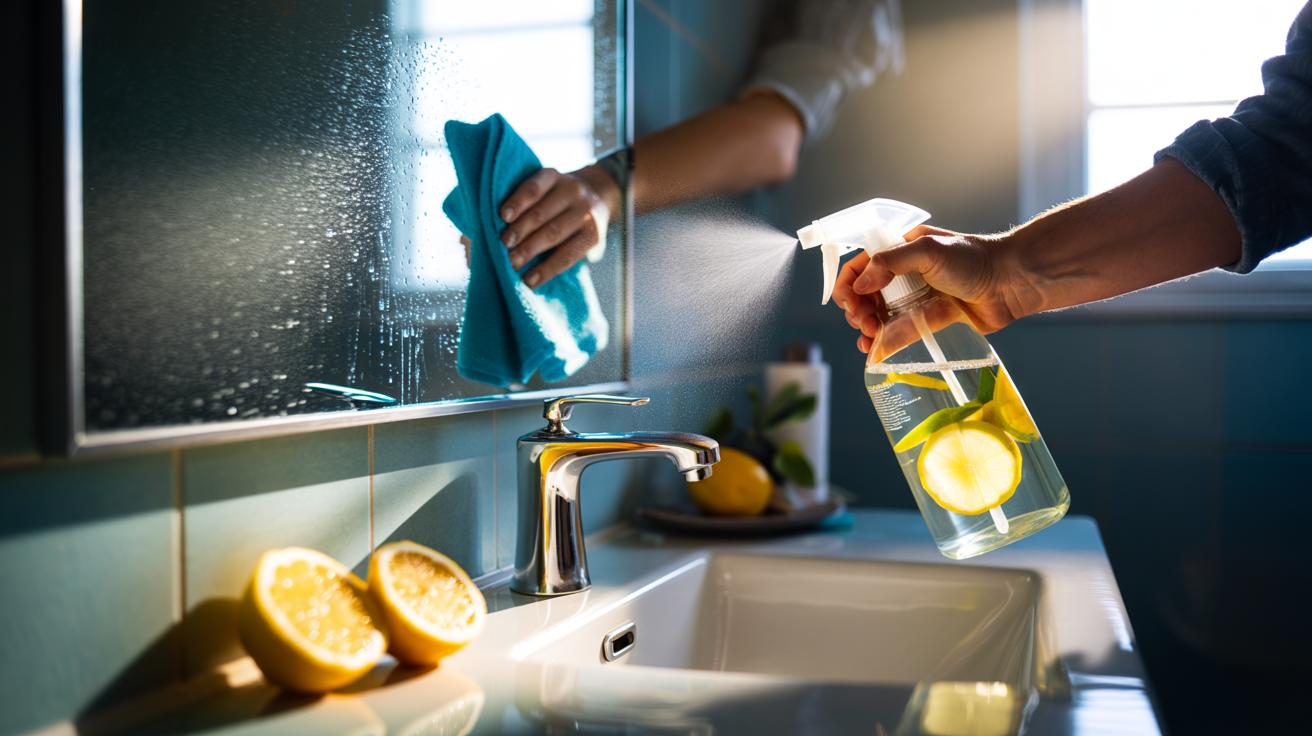
The quickest way to banish streaks from a bathroom mirror isn’t a boutique spray; it’s a lemon. Sliced, squeezed, slightly diluted, and expertly buffed, this kitchen staple delivers a mirror shine in minutes. Households across the UK are trading chemical glare for citrus clarity, and not just for thrift. Lemon’s bright scent, biodegradable profile, and cut-through performance make it a smart, everyday fix. The technique is simple. The results, instant. Light mist, measured passes, confident polish — that’s the formula reporters see again and again in homes, hotels, and photo studios where spotless glass is non-negotiable.
Why Lemon Works on Glass
Lemon’s power lies in citric acid, a mild organic acid that loosens the mineral salts and soap residues responsible for haze. These films scatter light, so the glass looks dull even when it’s “clean”. The acid chelates calcium and magnesium from hard water, breaks down surfactants, and helps water sheet off evenly. Result: fewer droplets, fewer streaks. Unlike ammonia-heavy formulas, lemon leaves no throat-catching fumes, and the solution rinses harmlessly down the drain. It’s economical too; a single fruit treats multiple mirrors.
There’s a nuance. Lemon contains trace essential oils that can leave micro-residue if you soak the surface. That’s why the winning move is a fine mist and a tight-weave microfibre cloth, then a decisive dry buff. Mist lightly, don’t drench, and work fast. The scent is uplifting, the finish crisp, and the process forgiving. For stubborn limescale specks, a slightly stronger mix or one extra pass clears the last ghosts without harsh scrubbing.
Quick Prep: From Fruit to Streak-Free Spray
You’ll need one fresh lemon, warm water, a clean spray bottle, and two cloths: one damp microfibre, one dry glass-polish cloth. Roll the lemon on the worktop to release juice, then squeeze through a sieve to remove pulp. Mix about 30 ml juice (two tablespoons) with 250 ml warm water. That 1:8 ratio hits the sweet spot: acidic enough to cut film, gentle enough for daily use. For hard-water homes, add 1 teaspoon white vinegar. Strain well — pulp causes drag and stripes. Label the bottle and make small batches to keep it fresh and fragrant.
For spatter-prone mirrors, pre-treat blobs with a halved lemon dipped in a pinch of fine salt, tap-tap, then wipe. Avoid coarse crystals; they can scratch. A final atomised spray and buff restores a uniform, streak-free sheen. Keep sprays light, almost like a perfume cloud, and polish immediately.
| Use Case | Lemon Ratio | Add-Ons | Contact Time | Finish Tip |
|---|---|---|---|---|
| Routine weekly wipe | 1:8 (juice:water) | None | None | Buff with a dry glass cloth |
| Hard-water specks | 1:4 | 1 tsp white vinegar | 60 seconds | Mist plain water, then polish dry |
| Toothpaste splatters | 1:6 | Fine salt on halved lemon | 10 seconds | Wipe, re-mist, final buff |
Step-by-Step: The Mirror Cleaning Method
Open a window. Dust the frame so grit doesn’t migrate to glass. Fold your microfibre into quarters; clean with one face, polish with another. Mist the mirror once or twice from arm’s length. Not five sprays. Not ten. Less liquid equals fewer streaks. Starting at the top-left, wipe in long, overlapping S-shapes to the right and down, keeping pressure light. Flip to a clean section when drag increases; a loaded cloth just redistributes film. For edges, angle the cloth and skim; avoid pushing moisture under the silvering at the back.
Switch to the dry cloth immediately. Repeat the S-pattern, then finish with short, brisk strokes around eye-level where light catches most. If you spy a ghostly crescent, that’s residue — place one fingertip under the cloth for micro-pressure and erase it. Skip newspaper inks if your edition smudges; a polishing microfibre gives consistent shine without fibres. Never flood the mirror edges; mist lightly and buff dry. Used well, lemon delivers that pin-sharp reflection photographers call “glass-black”. Fast. Clean. Gleaming.
In a cost-of-living crunch, a lemon is both cleaner and small luxury: a bright scent, a quick win, a finish that looks professionally done. It strips haze without the chemical fog, tames hard-water ghosts, and rewards good technique with instant clarity. And it’s versatile, from vanity mirrors to hallway glass. Small bottle, big impact. The only non-negotiables are restraint with liquid and commitment to a dry polish. Ready to retire the brash blue sprays and let citrus do the heavy lifting — or do you have a mirror-cleaning ritual that beats this simple, zesty method?
Did you like it?4.7/5 (28)