In a nutshell
- 🗑️ Slip a dryer sheet into the bin liner for near-instant relief: fragrance top notes swamp first whiffs while malodour counteractants and adsorbent carriers reduce the stink at source.
- 📍 Simple method, big payoff: place a sheet at the bottom or tape it inside the liner, use two for large bins, and replace with each bag change for a quick, consistent odour reset.
- 🧼 Know the limits: great for peelings and packaging, less so for fish and nappies—pair with draining liquids, double-bagging wet waste, and a monthly bin clean; it’s a first line of defence, not a miracle.
- 🌸 Choose smart: pick light citrus or cotton scents for small spaces, warmer bases for tougher odours; opt for hypoallergenic sheets, keep away from pets, and don’t use in compost caddies.
- 🧰 Alternatives and fixes: bicarbonate, activated carbon, or bin pods help, but the dryer sheet wins on convenience and cost; if smells persist, clean rims and seals before reapplying.
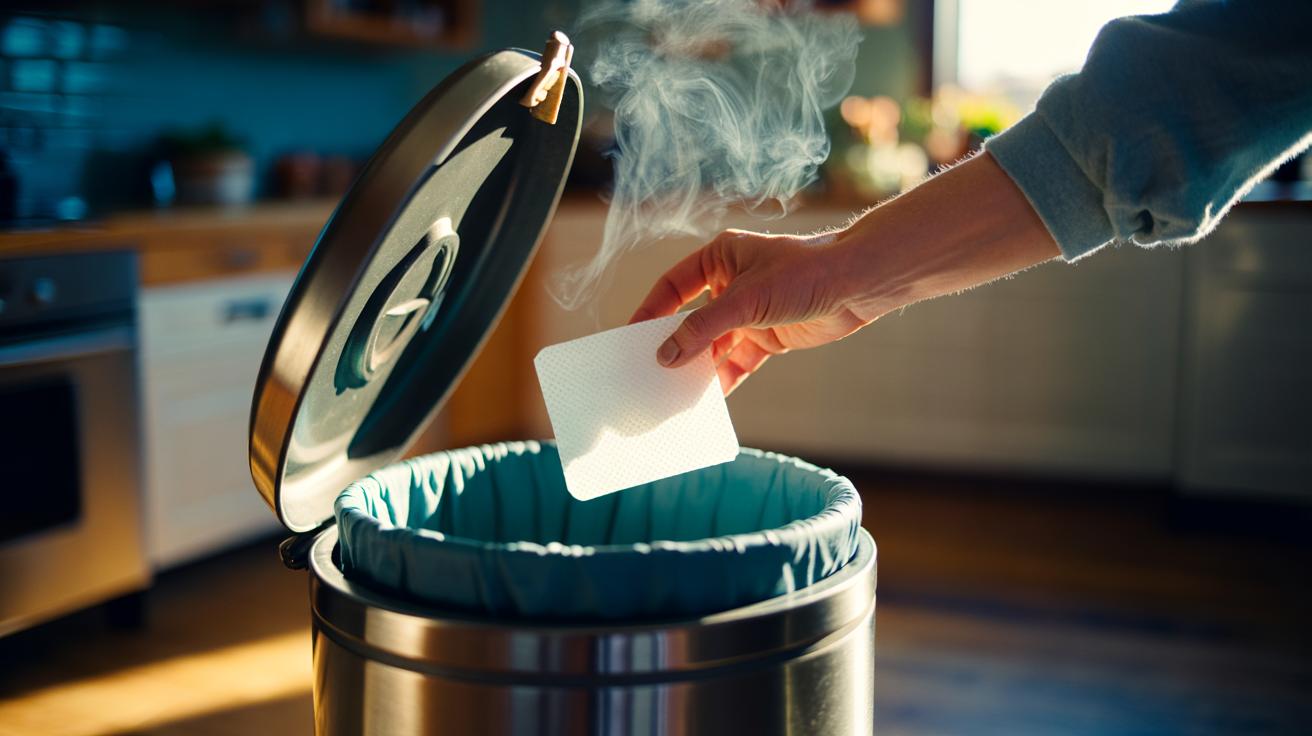
British households know the plight: a kitchen bin that smells long before collection day. The fix making waves is disarmingly simple — slip a dryer sheet into your bin liner and let the fragrance go to work. It’s cheap, quick, and requires no scrubbing. The science, not just the scent, is what makes it effective. Perfumed compounds disrupt our perception of malodours while certain ingredients trap the offending molecules. For many homes, the result feels instant. From student flats to family kitchens, this tidy trick is reshaping daily waste routines, curbing embarrassment and saving a few quid on fancy deodorisers.
How Fragrance Chemistry Stops Odours Instantly
Rubbish smells because volatile molecules — think sulfur compounds from onions, amines from fish, fatty acids from food waste — rise from the bag and hit your nose. A dryer sheet carries perfumed oils and softener agents that release a controlled plume of top, heart, and base notes. The immediate “top” notes are bright and fast, swamping the first whiff. Base notes linger, extending coverage. This is not just masking; it’s altering the odour landscape you perceive. Crucially, many modern fragrances include malodour counteractants designed to interact with specific stink molecules so they’re less detectable.
Some sheets also host carriers that adsorb or encapsulate odour molecules. Materials like porous starches or modified polymers can tuck away small volatiles, shrinking their reach. Meanwhile the cationic surfactants that soften fabric cling to the liner’s interior, where they hold fragrance close to the source. Air movement in the bin — every lid lift — pushes out a tiny scented “pulse,” renewing the effect. The outcome is twofold: rapid sensory relief and a slower, background neutralisation as malodours are bound or suppressed. That’s why the trick feels immediate and oddly persistent between bag changes.
A Simple Method: The Dryer Sheet Insert
Line the bin as normal, then drop a fresh dryer sheet flat at the bottom before adding waste. For swing-top or pedal bins, stick the sheet halfway up the liner’s interior using a small piece of tape; placing it higher keeps the fragrance closer to rising air. In a large wheelie, use two sheets at opposite sides. Replace when you swap the bag, or sooner after a particularly pungent load. If the bin smells strong on opening, add a second sheet immediately for a faster reset. It’s that straightforward.
Match the sheet to your space. Light, citrus scents suit small kitchens and don’t clash with cooking. For nappies or fish nights, a warmer base — amber, woody, powdery — tends to hold better. Sensitive noses? Choose low-allergen, lightly scented options. Keep sheets away from pets and children; do not compost or flush them. If you compost kitchen scraps, avoid placing a sheet in a caddy destined for the heap. Instead, reserve the trick for the general waste liner, where mixed refuse benefits most from fragrance and counteractants. Small habit, big payoff.
Measuring Results and Knowing the Limits
This hack excels with typical kitchen waste — peelings, packaging, takeaway boxes. It is less heroic when bins hold heavy protein residues, nappies, or shellfish, where ammonia and amines surge. Consider it a first line of defence, not a miracle cure. Clean the bin interior monthly, dry it fully, then reline with a new sheet. You’ll extend the fresh window dramatically. Combine with small behaviour tweaks: drain liquids from food containers, double-bag very wet waste, and shut lids promptly. Fragrance buys time; habits secure the win. Below is a quick guide to expectations and helpful add-ons.
| Waste Type | Expected Efficacy | Suggested Add-on |
|---|---|---|
| Veg peelings, coffee grounds | High | Paper towel layer to absorb moisture |
| Fish scraps, shellfish | Moderate | Seal in a small bag before binning |
| Nappies | Moderate to Low | Dedicated nappy sacks; frequent emptying |
| Takeaway packaging | High | Rinse residue; fold boxes flat |
| Garden trimmings (damp) | Moderate | Air dry first; ventilate lid if possible |
If odours persist even with a fresh sheet, inspect the bin rim, hinges, and lid seal; residue here often defeats deodorising. A quick wipe with washing-up liquid cuts grease films that hold smells. Then reapply your dryer sheet and monitor for 24 hours. If the smell lifts on opening but returns within minutes, the bin needs a full wash.
Choosing the Right Sheet and Scent for Your Home
Go for a trusted brand, but think practically. Strong perfumes can dominate small flats; a light citrus or cotton scent feels cleaner and interferes less with cooking aromas. For open-plan spaces, pick blends with soft base notes — musk or wood — because they linger without shouting. Hypoallergenic or dye-free sheets are sensible if anyone in the home is sensitive to fragrance. On costs, one sheet per liner adds pennies; multi-packs drive it lower. If you prefer a greener route, look for plant-based sheets engineered to biodegrade, though many still use synthetic carriers. Check labels and dispose in general waste.
Alternatives exist. Odour-neutralising bin pods, bicarbonate of soda sprinkled under the liner, or a reusable sachet filled with activated carbon all work. Yet the dryer sheet insert wins on convenience: it’s already in the cupboard, needs no setup, and kicks in fast. For pet households, store sheets safely; the softener actives are not for animals. If you keep a compost caddy, reserve this fragrance trick for the main bin to avoid contaminating organic waste streams. The best approach is a blend: smart routine, cleaner bin, subtle scent.
In homes battling whiffy liners, sliding a dryer sheet into the bag is a nimble, low-cost intervention that delivers immediate relief and steadier freshness through the week. The chemistry tackles perception and source, while practical placement maximises payoff without faff. It won’t fix a filthy bin or mask a seafood feast left overnight, but paired with small habits, it cuts odours dramatically. It’s a newsroom-tested hack with real-world legs. Will you try the sheet-at-the-bottom method tonight, or will you tweak the trick — taped to the side, doubled up for fish — to suit your own bin and routine?
Did you like it?4.5/5 (26)