In a nutshell
- 🧳 Musty suitcase odours stem from trapped humidity, ageing glues and VOCs; a simple dryer sheet overnight resets the air in confined luggage.
- 🔬 Fabric softeners work via cationic surfactants that cling to fibres and odour-capturing agents like cyclodextrins, releasing fragrance slowly while you sleep.
- 🛠️ Practical playbook: start with a dry case, place 1–3 dryer sheets (pouched for delicate fabrics), give it 8–24 hours, and boost results with a sachet of bicarbonate of soda.
- ⚠️ Sensitive options: choose fragrance-free sheets, activated charcoal, or light essential oils in a bag; address damp or mould first with a vinegar wipe and full drying.
- ♻️ Think greener and safer: reuse sheets, pick compostable alternatives, keep them away from heat and leather, and test linings to avoid residue.
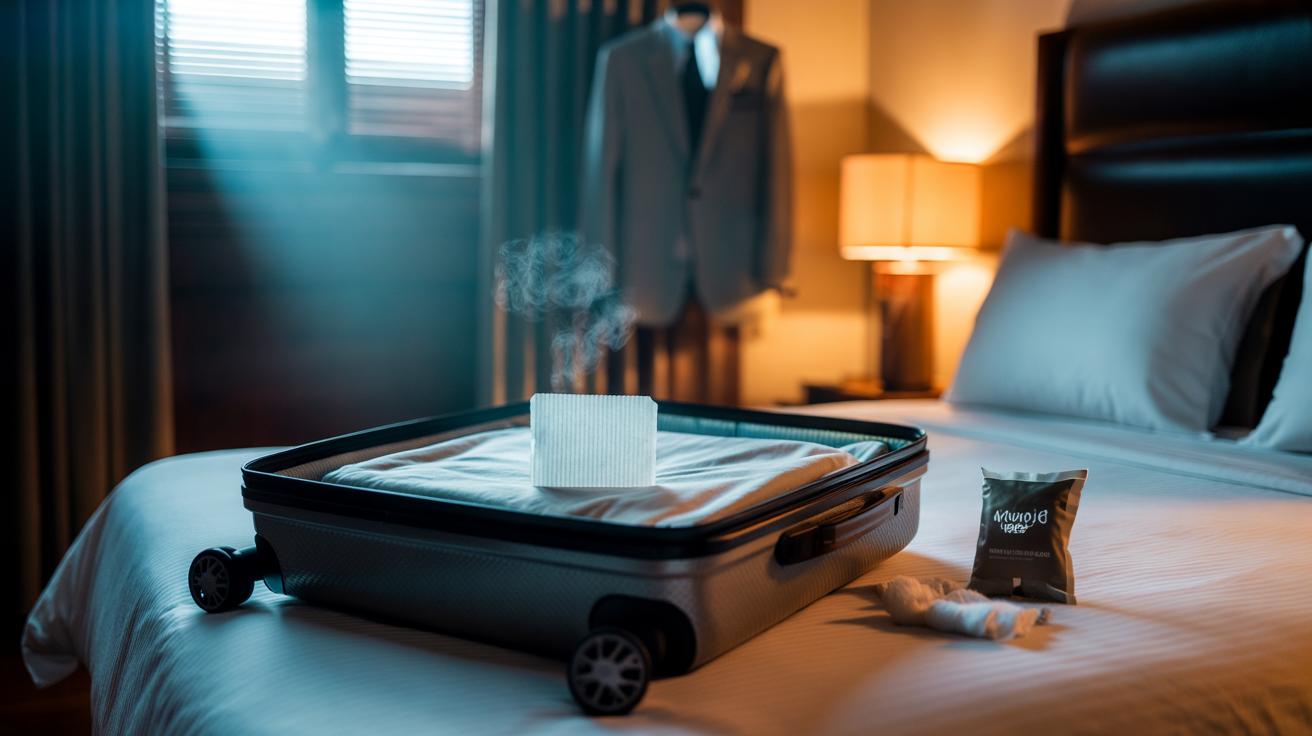
You crack open a suitcase after months in the loft and a stale, sour puff escapes. It isn’t dangerous, but it can cling to suits and dresses, dulling that first-day energy. Plenty of people swear by a simple hack: put a dryer sheet inside, zip it shut, and leave it overnight. By morning, the air smells brighter. The trick sounds like magic; it isn’t. It’s chemistry, airflow, and a pinch of patience doing quiet work while you sleep. Here’s how fabric softeners tame mustiness in confined spaces, why the tactic works especially well in luggage, and the small tweaks that turn a quick fix into a reliable ritual.
Why Suitcases Smell Musty
Suitcases are mini cellars. They trap micro-humidity from the last trip, hold onto skin oils from handles, and cradle forgotten boarding passes that off-gas papery odours. Over time, this closed ecosystem encourages the whiff we call mustiness, a bouquet largely driven by volatile organic compounds (VOCs) released by damp textiles, ageing glues, and the invisible residue of wear. Dark cupboards and lofts intensify it. Air stands still. Molecules accumulate. You get the aroma of disuse.
Hard-shell cases aren’t immune, either. Plasticisers and adhesives can leach faint scents that mingle with fabric lining odours. Soft-sided luggage, meanwhile, behaves like a sponge: fibres absorb ambient smells, then slowly release them when you unzip. Moisture is the villain’s sidekick—tiny amounts go a long way in transforming a clean case into a stale one. The result is not necessarily dirty, just unpleasant, and it can migrate into garments if ignored.
The good news? Mustiness is volatile by nature. Give those molecules something to bind with or mask them temporarily, and the smell fades fast. That’s where a single dryer sheet earns its keep.
How Fabric Softeners Neutralise Odours Overnight
Most dryer sheets are nonwoven carriers coated with cationic surfactants and fragrance. The surfactants—often quaternary ammonium compounds—are positively charged. They cling to negatively charged fibres in linings and clothing, smoothing static and helping distribute scent. In a closed suitcase, the sheet becomes a slow-release diffuser, steadily emitting fragrance molecules that outcompete stale air for your nose’s attention. Some formulations include odour-capturing agents such as cyclodextrins, ring-shaped molecules that can host small odour compounds inside their cavities. Others rely purely on masking with balanced top, heart, and base notes.
Why overnight? Time lets diffusion do its quiet work. As temperatures drift slightly while you sleep, microcapsules on the sheet can fracture or breathe, metering fragrance into the confined volume. The lining absorbs a whisper of softener, which helps anchor scent. Meanwhile, residual VOCs are diluted, adsorbed onto fibres, or simply displaced from prominence. Not eradicated—rebalanced.
The magic formula is simple: confined space + a portable fragrance reservoir + mildly adsorptive surfaces = fresher air by morning. It’s low effort, repeatable, and kind to travel-weary schedules.
Practical Steps: From Sheet to Suitcase
Start with a dry case. If it feels clammy, wipe the lining and leave it ajar for an hour. Place one dryer sheet in the main compartment and another in the zipped pocket near suiting. Close fully. For large checked luggage, two or three sheets work best; for a briefcase, half a sheet is enough. Overnight usually suffices, but 24 hours delivers a deeper refresh. To prevent residue on delicate fabrics (silk ties, cashmere), tuck the sheet inside a thin cotton pouch or an old handkerchief.
Want to go pro? Add a small open sachet of bicarbonate of soda—kept separate from clothes—to absorb background odours while the sheet adds a clean top note. Loosen compression straps so air can circulate. If the suitcase zip is airtight, leave it closed; if it’s older and leaky, position a sheet inside each compartment to even out coverage. Reuse each sheet two or three times until the fragrance fades.
| Sheet Type | Key Feature | Best For | Caution |
|---|---|---|---|
| Scented classic | Strong fragrance | Quick overnight refresh | May overwhelm sensitive noses |
| Fragrance-free | Static control only | Allergy-prone travellers | Less odour masking |
| Plant-based | Milder surfactants | Eco-conscious use | Shorter-lasting scent |
Alternatives and Caveats for Sensitive Travellers
If you dislike perfume, skip fragrance entirely. Pop in an activated charcoal pouch or a sachet of bicarbonate to passively absorb odours. A cotton ball with two drops of high-quality essential oil sealed inside a muslin bag offers a gentler scent, though essential oils can mark fabric if they escape. Always keep aromatic materials away from direct contact with garments you value. For persistent odours from genuine damp, clean the lining first: a light mist of 50:50 water and white vinegar, wiped and fully dried, resets the canvas before any freshening trick.
There are limits. Dryer sheets don’t cure mould; they distract the nose. If you see spots or smell a mushroom note, disinfect and dry thoroughly. Allergy sufferers should choose fragrance-free sheets or none at all, and those with asthma may prefer charcoal. Travelling with children? Store sheets inside a zipped pocket, not loose. And remember, hotel wardrobes can be mustier than your luggage; a spare sheet on the shelf keeps clothes crisp between meetings.
Sustainability And Safety Considerations
Classic dryer sheets are often polyester nonwovens. They’re convenient but not easily recyclable. To tread lighter, seek compostable or paper-based options, or reuse a single sheet multiple times until it’s inert. Small changes—like pairing one sheet with a reusable charcoal bag—dramatically reduce waste without sacrificing freshness. Dispose of used sheets with general rubbish, not down the loo. If you prefer refillable solutions, a tiny atomiser of fabric spray with odour-trapping technology can stand in for sheets and last a season.
Safety is simple: keep sheets away from heat sources, don’t place them on damp leather, and test on an inconspicuous lining spot if your case is new. Essential oils require extra care; citrus can stain, and clove is potent. Aim for light touch. The goal isn’t a perfumery in a suitcase, but a discreet reset that restores the neutral “new case” vibe before your next journey.
The overnight dryer-sheet trick works because it respects space, time, and chemistry. It’s cheap, quiet, and oddly satisfying when you unzip to a clean, confident scent. Whether you choose classic softeners, charcoal, or a minimalist rinse-and-dry reset, the principle remains: manage humidity, curate the air, protect the fabrics. Travel is demanding; your luggage doesn’t have to be. What’s your go-to strategy for keeping cases and carry-ons smelling fresh between trips, and which tweak would you try next time?
Did you like it?4.6/5 (23)