In a nutshell
- 🧪 The peel’s inner layer works fast because of saponins (natural surfactants), pectin (emulsifier), and cellulose fibres (micro-abrasion), with trace potassium salts boosting wetting and oil breakup.
- 🧼 Use methodically: apply to a warm pan, slightly dampen the peel, wipe in small circles then long strokes, and rinse; follow with washing-up liquid after animal fats for hygiene and compost the peel.
- 🍳 Compatibility matters: excellent on stainless steel and aluminium; gentle only on non-stick; cautious on cast iron/carbon steel to protect seasoning and avoid worn or blistered coatings.
- 🌱 Eco perks with caveats: cuts detergent and paper towels, is plant-based and compost-ready, but can smear if too wet, smells briefly of banana, and isn’t for burnt-on residues.
- ⚡ Real-world payoff: for light oil films it can rival a soapy sponge, delivering quick, low-waste degreasing using a kitchen scrap you already have.
It sounds like a parlour trick: rub a greasy pan with a banana skin and watch the slick vanish. Yet it works, and quickly. Under that mottled yellow jacket sits a chemistry set of fibres, natural surfactants and sticky polysaccharides that grab oil and lift it from metal. This hack isn’t magic; it’s materials science in your fruit bowl. When you understand why, you can do it better, faster, and without risking your cookware. From saponins to pectin, and from cellulose “micro-scrubbers” to trace potassium salts, here’s the evidence-led breakdown of why oil residues disappear so fast—and how to put the peel to work safely in your kitchen.
The Quick Science: How a Banana Peel Breaks Down Grease
Banana peels contain a trio that’s kryptonite to kitchen grease: saponins, pectin and cellulose. Saponins are plant molecules that behave like mild surfactants; they lower the interfacial tension between oil and water, helping droplets detach from pans. Pectin, a sticky polysaccharide, forms a gel-like film that can emulsify and trap oil microdroplets on contact. Then cellulose—particularly the fine fibres in the peel’s inner layer—adds gentle, non-scratching abrasion, physically lifting stubborn films without the harshness of steel wool. The result is a fast, one-two punch: chemical loosening followed by mechanical pickup.
Speed matters. Warm surfaces soften fats, and the peel’s mucilage spreads quickly, creating a wetting layer that penetrates thin oil films. Trace mineral salts, including potassium, increase ionic strength in the wipe film, subtly improving wetting and breakup. Phenolic compounds add a mild degreasing tang by altering surface energy at the oil–metal boundary. Together, these interactions mimic a diluted washing-up liquid—only plant-based and disposable in the compost caddy. That’s why a few swipes often outperform a dry paper towel and rival a soapy sponge for light residues.
| Peel Component | Primary Action on Grease | Why It Feels Fast |
|---|---|---|
| Saponins | Lowers surface tension; forms proto-micelles | Immediate detachment of oil film |
| Pectin | Gels and emulsifies droplets | Traps oil as you wipe |
| Cellulose fibres | Micro-abrasion; lifts residue | Physical pickup in seconds |
| Trace potassium salts | Improves wetting, breakup | Spreads cleaning film rapidly |
Step-by-Step: Using a Banana Peel to Clean Cookware Safely
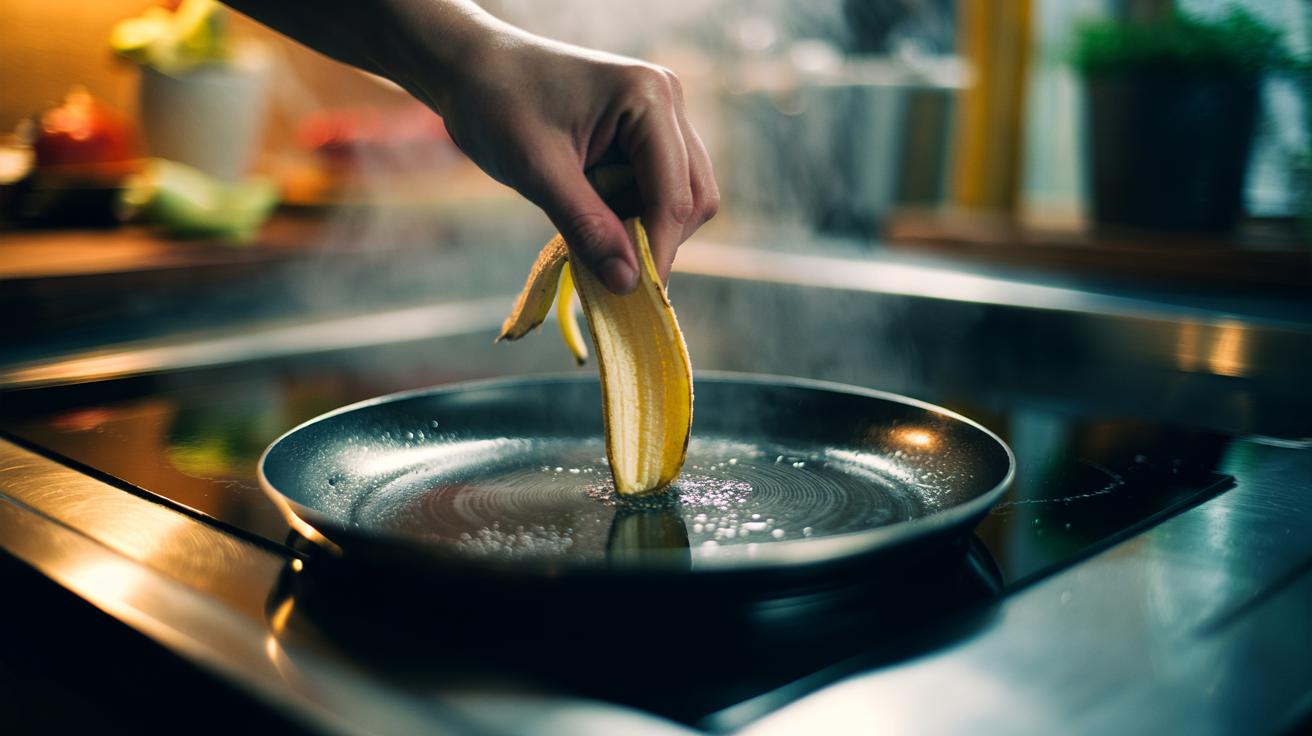
Start with a pan that’s cool enough to handle but still warm. Warmth softens fats, letting the peel’s compounds act fast. Flip the peel inner side out. Lightly dampen it—just a splash—so the mucilage activates without becoming slippery. Wipe with small circles, then long strokes from centre to rim. You’ll see the sheen dull as oil transfers to the peel. For baked-on patches, fold the peel to create a firm edge; it concentrates those cellulose micro-scrubbers without scratching. Refresh with a new section of peel as it loads with grease.
Finish wisely. For vegetarian or low-risk pans, a hot-water rinse may be enough. For meat fats or anything that touched raw protein, use a quick pass with washing-up liquid and hot water afterwards for hygiene. Dry immediately with a cloth to avoid water spots on stainless steel or dullness on aluminium. Do not attempt this on a smoking-hot pan; burns aren’t part of the experiment. Dispose of the peel in your food waste or compost—job done, bin spared. Optional bonus: rub a final pass on the outer rim and handle to remove fingerprint smears.
What Works Best: Metals, Non-Stick, and Cast Iron Compared
On stainless steel, the peel is a star. The smooth grain and chromium oxide layer let saponins do their thing, while pectin glides across without leaving haze. Stainless tolerates the gentle abrasion, so you’ll notice quick clarity when you rinse. If you’ve ever chased rainbow films across a pan, this is a neat alternative to vinegar. Aluminium responds similarly, though you should rinse promptly to avoid lingering plant acids that might mark a soft, uncoated surface.
With non-stick, be gentle. The peel’s inner fibres are soft, yet pressing too hard can abrade cheap or worn coatings. Use light strokes only. This method is excellent for eggy films and oil halos, but avoid working on blistered coatings; retire those pans instead. For cast iron and carbon steel, the calculus changes. The peel will remove free grease quickly, but it can also tug at immature seasoning. Use it only for day-to-day sheen removal, not for polymerised build-up; then wipe with a drop of oil to refresh. Seasoning intact, pan pristine—that’s the aim.
Eco Credentials and Hidden Downsides
There’s a satisfying circularity here: yesterday’s snack becomes today’s cleaner. You cut paper towel use, skip a squirt of detergent, and send the peel to compost, not landfill. Low-cost, low-waste, low faff. In homes with septic systems, reducing surfactant load is a quiet win. Plant-based cleaning often feels slower; this is a rare exception that is quick and tactile. It turns an unavoidable by-product into a useful, instant tool.
Downsides exist. Sticky pectin can smear if the peel is too wet or the pan too cool; just rinse hot and wipe dry. Overripe peels are softer and messier—effective, but untidy—while unripe, firmer skins scrub best. There’s a faint banana odour on contact; it vanishes after rinsing. And remember: this is for light to moderate oil, not burnt caramel or lacquered roasting trays. Use common sense, and pair with traditional cleaning when hygiene demands it. Think of the peel as a first responder, not the entire fire brigade.
With a little science in mind, the banana peel stops being a gimmick and becomes a targeted, tactile tool for everyday grease. It loosens, lifts and locks away oil in seconds, then exits via the compost with nothing left behind but a clean pan and a small sense of triumph. Saponins, pectin and cellulose do the quiet work; you just provide the swipe. So next time your skillet gleams with a stubborn sheen, will you reach for a peel before the washing-up liquid—and what other kitchen cast-offs might earn a place in your cleaning repertoire?
Did you like it?4.6/5 (29)