In a nutshell
- 🧪 Baking soda works fast on bathroom mould by being mildly hygroscopic (draws moisture), gently abrasive, and alkaline (about pH 8.3), which loosens the protective biofilm and neutralises musty odours.
- ⏱️ Five-minute method: ventilate, lightly mist, apply a 3:1 soda paste, wait five minutes, agitate with microfibre, rinse, and dry immediately; avoid mixing with vinegar, and extend to 10–15 minutes or follow with 3% hydrogen peroxide for tougher spots.
- 🧰 Tools and surfaces: fresh soda, spray bottle, two cloths, soft toothbrush, plastic scraper; tailored techniques for glazed tile, glass, grout, silicone, and acrylic; spot-test first and avoid raw marble or soft natural stone.
- 🌬️ Moisture control: keep relative humidity under 60%, run the extractor during and 20 minutes after showers, squeegee surfaces, cross‑ventilate, launder towels hot, refresh open bowls of soda, and seal grout or replace perished silicone.
- ⚠️ Limits and escalation: baking soda won’t fix deeply colonised grout or stained-through silicone; for black mould over ~1 m² or suspected leaks, seek professional help and consider ventilation upgrades.
Damp corners and steamy mirrors are perfect breeding grounds for bathroom mould, but there’s a low-cost fix hiding in your cupboard. Baking soda — also known as sodium bicarbonate — absorbs excess moisture, neutralises musty odours and scours away the biofilm mould clings to. Used properly, it acts fast. On tiles and glass, you can watch speckles fade as residue loosens under a gentle wipe. The trick is understanding why it works and how to apply it with intent. For many everyday patches, surface mould can appear to vanish in around five minutes when baking soda is used as a targeted, timed treatment. Here’s the science, the method and the prevention plan.
Why Baking Soda Tackles Bathroom Mould So Quickly
Think of baking soda as a triple-action ally. First, it’s mildly hygroscopic, meaning it draws in a film of water from damp surfaces. That matters, because mould’s foothold depends on available moisture. Second, its alkaline pH (about 8.3) disrupts the slightly acidic environment favoured by mould, helping to loosen the matrix that bonds spores to grout and sealant. Third, its fine crystals provide a gentle abrasive effect, lifting grime and the invisible biofilm that protects growth on hard, non-porous surfaces. The result: faster release, faster wipe-away.
On glossy tiles, glass and enamel, this combination often turns a stubborn-looking patch into a quick clean-up. You’re not bleaching; you’re detaching and depriving. That’s why odours ease too: the powder also adsorbs volatile compounds linked to mustiness. It’s honest chemistry, not a miracle. Deeply colonised grout or perished silicone may need more than alkalinity and abrasion. Yet as a first response to fresh outbreaks and condensation-driven speckles, sodium bicarbonate punches above its weight — especially when paired with good ventilation and prompt drying after showers.
The Five-Minute Method: Step-by-Step Instructions
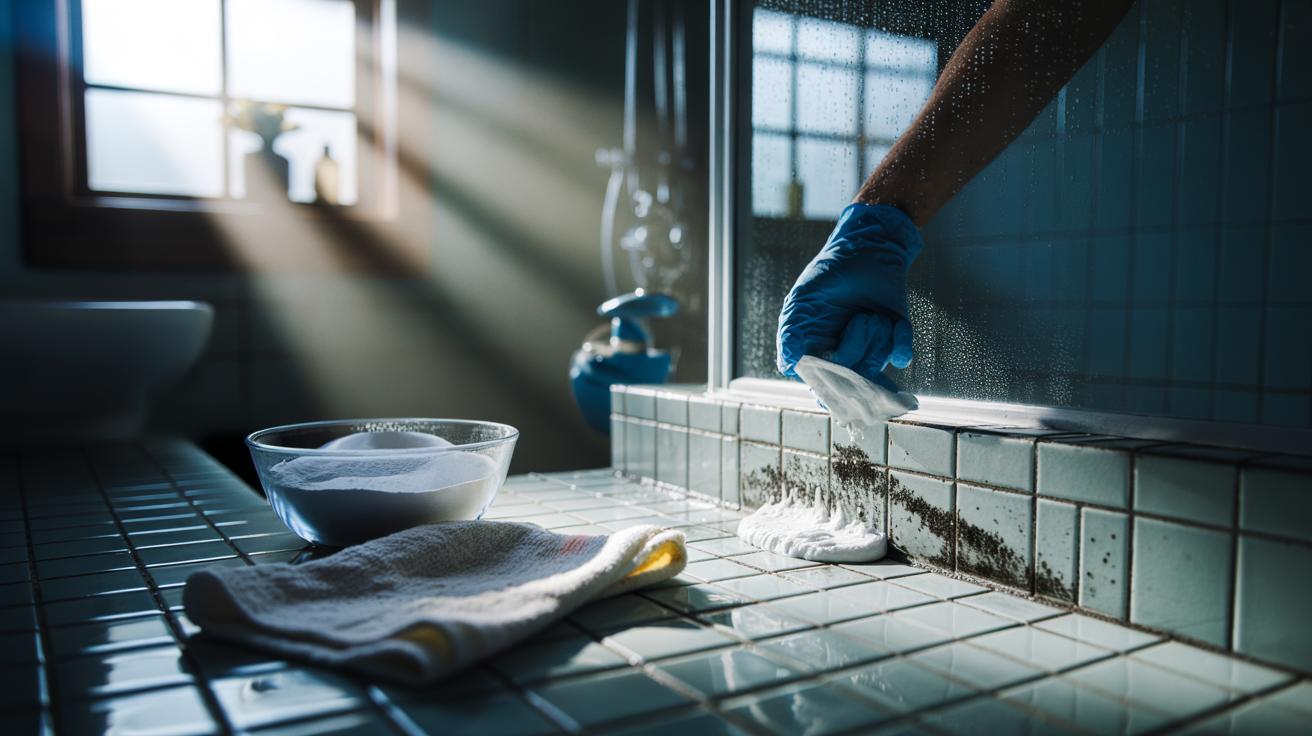
Start with airflow. Crack a window, switch on the extractor. Reducing ambient humidity while you clean improves results dramatically. Lightly mist the mouldy area with clean water; you want “damp”, not dripping. Sprinkle a thin, even layer of baking soda directly onto the patch. For vertical spots or silicone edges, make a thick paste (roughly 3 parts powder to 1 part water) and press it on with a gloved finger or soft brush.
Set a timer for five minutes. In that contact time, the powder draws moisture, raises pH and loosens the film binding the mould. For glass and glazed tile, gently agitate with a microfibre cloth using small circles. You’ll see the veil lift. Rinse with warm water and wipe dry immediately. Drying is non‑negotiable: if the surface stays wet, mould can rebound. Tough streak along silicone or textured grout? Reapply the paste and extend contact to 10–15 minutes, then agitate with a soft toothbrush. Avoid mixing directly with vinegar — the fizz is theatrical but neutralises the alkalinity you need for cleaning power.
Simple Tools, Ratios and Surface Guide
A little structure turns a cupboard staple into a reliable routine. Use fresh, clump-free sodium bicarbonate, a spray bottle of water, and two cloths (one damp, one dry). Keep a soft toothbrush for edges and a plastic scraper for limescale lines. Always spot-test on delicate finishes and avoid vigorous rubbing on high-gloss acrylics. Below is a quick guide for common bathroom materials and the typical dwell time that supports a five-minute turnaround.
| Surface | Mix Ratio (Bicarb:Water) | Contact Time | Technique | Notes |
|---|---|---|---|---|
| Glazed tile | Sprinkle dry or 3:1 paste | 3–5 mins | Light circular wipe | Rinse, then dry fully |
| Glass screen | Thin 3:1 paste | 5 mins | Microfibre only | Avoid gritty over-scrubbing |
| Grout (ceramic) | Thick 3:1 paste | 5–10 mins | Soft toothbrush | Seal after deep clean |
| Silicone sealant | 3:1 paste band | 5–15 mins | Dab, then wipe | Replace if stained through |
| Acrylic bath | Very thin paste | 3 mins | Feather-light wipe | Test small area first |
Do not use on raw marble or soft natural stone; the abrasion can dull the surface. For a hygiene boost after the soda step, mist 3% hydrogen peroxide, leave five minutes, then rinse and dry — an effective one-two for occasional deeper cleans without harsh bleach odour.
Beyond the Quick Fix: Moisture Control and Prevention
Cleaning wins the skirmish; prevention wins the war. Mould thrives when bathrooms sit above 60% relative humidity, so tackle the damp. Run the extractor during showers and for 20 minutes after. Keep the door ajar to encourage cross‑ventilation. A squeegee swipe on glass and tiles removes the thin water film mould needs. Treat moisture, not just stains, and you’ll clean less often. Place a shallow bowl of baking soda on a high shelf to absorb background odours and minor humidity; refresh fortnightly. Launder towels hot, and don’t leave them bunched on radiators.
If grout regularly darkens, consider resealing after a thorough clean; sealed grout resists absorption, making five-minute maintenance genuinely feasible. Check silicone: if it’s stained through, replace it — no cleaner can rescue perished rubber. For persistent black mould covering more than a square metre, or if you suspect leaks behind walls, consult a professional and investigate ventilation upgrades. Realistic habit shifts, paired with soda’s quick action, turn the bathroom from perpetual chore to manageable routine, saving money and preserving that clean, crisp, post-shower feel.
Baking soda earns its reputation because it’s simple, safe on most hard surfaces and fast when time is tight. It absorbs moisture, lifts the film, and lets you wipe away the problem before it spreads. Pair that with smart airflow and quick drying, and the five-minute clean becomes a weekly reality rather than a hopeful promise. The goal is consistency: short, regular interventions beat occasional blitzes. What would change most in your bathroom — a sharper extractor fan routine, a fresh bead of silicone, or keeping a jar of baking soda within easy reach for instant action?
Did you like it?4.6/5 (27)