In a nutshell
- 🍌 Banana peels rich in glucose, fructose, and sucrose feed microbes, raise heat via microbial respiration, and jump-start rapid decomposition.
- 🌬️ Chopped peels add fibrous structure and micro-air pockets; pairing with shredded cardboard boosts oxygen flow and keeps odours in check.
- ⚖️ Aim for a 2:1 browns-to-greens mix by volume to maintain a healthy carbon-to-nitrogen balance and sponge-like moisture.
- 🔧 Best practice: add small, frequent portions, cap with browns, and monitor heat and scent; if slimy or ammonia-smelling, add browns and re-aerate for aerobic activity.
- 🌱 Result and caution: sugars spark the thermophilic phase, fungi finish the job into stable humus; compost peels in a bin, not buried whole, to avoid pests and uneven decay.
Banana skin ignites composting. Not literally, of course, but the phrase captures a truth gardeners swear by: natural sugars in banana peels act like kindling for a tired heap. When those sugars touch a community of hungry microbes, the whole system stirs. Heat rises. Smells shift from stale to sweet-earthy. Texture loosens. A simple kitchen scrap can accelerate the journey from food waste to friable humus. This isn’t folklore. It’s biochemistry you can observe with a hand on the hot core of your bin. Here’s how one peel, handled well, can spark a bigger transformation than you might expect.
Why Banana Skin Supercharges Compost
A fresh banana peel is a compact package of glucose, fructose, and sucrose, plus pectins and readily digestible fibres. These simple sugars are prime fuel for bacteria and yeasts that drive the early, fast phase of decomposition. They burn through the sugars, release heat through microbial respiration, and multiply rapidly. Temperature climbs. Enzymes proliferate. Laggard cellulose and hemicellulose begin to unlock. That early heat pulse is the difference between a sluggish pile and a living reactor. Sugar acts as a starter, much like a pinch of demerara in a yeast dough; it doesn’t feed the entire loaf, but it gets the rise going.
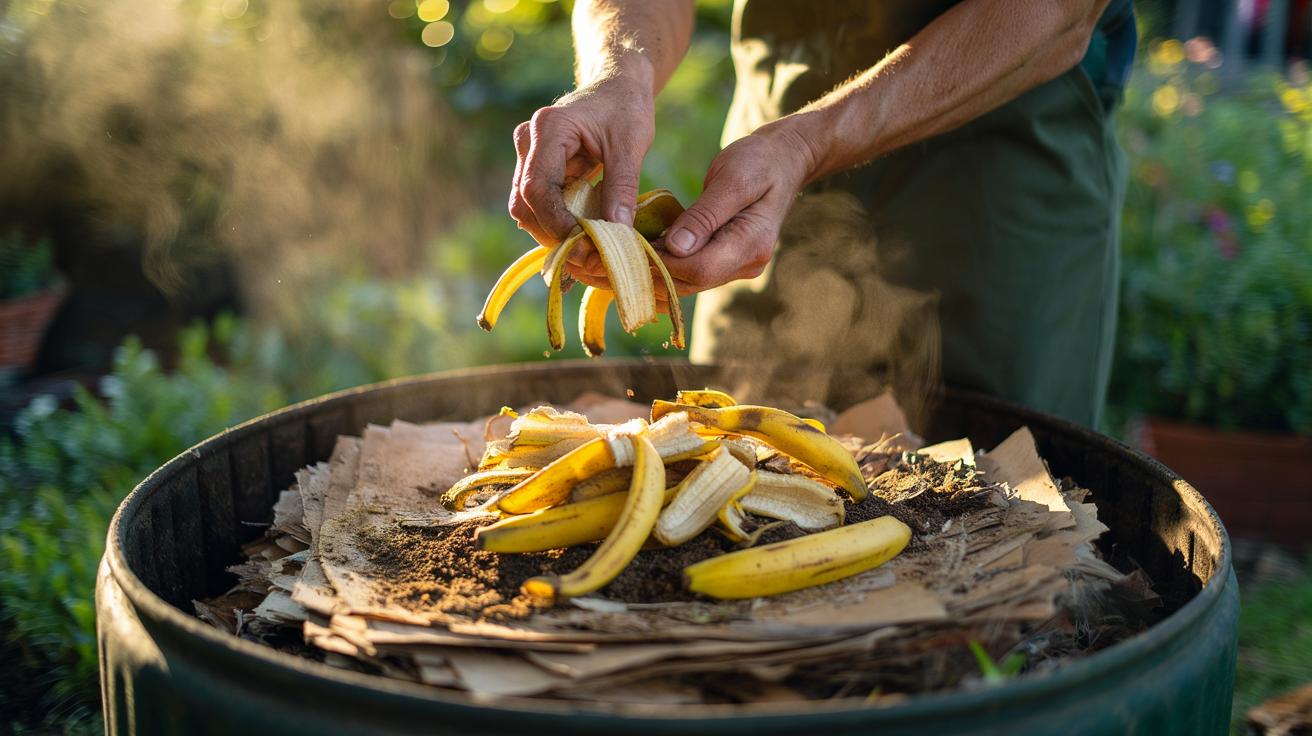
There’s also structure. Banana skin is flexible yet fibrous, so when chopped, it creates micro-pockets where air lingers. Oxygen matters. Aerobic microbes dominate and odours stay in check. Add the peel with a handful of shredded cardboard and you deliver both energy and airflow, a one-two punch that helps the heap move swiftly into its thermophilic stride.
From Sugar Rush to Stable Humus
The early “sugar rush” hands the baton to a broader cast of decomposers. As the easy carbohydrates vanish, fungi and actinomycetes deploy exoenzymes to tackle tougher polymers. Pectin softens. Cellulose loosens. Lignin resists, but it yields at the edges, especially in a hot, well-turned bin. Sugars do not finish the job; they start the choreography and set the tempo. This progression matters because end-product quality—dark, crumbly, stable humus—depends on a complete succession of microbes, not just a brief flare of activity.
Balance is the art. Kitchen scraps, including banana peels, count as “greens” in composting shorthand, rich in moisture and relatively available nitrogen. To avoid a sticky mat and anaerobic pockets, pair peels with “browns” such as straw, dry leaves, or shredded paper. Keep moisture like a wrung-out sponge. Turn lightly. If the heap smells sour or looks slimy, you’ve overfed the sugars; add carbon-rich browns and fluff the mass. The goal is a steady arc: hot, then warm, then curing—never a wet slump.
| Component | Primary Role in Compost | Effect on Speed |
|---|---|---|
| Glucose/Fructose | Feeds fast-growing bacteria | Rapid heat rise; quick start |
| Sucrose | Supports yeasts and bacteria | Boosts early enzyme output |
| Pectin | Fungal substrate as sugars fade | Sustains mid-phase breakdown |
| Minerals (K, Ca) | Aids microbial function; soil nutrition | Indirect support; improves end product |
Practical Ratios, Timing, and Troubleshooting
Think in layers and timing. Chop banana peels into postage-stamp pieces to increase surface area, scatter them widely, then cap with a dry, carbon-rich layer—shredded cardboard is ideal. Aim for an overall carbon-to-nitrogen balance that keeps the heap lively but not sticky. In practice, that means two parts browns to one part greens by volume. Small, frequent additions beat occasional dumping. They prevent clumps, maintain airflow, and keep the microbial workforce consistently supplied without overwhelming it.
Watch signals. A warm middle and earthy scent? You’re on track. Ammonia whiff or slime? Stir in browns and fork the heap to reintroduce oxygen. If the pile won’t heat, a banana peel can be the nudge: add a handful of peels, moisten lightly, and re-cap with browns. In cold snaps, the sugars can help push the heap into the thermophilic phase sooner, shortening the path to curing. Resist the meme of burying whole peels near plants; they decompose unevenly and can attract pests. The bin or hot heap is their best stage.
Handled smartly, banana skin is more than a token toss; it’s a reliable accelerator that feeds microbes, raises temperature, and ushers waste towards mature compost with fewer hiccups. The trick is balance: energy from sugars, structure from browns, and oxygen throughout. Keep your additions small, your mix airy, and your eye on smell and heat. Do that, and your compost will sprint, not shuffle, to the finish line. What simple tweak—smaller chops, better layering, or a steadier cadence of scraps—will you try this week to make your heap run hotter and finish faster?
Did you like it?4.5/5 (25)