In a nutshell
- 🍌 Banana peels deliver a swift potassium pulse that supports turgor, colour, and resilience in roses, while sugars energise soil life for quick nutrient movement.
- 🧪 Overnight decay is microbe-driven: enzymes unlock sugars, soluble ions diffuse, and the rhizosphere becomes busier—fast K release, slower P availability, modest N.
- 📊 Peels are potassium-forward but not a complete feed—pair with compost and a balanced fertiliser to meet nitrogen and phosphorus needs.
- 🛠️ Best practice: chop and bury peels 10–15 cm deep under mulch to deter pests; prefer hot composting or bokashi over unreliable “banana teas.”
- 🌿 Build a sustainable regime with mulch, comfrey or seaweed for trace elements, sensible watering and pruning—and test results by running a simple side-by-side garden trial.
A discarded banana skin on a pavement is pure slapstick. In a flower border, though, that same banana peel can be quiet alchemy. Gardeners have long whispered that a peel tucked under mulch helps roses pop with colour by morning. The kernel of truth? Soft fruit tissues decompose at speed, and their soluble nutrients begin to move almost immediately once moisture arrives. Not a miracle. A process. As microbes wake and feed, they release ions and acids, nudging nutrients into the rhizosphere where roots are most active. The real story is how overnight decay primes soil life, which in turn feeds plants. Used well, this homely scrap becomes a tiny, targeted boost rather than a gimmick.
Why Banana Peels Boost Roses
Roses crave balance, but they particularly appreciate potassium during bud formation and flowering. Potassium helps regulate stomata, keeps petals turgid, and supports disease resilience, which is why rose feeds often carry a higher K number. Banana peels are naturally rich in K, and because much of it sits in cell sap, it leaches readily once tissues break down. That gives a swift nudge to plants already on the brink of blooming. The peel’s soft cellulose and residual sugars do something subtler too: they energise soil microbes around the root zone, creating a bustling, oxygenated interface that improves nutrient exchange.
None of this replaces a full feeding regime. Peels are light on nitrogen and middling in phosphorus, so they won’t build stems or drive repeat flushes by themselves. Think of them as a strategic garnish atop sound horticulture: watering at the base, steady organic matter, and timely pruning. Quick fixes rarely beat good soil care, but small, well-placed boosts can tilt a rose from good to glorious. Used sparingly, peels can brighten bloom quality, thicken canes over time, and help plants ride out brief dry spells with fewer sulks.
From Slip to Soil: The Science of Overnight Decay
Banana peels are soft, thin, and rich in easily metabolised compounds. That means microbes—bacteria, yeasts, and fungi—colonise them fast. Within hours of contact with damp soil, enzymes begin unlocking sugars, while naturally occurring acids loosen cell walls. As the peel softens, water infiltrates and soluble ions diffuse outward. In moist, warm soil, the first flush of nutrients can arrive within hours. Potassium, which moves freely in solution, is typically first out of the gate. You won’t rewrite the plant’s nutrient ledger in a night, but you can create a brief, useful pulse where roots are active.
Not all elements sprint. Phosphorus often binds to soil particles, especially in calcareous or heavy UK clays, so it trickles rather than floods. Nitrogen in peels is modest; step-changes in growth demand more than a skin can supply. Still, the microbial stir matters. Respiring microbes produce carbon dioxide that can shift soil pH microsites, subtly improving nutrient availability. Worms get involved, dragging fragments downward and mixing them with mineral particles. By morning, you won’t see much change above ground, yet the rhizosphere will be busier, warmer, and marginally richer in accessible K—just enough to improve a tight bud’s confidence.
What Banana Peels Really Provide
Garden myths thrive on vagueness, so here are grounded expectations. Banana peels deliver a potassium-forward hit, with modest calcium and magnesium, very little nitrogen, and trace micronutrients. Values vary by variety and ripeness, and whether you consider fresh or dried peel. The headline remains: fast K, slow everything else. That is helpful for bloom quality and stress resilience, but it is not a complete feed. Think stimulus for microbes and petals, not a one-stop fertiliser. Use the peel as part of a wider nutrition plan built on compost and balanced fertilisers.
| Nutrient/Component | Typical Peel Content | Role for Roses | Availability Speed |
|---|---|---|---|
| Potassium (K) | High (notably 3–5% dry basis) | Flower quality, turgor, stress tolerance | Fast (hours–days) |
| Phosphorus (P) | Low | Root energy and bloom set | Slow (weeks; soil-bound) |
| Calcium (Ca), Magnesium (Mg) | Low–moderate | Cell strength, chlorophyll function | Moderate (days–weeks) |
| Micronutrients (Mn, Zn, Cu) | Trace | Enzyme activators | Variable (trace availability) |
| Sugars/Carbon | Present | Feeds microbes, improves structure | Immediate to fast |
Interpreting the table, the peel’s value lies in synergy: a small K pulse alongside microbial stimulation that slightly improves nutrient cycling. Pair it with compost to add bulk organic matter, and with a rose-specific feed to cover nitrogen and phosphorus. It is helpful, but it is not a balanced fertiliser. Consider it the espresso shot, not the breakfast.
Safe Methods, Myths, and Sustainable Alternatives
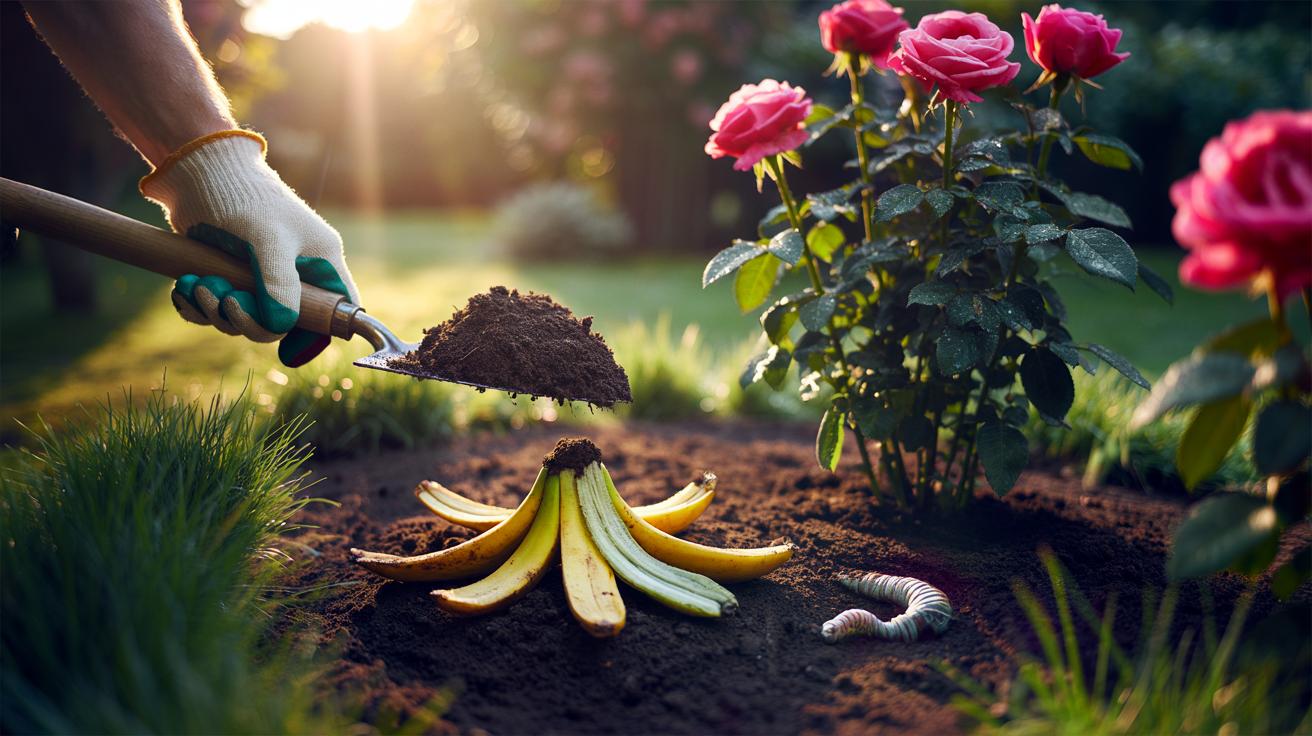
First, practicality. Chop peels into postage-stamp pieces and bury them 10–15 cm deep, just beyond the drip line. This keeps foxes, rats, and slugs from treating your border like a buffet and positions the peel where feeder roots roam. Water the area if conditions are dry. Under mulch, decomposition is quicker and odour-free. If you must place a peel on the surface, cover it well; exposed skins can mould, attract pests, and look unsightly in a tidy British garden.
Better still, pre-process. Add peels to a hot compost heap for safer, more uniform nutrition, or use a sealed bokashi system to ferment, then bury. Banana “teas” made by steeping peels in water are fashionable but inconsistent, with low nutrient density and high potential for anaerobic stink. Do not rely on banana peels alone for nutrition. Roses respond best to a measured, balanced fertiliser in spring, a light summer top-up, and steady organic matter that keeps soil spongy and alive.
Round the system out with mulch—well-rotted manure or compost—to conserve moisture and moderate temperature swings. Consider sustainable allies such as comfrey liquid for K, seaweed extracts for trace elements, and green manures over winter. Check pH if blooms underperform; locked-up nutrients often masquerade as deficiencies. And remember the obvious: sunlight and water. Peels are polish. The fundamentals deliver the shine.
The old joke about a banana peel slip hides a gardener’s truth: soft fruit waste, handled wisely, can sharpen a rose’s performance precisely when buds tighten and colour swells. Overnight, microbial gears turn. Potassium moves. The soil breathes a little easier. None of it replaces thoughtful feeding, mulching, and pruning, yet the effect is tangible enough to earn its spot in a thrifty toolkit. Why not run your own backyard trial—one bed with chopped peels under mulch, one without—and track bloom count, size, and fragrance over a month to see what difference you discover?
Did you like it?4.5/5 (26)