In a nutshell
- 🍌 The banana peel patch offers a plant-based boost: rich in polyphenols, lutein, and trace vitamin C that may calm inflammation and oxidative stress in bruised skin.
- 🧪 Antioxidants help mop up free radicals from haemoglobin breakdown, while the peel’s natural lipids create a gentle occlusive barrier that soothes and protects overnight.
- 🩹 How to use: clean skin, apply the inner peel, secure lightly, start with 20–30 minutes, then consider overnight; avoid broken skin and patch-test if banana-sensitive.
- 📊 Science snapshot: peels are antioxidant-rich, but clinical evidence for bruises is limited; plausible mechanisms exist, yet “overnight cure” claims remain anecdotal.
- ⏱️ Expectations matter: minor bruises may look softer by morning, deeper ones take days; seek medical advice for severe, unexplained, or frequent bruising, especially on blood thinners.
Waking up to a violet bloom on your shin is a familiar nuisance. Among the homespun fixes whispered across Britain, the humble banana peel patch is enjoying a revival. The claim is simple: hold the soft inner peel against the skin and let nature’s antioxidants get to work while you sleep. It sounds quaint, even cheeky, yet there’s a kernel of chemistry behind the folklore. Peels are rich in polyphenols and soothing oils that may calm the storm of a bruise. It’s not magic, it’s biology meeting patience. Here’s how it might help, what’s inside the peel, what to try at home, and what science still needs to prove.
What’s Inside a Banana Peel?
Under the bright jacket of a banana sits an overlooked pharmacy. The peel holds a cocktail of polyphenols (including catechins and tannins), carotenoids such as lutein, and trace amounts of vitamin C. It also carries natural waxes and lipids that form a light occlusive film. These compounds are known for their antioxidant capacity—neutralising reactive oxygen species that accumulate after tissue is knocked and capillaries leak. Those molecules don’t erase a bruise instantly, but they may smooth the path toward recovery. The inner peel is also cool to the touch, which can feel relieving in the first day after a bump.
To frame the essentials clearly, here’s a simple snapshot of the peel’s key constituents and why they matter for discoloration and tenderness:
| Compound/Class | Role in Skin |
|---|---|
| Polyphenols (catechins, tannins) | Scavenge free radicals, may temper inflammation |
| Lutein and other carotenoids | Support defence against oxidative stress in superficial tissues |
| Trace vitamin C | Assists collagen maintenance, helps normal capillary integrity |
| Natural lipids/waxes | Provide a gentle occlusive barrier to retain moisture |
Put together, the peel offers a modest, plant-based toolkit. Think of it as a supportive dressing—cooling, protective, antioxidant—rather than a silver bullet. That distinction matters when expectations run wild on social media.
How Antioxidants May Diminish a Bruise
A bruise begins with microtears in capillaries. Blood pools under the skin; haemoglobin breaks down into a parade of colours; inflammation and oxidative stress follow. The inner banana peel, pressed as a soft patch, could assist in two ways. First, its antioxidants may mop up reactive by‑products generated as red blood cells degrade, potentially easing local irritation. Second, the peel’s slightly waxy surface acts like a breathable dressing, preserving moisture and sheltering fragile tissue from friction while you toss and turn.
There’s also the calm of contact. Coolness dulls discomfort. Gentle occlusion reduces transepidermal water loss, supporting the skin’s overnight repair rhythms. As macrophages clear debris and iron pigments, a less inflamed environment may look less angry by morning. Antioxidants do not “dissolve” a bruise, but they can nudge the healing milieu in your favour. Pairing the peel with sensible timing helps: cold compresses in the first 24 hours remain useful for swelling; the peel patch can be a later, soothing adjunct.
Importantly, context is king. The size of the bruise, depth of tissue injury, and your own circulation dictate results. A minor knock on the forearm might show a softer edge after one night. A deeper thigh contusion? Expect days, not hours, no matter the plant power.
How to Try a Banana Peel Patch Safely
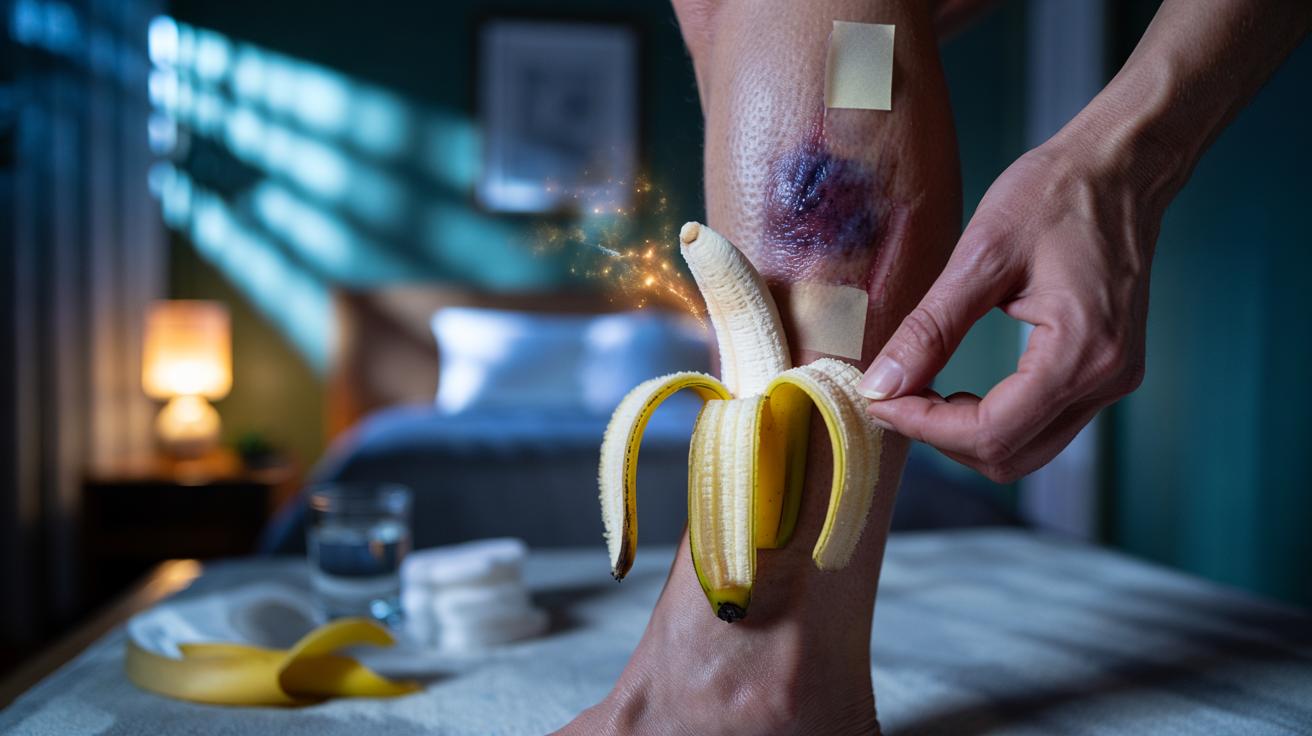
Start clean. Choose a ripe, yellow banana with minimal blackening; wash the peel to remove residues. Cut a section slightly larger than the bruise and place the soft inner side against your skin. Secure it gently with paper tape or a light gauze wrap—snug, not tight. Begin with 20–30 minutes to check comfort, then consider overnight use if all feels well. Never apply to broken skin, rashes, or stitches. When you remove the patch, rinse with lukewarm water and pat dry. A simple, fragrance‑free moisturiser can follow to lock in hydration.
Allergies exist. People sensitive to latex-like proteins or bananas may react, so patch-test on the inner forearm for 15 minutes before a full application. If stinging, redness, or swelling appears, stop. Keep the peel out of direct sunlight while on the skin to avoid photosensitivity concerns, however small. And remember the basics of bruise care: rest the area if tender, consider a brief cold pack on day one, and elevate if swelling is noticeable. If bruising is severe, unexplained, or frequent—especially if you take blood thinners—seek medical advice. In short, be gentle, be observant, and let the peel play a supporting role.
What Science Says and What We Still Don’t Know
Laboratory studies consistently show banana peels are rich in antioxidants, with measurable polyphenol and carotenoid content. That’s solid groundwork. Yet direct clinical trials on bruises are scarce. We lack randomised comparisons between peel patches and standard care, so claims of “overnight” transformation belong in the anecdotal column. The plausible mechanism is there; the gold‑standard evidence is not—yet. This gap doesn’t invalidate the practice, but it should temper certainty and encourage curiosity-driven trials.
For now, the peel sits alongside other low‑risk comfort measures. Its advantages are accessibility, a kind occlusive effect, and a biochemistry that aligns with the biology of bruise resolution. Its limits are equally clear: depth of injury, individual variability, and time. Researchers could easily design small, pragmatic studies—measuring colour change, pain scores, and time-to-resolution—to test whether a banana peel patch adds quantifiable benefit. Until then, think of it as a gentle nudge rather than a clinical intervention. Evidence evolves; folk wisdom either earns its stripes or yields to better ideas. That is how good health journalism—and good science—keeps us honest.
By the time the kettle boils tomorrow, your bruise might look a touch softer, your skin a shade calmer, thanks to a plant’s quiet chemistry. It’s a modest win, not a miracle. If you enjoy low-cost, low-risk care rituals, the banana peel patch has a place in the bathroom cabinet, somewhere between the cold pack and the plaster. Treat it as supportive care, observe your skin carefully, and seek help when the signs point to something more serious. What would you want a rigorous UK trial to measure first: speed of colour change, tenderness, or simple next‑day confidence in the mirror?
Did you like it?4.6/5 (26)