In a nutshell
- 🧪 The science: baking soda (sodium bicarbonate) is amphoteric, neutralising both acids and bases while reducing VOCs via rapid surface adsorption—hence odours fade in seconds.
- ⚡ Fast method: sprinkle a thin, even layer, light brush-in, slight dampness only, then allow 15–60 minutes (overnight for pets) and vacuum slowly with a HEPA-equipped machine.
- 📊 Practical guidance: the article includes a simple dosage and dwell-time table for mustiness, spills, pet accidents, and smoke, making results predictable and repeatable.
- 🐾 Stubborn smells: blot fresh messes, repeat cycles, and pair bicarbonate with enzyme cleaners for old pet stains; for smoke, pre-mist, dust, dwell, and repeat to lift residues.
- 🛡️ Safety and care: always patch-test wool/dyed fibres, avoid vinegar fizz on carpet, protect your vacuum by cleaning filters/bags, and store bicarbonate airtight for reliable, fragrance-free freshness.
There’s a reason every British kitchen cupboard hides a box of baking soda. Sprinkle it on a musty carpet and the smell seems to vanish, fast. Not a perfume trick. Something smarter. In seconds, fine crystals begin trapping and neutralising odour molecules that drift up from fibres and padding. The process is quiet, almost invisible, but powerfully effective. For busy homes with pets, spilled tea, or damp shoes, it’s a low-cost rescue that rivals pricey sprays. It doesn’t cover up odours; it takes them out of circulation. Here’s how that deodorising magic works—and how to deploy it like a pro.
Why Baking Soda Neutralises Nasty Odours
At its core, baking soda is sodium bicarbonate, a mildly alkaline compound with a rare talent: it’s amphoteric. That means it can react with both acids and bases, nudging smelly molecules toward a more stable, less volatile state. Many carpet odours come from weak acids (soured milk, sweaty feet) or alkaline residues (old urine turning to ammonia). The bicarbonate ion buffers these extremes, reducing the release of volatile organic compounds (VOCs) into the air. Result: fewer stink molecules reach your nose.
Equally important is adsorption. Those powdery crystals have loads of microscopic nooks. Odour molecules hitch a ride onto the surface, held by weak forces while chemical neutralisation gets to work. Humidity helps: a thin moisture film dissolves some compounds, making reactions faster. That’s why a light misting before sprinkling can speed things up. If you’ve ever noticed a smell fading within seconds of dusting the carpet, you’ve witnessed top-layer VOCs being trapped almost instantly. Deeper contamination takes longer, but the first impression changes quickly.
How to Use It for Fast Results
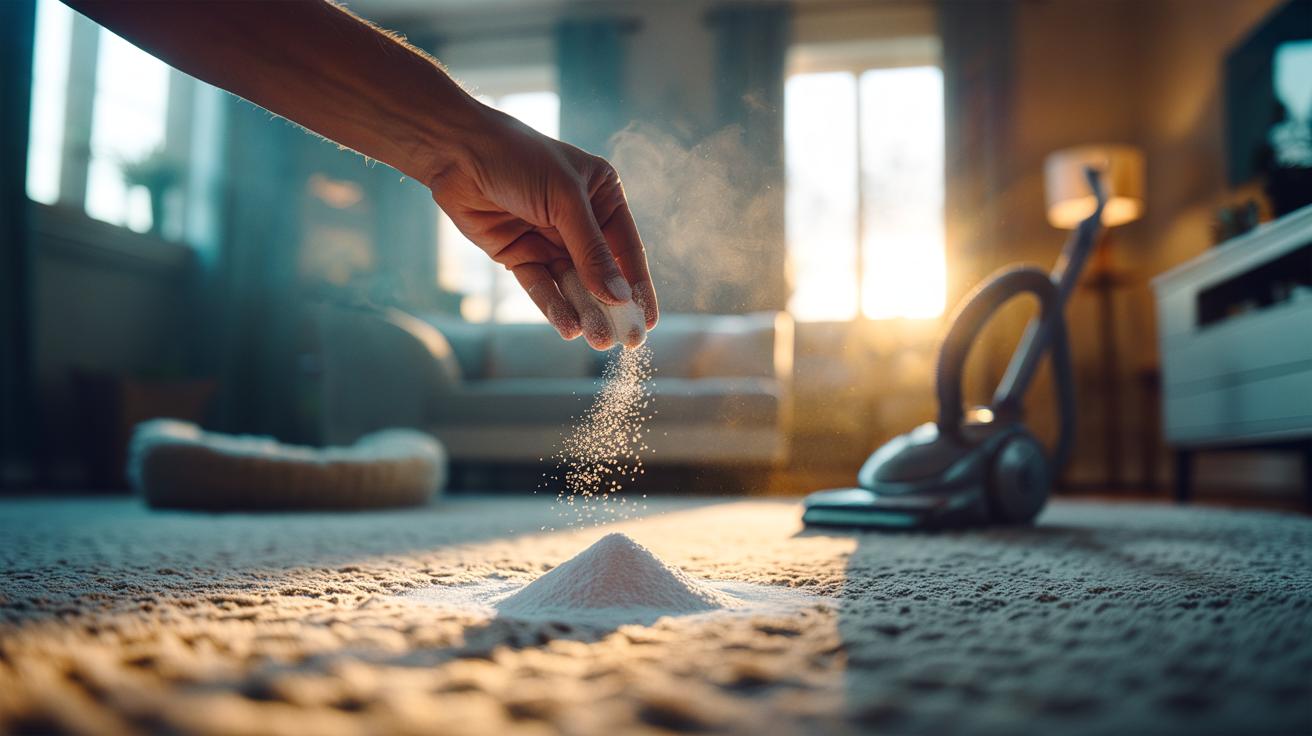
Speed matters. For a quick refresh, sprinkle a thin, even layer of baking soda across the affected area, then gently work it in with your fingertips or a soft brush. Open a window to keep air moving. You’ll often sense a difference within moments as surface odours are captured. For persistent smells, add dwell time: 15–60 minutes for routine freshness; overnight for pet or spill problems. Vacuum slowly to lift powder from the base of fibres. Use a clean bag or a vacuum with a HEPA filter to prevent fine dust from recirculating. Don’t drench carpets first—slight dampness is ideal, but wet clumps slow the process.
Here’s a simple guide for dosage and timing:
| Odour Source | Suggested Amount | Dwell Time | Notes |
|---|---|---|---|
| Everyday mustiness | 1–2 tsp per m² | 15–30 min | Light brush-in; quick vacuum |
| Spilled drink (dried) | 1 tbsp per m² | 45–60 min | Spot treat; allow airflow |
| Pet odour (fresh) | Heavy sprinkle | Overnight | Blot moisture first |
| Smoke residue | Moderate sprinkle | 2–4 hours | Repeat over several days |
Tackling Stubborn Smells: Pets, Smoke, and Spills
Not all odours are equal. Pet accidents change chemistry as they dry, producing alkaline ammonia. Baking soda excels here because it buffers high pH while limiting VOCs that trigger that eye-watering tang. Start by blotting the damp patch thoroughly. Apply a fresh sprinkle, work it in, and give it time—overnight is ideal. Vacuum, then repeat if the pong persists. For old stains deep in the underlay, pair bicarbonate with an enzyme cleaner; enzymes digest the organic source, while soda tackles the fumes.
Smoke is different. Tarry particles cling to fibres and backing, so results improve with repetition. Dust, dwell, vacuum, then do it again tomorrow. A gentle pre-mist with water or a 50:50 isopropyl and water spritz (patch-test first) helps release residues for better adsorption. Spilled milk or wine? Neutralisation and odour capture are faster if the area is first blotted, then lightly misted to activate dissolution on the fibre surface. Always finish with a slow, thorough vacuum to extract powder and the smells it holds.
Safety, Surfaces, and Small Print
Baking soda is benign, but carpets vary. Wool and richly dyed fibres demand a patch test in a hidden corner—check for texture changes after drying. The powder is mildly abrasive; on delicate sisal or seagrass, use a lighter hand and shorter dwell times. Never mix soda directly with strong acids like vinegar on the carpet; you’ll just make CO₂ fizz and water, then push moisture deeper. Keep it simple: apply dry (or on slightly damp fibres), let chemistry and adsorption work, then vacuum well.
Mind your vacuum. Fine powders can clog filters and bags. Fit a fresh bag, empty the canister promptly, and clean or replace filters to maintain suction. Store your bicarbonate in an airtight tub—ambient humidity slowly consumes its capacity. Environmentally, it shines: non-toxic, fragrance-free, recyclable packaging. If you love a scent, add it after cleaning with a separate fabric-safe spray. The real victory is neutral air: no cloying perfume, no lingering whiff—just clean.
In a world of perfumed sprays and complex formulations, the humble box of sodium bicarbonate earns its keep through calm, clever chemistry. It buffers extremes, captures VOCs, and lifts everyday odours without drama—or a big bill. The trick is technique: light, even coverage; sensible dwell times; a patient, thorough vacuum at the end. Used this way, baking soda removes odours rather than hiding them, and the result feels naturally fresh. Ready to reclaim your carpets with a sprinkle-and-suck routine—what odour will you challenge first, and how will you judge success?
Did you like it?4.4/5 (23)