In a nutshell
- 🔬 The science: baking soda raises pH, neutralises acids, triggers gentle saponification, and adds soft micro‑abrasion and CO₂ lift to break burnt residue fast.
- 🥣 Recipe and ratios: mix 3:1 soda:water for a thick paste; add a drop of washing‑up liquid for grease or hydrogen peroxide (3%) for sugary stains.
- 🧰 Application method: spread 3–5 mm, cover with cling film to prevent drying, set appropriate dwell time (5–40 minutes), then wipe with a damp microfibre cloth and finish with a vinegar rinse.
- 🧪 Surface savvy: safe on ceramic, enamel, and stainless steel; use care on aluminium and copper, avoid pressure on glass hobs, and wipe along the grain on stainless.
- 💡 Pro tips and benefits: re‑mist if paste dries, use a plastic scraper gently; the method is odour‑free, low‑cost, and eco‑friendly, replacing harsher chemical sprays.
Spattered sauces. Caramelised sugars. Polymerised oil rings that seem welded to the hob. Every cook knows the sight, and the shoulderache that follows. A simple trick spares the grind: a thick baking soda paste that taps chemistry, not brawn. In minutes, its gentle alkaline bite loosens burnt residue and frees your time. The method is unfussy, frugal, and kind to most finishes. Let the paste do the work while you brew a tea. Below, the science behind that clean sweep, a step-by-step recipe for the perfect paste, and precise timings so you can match technique to mess with confidence.
The Chemistry: Why Alkaline Action Dissolves Burnt Residue
Beneath the sparkle is simple science. Sodium bicarbonate (baking soda) is a mild base. When hydrated, it raises the pH at the spill surface, nudging stubborn soils out of their comfort zone. Burnt pans often carry acidic notes—think tomato reductions, caramelised sugars, and trace vinegar—that cling tenaciously. In a higher pH, those acids are neutralised and many bonds loosen. Greasy residues contain fatty acids; the alkaline paste begins gentle saponification, turning a smear of oil into a tiny bloom of soap right where you need it. It’s the pH shift that breaks the gunk’s chemistry, not brute force.
The paste helps mechanically too. Undissolved crystals provide soft micro‑abrasion, scuffing the char without scratching most resilient surfaces. Carbonate species also tie up minerals, softening water and preventing redeposit. Where acids linger, bicarbonate releases a whisper of CO₂ fizz—those microbubbles creep under the crust and lift. Crucially, the paste stays put. Evaporation slows, keeping moisture at the interface so reactions continue. Result: polymerised oil films and browned proteins unhook from the hob, and a cloth lifts them in a single pass. Clean chemistry, minimal effort, pleasingly swift.
How to Mix and Apply a Baking Soda Paste That Works
Measure three parts baking soda to one part warm water for a spreadable, toothpaste‑thick paste. Stir until smooth; add a drop of washing‑up liquid if the spill is greasy, as surfactants boost lift. For sugar scorches, swap some water for 3% hydrogen peroxide to tackle caramel stains. Thick paste clings; thin slurry slides and stalls.
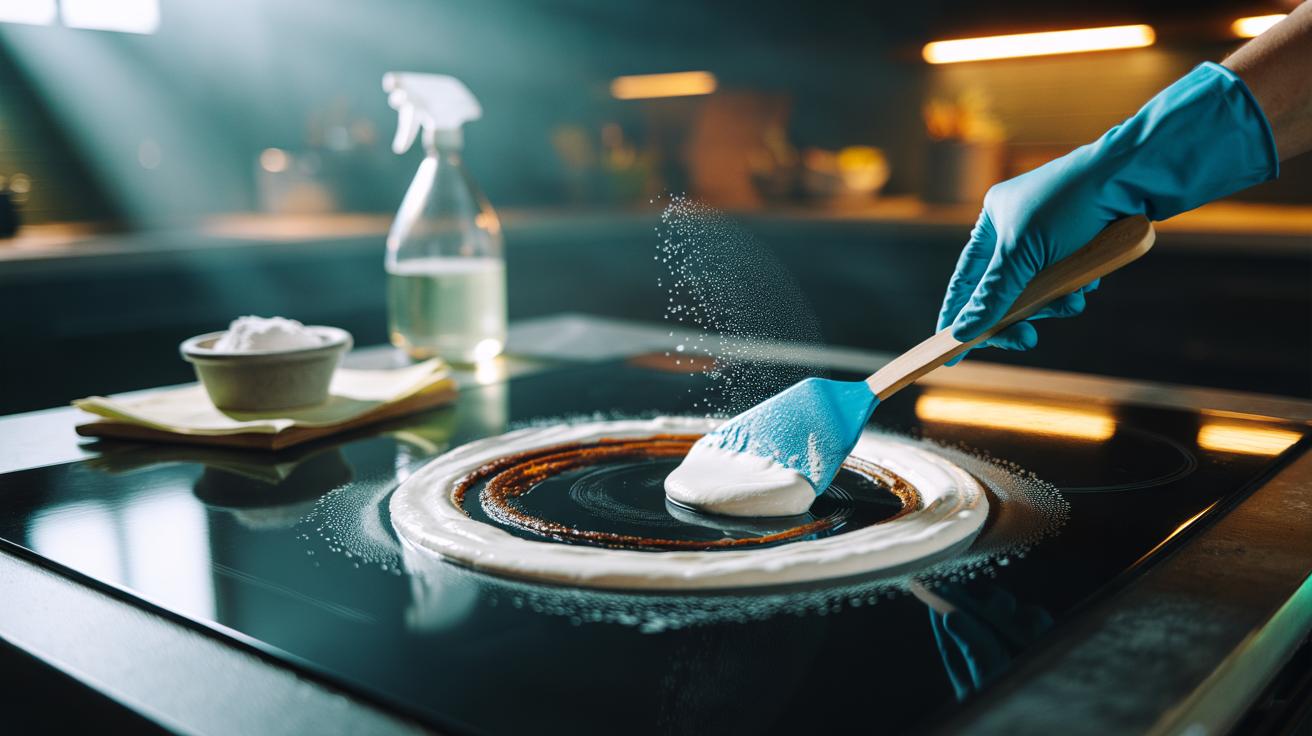
Wipe loose crumbs. Spread the paste 3–5 mm thick over the stain. For fragile finishes, use your fingers or a soft spatula; on robust enamel or stainless, a plastic scraper speeds coverage. To extend contact on stubborn patches, lay a piece of cling film over the paste. This slows drying and keeps the chemistry active. Typical dwell time: 5–10 minutes for fresh splatters, 20–30 minutes for baked‑on rings. Avoid rubbing circles at first; let time, not pressure, unlock the bond.
Remove the film. Wipe with a damp microfibre cloth, drawing residue in straight strokes. Stuck flecks? Nudge gently with a plastic blade held shallow to the surface. Rinse with a 1:4 white vinegar:water spritz to neutralise any alkali film, then buff dry. Apply, wait, wipe: it works. Your polish returns, without harsh fumes or scratched glass.
Dwell Times, Surface Compatibility, and Smart Add‑Ons
Not all hobs and spills behave alike. Ceramic glass and enamel tolerate baking soda well, though you should let crystals do light work, not gouging. Stainless steel enjoys the alkalinity but hates over‑scrubbing along the grain. Avoid prolonged paste on bare aluminium and copper; both can discolour. Cast‑iron trivets are fine, yet heavy abrasion can strip seasoning, so re‑oil after. For tough sugary boil‑overs or protein scorch, blend in peroxide or add heat: a warm (not hot) surface accelerates reactions. Match the recipe to the mess and you’ll save half the time.
| Spill Type | Paste Ratio | Add‑Ons | Dwell Time | Surface Notes |
|---|---|---|---|---|
| Oily splatter | 3:1 soda:water | 1 drop washing‑up liquid | 5–10 minutes | Safe on ceramic, enamel, stainless |
| Sugary boil‑over | 3:1 soda:peroxide (3%) | Cling film cover | 20–30 minutes | Test on aluminium; wipe promptly |
| Protein scorch | 4:1 soda:water (thicker) | Warm surface, plastic scraper | 15–25 minutes | Wipe along grain on stainless |
| Polymerised ring | 3:1 soda:water | Vinegar rinse after | 25–40 minutes | Avoid pressure on glass hobs |
Two pro tips clinch it. First, if the paste dries, re‑mist lightly to restart contact; don’t grind in powder. Second, finish with a neutral clean: a damp cloth, then a dry buff to erase streaks. Odour‑free, low‑cost, and quietly effective, this is a routine you’ll actually keep.
A humble tub of baking soda replaces an army of harsh sprays, trims your cleaning time, and keeps the kitchen breathable. The paste is forgiving, the method repeatable, and the results immediate enough to feel satisfying. Clean smarter, not harder, and let chemistry shoulder the load. From weeknight splatters to slow‑roast encrustations, you now have a reliable protocol and a clear timetable. Which spill on your hob will you challenge first—and what twist on the paste will you try to make it vanish even faster?
Did you like it?4.4/5 (22)