In a nutshell
- 🧪 Baking soda (sodium bicarbonate) neutralises microwave odours in about 30 seconds by combining mild alkalinity with high-surface-area adsorption, accelerated by heat and steam.
- ⚙️ Follow the quick method: 200–250 ml water + 1–2 tsp baking soda in a microwave-safe mug, heat 30–45 seconds, pause with door ajar, wipe, then leave the mug inside for five minutes; include simple safety steps (ceramic/glass only, wooden stirrer).
- 🐟 Stubborn smells—fish amines, curry oils, and burnt popcorn compounds—are rapidly blunted; use a second short cycle, wash the turntable, and apply a bicarbonate paste for corners and seals if needed.
- 🧼 Prevention matters: cover dishes, wipe spills immediately, adopt a weekly baking soda steam and gentle clean, check seals and vents, and keep a ramekin of dry bicarbonate inside between uses.
- 💷 Safe and practical: this approach is non-toxic, low-cost, fast to perform on busy days, and restores a neutral-smelling microwave without harsh fragrances.
Microwaves hold onto smells. One reheat of fish or curry and the aroma lingers, stubborn and slightly embarrassing. The quickest fix hiding in plain sight is baking soda, the supermarket staple known chemically as sodium bicarbonate. Used right, it can tame odours in around 30 seconds, reclaiming your kitchen from last night’s leftovers. The trick is speed plus chemistry. Warmth unlocks volatile molecules; moisture moves them; bicarbonate intercepts them. That tiny window of heat and steam is all this powder needs to start neutralising even aggressive smells. It’s affordable, non-toxic, and safe on most interiors. Here’s how fast absorption works, and the method to make it happen without scrubbing.
Why Baking Soda Works So Fast
Odours hang around because volatile organic compounds cling to the cavity and plastic turntable, then keep off-gassing. Sodium bicarbonate counters this on two fronts. First, its mild alkalinity buffers acidic molecules that dominate many food smells, gently shifting their chemistry so they’re less volatile. Second, the fine, crystalline powder offers ample surface area for adsorption—the physical capture of airborne molecules onto a surface. In a warm, humid microwave, this process accelerates dramatically. Heat increases molecular movement, while steam helps lift residues and ferries odour compounds into the air where bicarbonate can grab them.
Bicarbonate is also a buffer, so it resists pH swings and continues working as fresh molecules arrive. That’s why brief bursts outperform long, cold sits when you’re dealing with pungent meals. Trace sulphur notes from reheated eggs, tang from tomato sauce, the smoky bite of burnt crumbs—each loses intensity as the surface chemistry changes and the worst offenders get sequestered. You smell less because there’s literally less to smell. Give the powder heat and moisture, and it behaves like a tiny odour sponge, fast and surprisingly effective.
The 30-Second Microwave Method, Step by Step
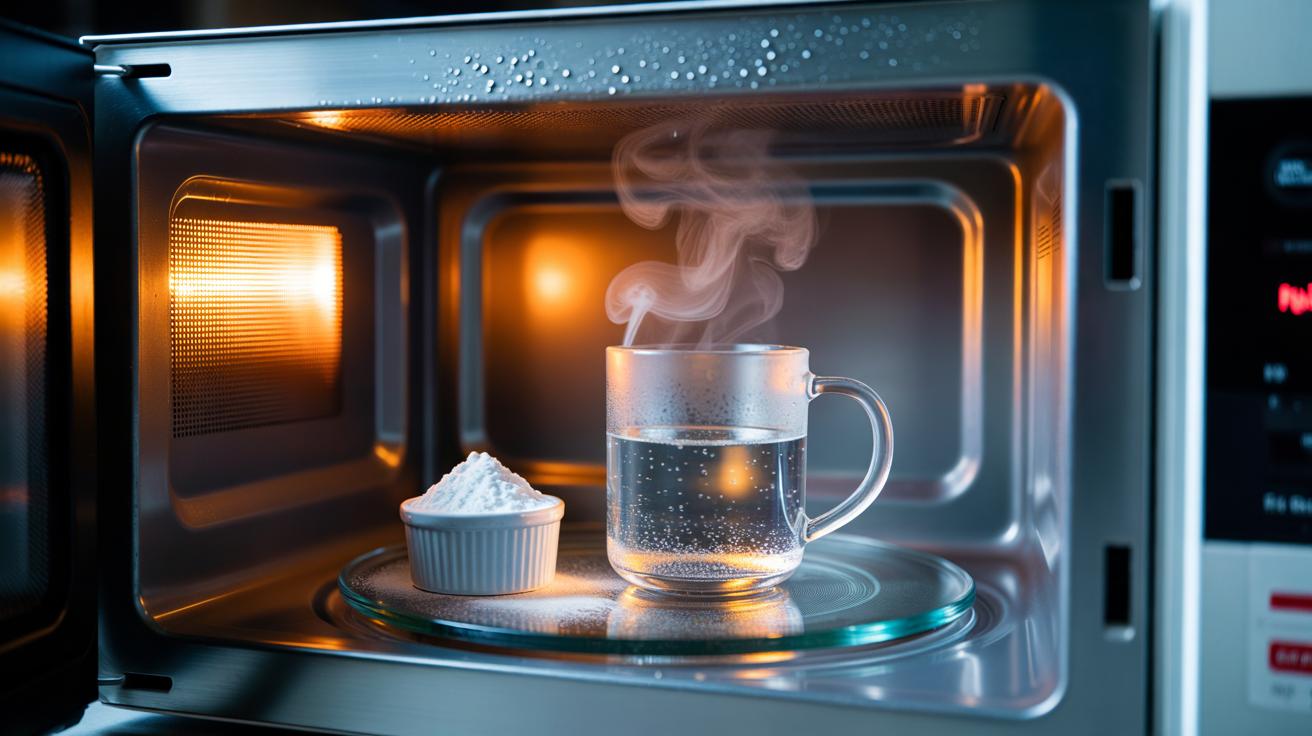
Start with a microwave-safe mug or bowl. Add 200–250 ml of water and stir in 1–2 teaspoons of baking soda until mostly dissolved. Place it in the centre of the turntable. Heat on high for 30 seconds. In compact models or after cooking particularly pungent meals, extend to 45 seconds. Carefully open the door—there’ll be warm steam—and leave the door ajar for 30 seconds. That short pause matters: steam loosens residues while bicarbonate-laden vapour scavenges odours. Wipe the interior with a soft cloth, then leave the mug inside (door closed) for five minutes to keep absorbing any stragglers.
Safety first. Use ceramic or glass, never sealed containers. To reduce superheating risk, drop a wooden stirrer in the mug before heating. If you see heavy splatter or char, lift it first: remove the turntable, wash with hot water and a shake of bicarbonate, then run the 30-second cycle. For plastics that have absorbed curry oils, a second pass works wonders. You can also leave a dry, open ramekin of baking soda in the idle microwave between uses—just remember to remove it before cooking.
| Parameter | Recommendation |
|---|---|
| Water | 200–250 ml in a microwave-safe mug/bowl |
| Baking soda | 1–2 tsp (more if odour is severe) |
| Heat time | 30–45 seconds on high |
| Post-cycle | Door ajar 30 sec, wipe, then shut with mug inside 5 min |
| Tip | Drop in a wooden stirrer to curb superheating |
Most users report a noticeable odour drop before the interior even cools. If garlic or fish still whispers from the vents, repeat once and open a window. The second hit often clears lingering volatiles that released late from plastics or seals. Cost per treatment? Pennies. Impact? Big.
Neutralising Tough Smells: Fish, Curry, and Burnt Popcorn
Some odours feel immortal. Fishy notes stem largely from amines such as trimethylamine; curry aromas persist thanks to potent essential oils and pigments like curcumin; burnt popcorn delivers a cocktail of pyrazines and smoky aldehydes that embed in plastics. Baking soda tackles this rogues’ gallery by reducing volatility and trapping air-borne molecules, especially once the cavity is warm and humid. Thirty seconds won’t erase a disaster burn, but it will blunt the edge fast. Follow with a wipe to remove the residues the steam has loosened, and most households see the harshness fall away.
For extreme cases, run a second 30–45 second cycle. If burnt notes linger, wash the removable turntable with hot water, a spoon of sodium bicarbonate, and a tiny drop of mild washing-up liquid. That combo lifts the sticky by-products that cling and keep emitting. For curry, focus on the door seal and corners where oils hide; a bicarbonate paste (one part powder to one part water) dabbed on for five minutes then wiped clean helps. With fish, the warm-then-wipe sequence is often enough, as steamy bicarbonate intercepts amine vapours quickly before they settle. The aim is simple: reduce what’s airborne, remove what’s stuck, and stop the cycle of re-release.
Beyond Deodorising: Cleaning and Maintenance That Prevents Odours
Fast fixes are great, but prevention saves time. Cover dishes with a vented lid to limit splatter. Wipe spills immediately; reheated residues polymerise and trap odours. Make a weekly ritual: a 30-second baking soda steam, a gentle wipe, and a quick wash of the turntable. This routine keeps plastics from absorbing the very compounds that later haunt your microwave. Keep an open ramekin of dry sodium bicarbonate inside between uses to passively mop up background whiffs—replace monthly or after heavy duty smells.
Be kind to the cavity. Skip abrasive pads on enamel or plastic trims. A soft cloth, warm water, and bicarbonate paste offer enough lift without scratches that harbour smells. Don’t mask—remove. Sprays and perfumes mingle with food aromas and can make things worse. If you notice chronic odours despite cleaning, check the waveguide cover and vents for grease; remove and wash if your model allows, or consult the manual. A clear airflow helps smells dissipate instead of looping back into the chamber. Low-cost, low-effort, and low-chemical, this is a maintenance rhythm that repays itself every busy weekday lunch.
Baking soda isn’t a miracle; it’s sensible chemistry deployed with heat and humidity. In half a minute, you can soften fierce odours, then wipe them out before they settle in for a week-long stay. It’s safe, inexpensive, and ready when you are. Pair it with quick, regular maintenance and your microwave will smell like, well, nothing at all. Which kitchen culprit gives you the most grief—fish, curry, or that unforgettable burnt popcorn—and how will you design your 30-second rescue plan?
Did you like it?4.2/5 (25)