In a nutshell
- 🥬 Moisture dynamics: lettuce respires, humidity nears 100%, condensation forms; free water dissolves solutes, reduces turgor pressure, and softens leaves.
- 💧 Spoilage loop: standing water fuels microbes and enzymes, speeding decay; even with modified atmosphere packaging, temperature swings still trigger condensation.
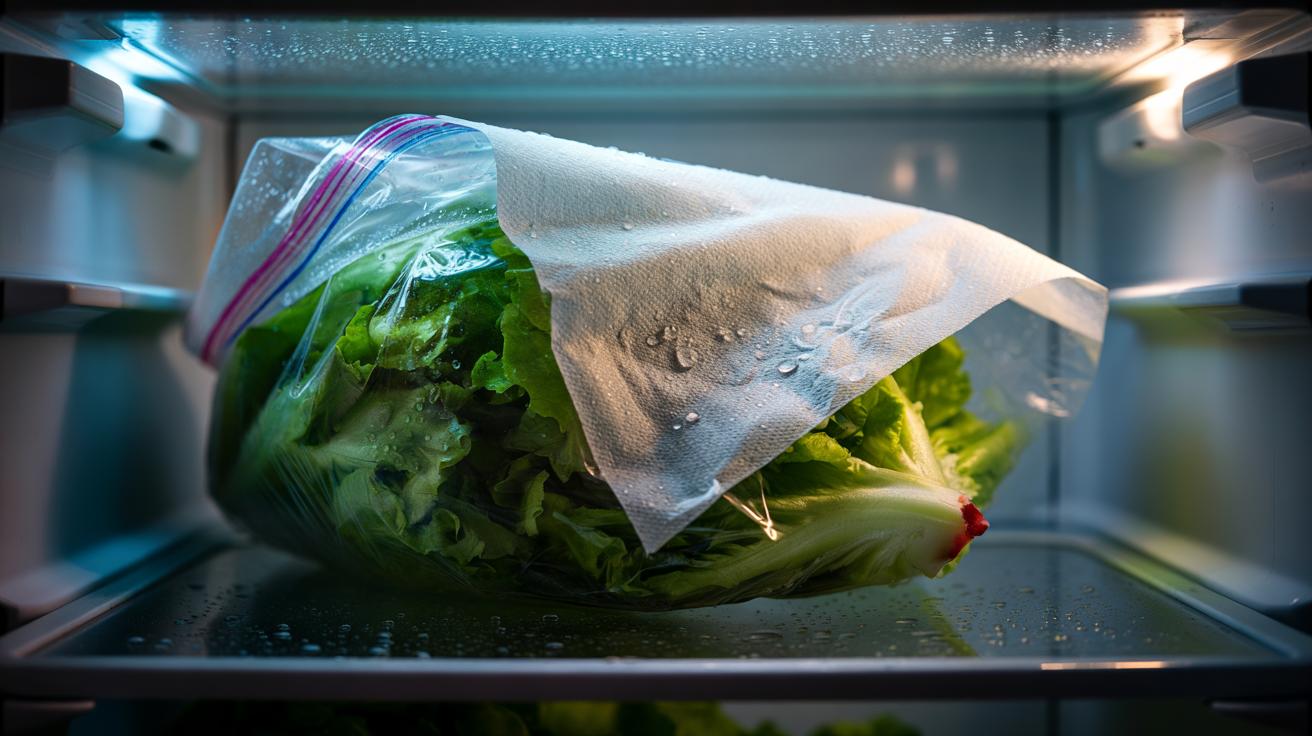
- 🧻 Paper towel as buffer: its capillary matrix wicks droplets, stabilises humidity, prevents pooling, and preserves crunch without desiccating leaves.
- 🧊 Practical steps: start dry, store at 1–4°C in the crisper, keep away from ethylene-producing fruits, replace the towel when damp, and split large bags.
- ⏱️ Gains and caveats: expect 2–4 extra days of crispness (more for romaine/iceberg); use unscented towels, watch for lint, and note it won’t reverse existing spoilage.
A single sheet of kitchen roll can feel like a trivial fix, yet it reliably keeps bagged lettuce crisp. The secret isn’t sorcery. It’s physics and plant biology working in your fridge. Fresh leaves constantly release water, turning sealed salad bags into tiny cloud chambers where droplets form and linger. That free water spells trouble. It accelerates decay. It invites microbes. Place a clean, dry paper towel in the bag and you give moisture somewhere safe to go. Absorption prevents the build-up of spoiling moisture, stabilising the leaf’s delicate balance between hydration and sogginess. It’s cheap. It’s fast. And—used right—it works astonishingly well.
Why Moisture Builds Up in Salad Bags
Lettuce is alive, even after harvest. It respires, releasing water vapour and carbon dioxide. In a sealed or semi-sealed bag, humidity surges toward 100%. Then your fridge door opens, temperature fluctuates, and vapour becomes condensation. Micro-droplets collect on leaf surfaces, drip, and pool. This film of water is not benign. It dissolves cell solutes, disrupts membranes, and softens cell walls, erasing the turgor pressure that makes leaves snap instead of sag. Moisture isn’t the enemy—free water is. A humid atmosphere keeps leaves hydrated; liquid water drowns them in their own exudates.
Once droplets persist, microbes flourish. Spoilage bacteria and yeasts multiply faster in warm, wet niches; even at 4°C, they tick along, fed by leaked sugars and amino acids. Enzymes accelerate tissue breakdown. Edges brown. Aromas shift from fresh to funky. Many salad bags use microperforations or modified atmosphere packaging to slow this cascade, but they can’t stop condensation from daily temperature swings. The result is a vicious cycle: water begets damage, damage begets more water release, and crispness vanishes. Breaking the cycle means managing humidity without letting liquid collect.
How a Paper Towel Works as a Humidity Buffer
A paper towel provides a high-surface-area, capillary-rich matrix that grabs droplets the moment they form. Think of it as a spongey “rain gutter” inside the bag. It intercepts condensation, wicks it away from leaves, and holds it within fibres where microbes have fewer nutrients and less access to the produce surface. Crucially, it doesn’t desiccate the salad; it simply mops up free water while allowing the bag to stay humid. By absorbing peaks of moisture, the towel creates a stable microclimate that preserves crunch. Place it flat against the inner wall or tuck it on top so gravity helps.
| Moisture Source | What You See | Paper Towel Effect |
|---|---|---|
| Leaf respiration | Foggy bag, clammy leaves | Buffers humidity, prevents pooling |
| Temperature swings | Dew drops and slick patches | Immediate wicking of condensate |
| Mechanical damage | Wet, bruised spots | Draws exudates away from tissue |
Use unscented, plain towels to avoid perfumes or inks. Swap them when damp—daily for very tender leaves, every 48 hours for sturdier blends. If your bag is tightly sealed, squeeze out excess air but avoid crushing; the goal is contact without compression. A rigid container lined with a towel works similarly, especially for prepped leaves. Too much airflow dries salad; controlled absorption keeps it crisp. The difference shows in texture after three to five days: bite becomes snap, not slump.
Practical Steps, Risks, and Shelf-Life Gains
Start dry. If the lettuce is visibly wet, spin or pat it before bagging. Slide a clean, dry paper towel into the bag—top or side is fine—then reseal. Store at 1–4°C in the crisper drawer, away from ethylene-heavy fruits like apples and avocados that hasten senescence. For pre-washed mixes, don’t rewash; extra water accelerates spoilage. Check the towel daily and replace at the first sign of saturation. For big family packs, split into two bags with a towel each. This limits cross-contamination and reduces the “all soggy at once” effect when one area gets wet.
There are caveats. Towels can shed lint; choose a sturdier brand if you notice fibres. Avoid recycled towels printed with dyes for prolonged contact. If a bag already smells sour, the towel won’t reverse spoilage—cut losses. For most households, the payoff is tangible: many see 2–4 extra days of crispness, sometimes longer with iceberg or romaine compared to tender baby leaves. Pair the towel with gentle handling and fewer temperature shocks, and the gains compound. Absorption is not a gimmick; it’s a targeted way to remove the thin film of water that turns freshness into mush.
In the end, the paper towel trick thrives because it respects what lettuce wants: steady humidity, no standing water, minimal bruising. It’s low-tech, reversible, and improves texture without adding chemicals or cost. For busy cooks, that means salads that stay perky through the workweek instead of wilting by Wednesday. For frugal shoppers, it means less waste. By absorbing spikes of moisture, you slow biology to a delicious crawl. What small storage tweak will you try next to extend freshness and cut food waste in your own kitchen?
Did you like it?4.5/5 (21)