In a nutshell
- ⚡ How it works: A dryer sheet uses electrostatic control and cationic surfactants to neutralise charge, releasing fur so it clings to the sheet or the dryer’s lint trap instead of your clothes.
- 🧰 Quick method: Spot-test delicate fabrics, choose unscented sheets, use light overlapping strokes (no scrubbing), replace saturated sheets, or do a 10-minute low-heat tumble to finish removal.
- ⏱️ What to expect: Fast, visible results in minutes; smooth synthetics respond best, while dense knits need extra passes; reduces re-cling thanks to an anti-static film for a cleaner finish.
- 🌱 Alternatives and safety: For performance fabrics, use a damp microfibre cloth or wool dryer balls; pick low-waste options and avoid sheets on flame-resistant finishes or infant sleepwear; go fragrance-free for allergy-prone homes.
- 🐾 Limits and upkeep: Deep-pile throws and looped rugs may require a vacuum or rubber squeegee; depill garments to reduce cling, brush pets regularly, and make static control a routine habit.
Pet hair clings to clothes, throws, and car seats with stubborn resolve, turning sleek black trousers grey by lunchtime. The fix, surprisingly, often hides in the laundry cupboard. A simple dryer sheet can sweep stuck-on fur free in moments, harnessing the science of static to lift fibres without mess or elbow grease. It feels almost like a magic trick. It isn’t. It’s chemistry and charge at work, supported by light lubrication that keeps loosened hair from reattaching. The result is fast, low-effort, and satisfying. When time is tight and lint rollers run out, this trick saves the day. Here’s how the effect works — and how to do it right.
How Static Lift Captures Fur
The secret is a blend of electrostatic charge and softening agents. Pet hair and textiles often sit far apart on the triboelectric series, so when they rub, charge builds and locks fibres together. Dryer sheets carry cationic surfactants (often quaternary ammonium compounds) that spread a microscopic, positively charged film across fabric. That film reduces static build-up, slightly lubricates the surface, and changes the charge differential. The outcome is twofold: hair releases more easily, and freed strands are less likely to spring back.
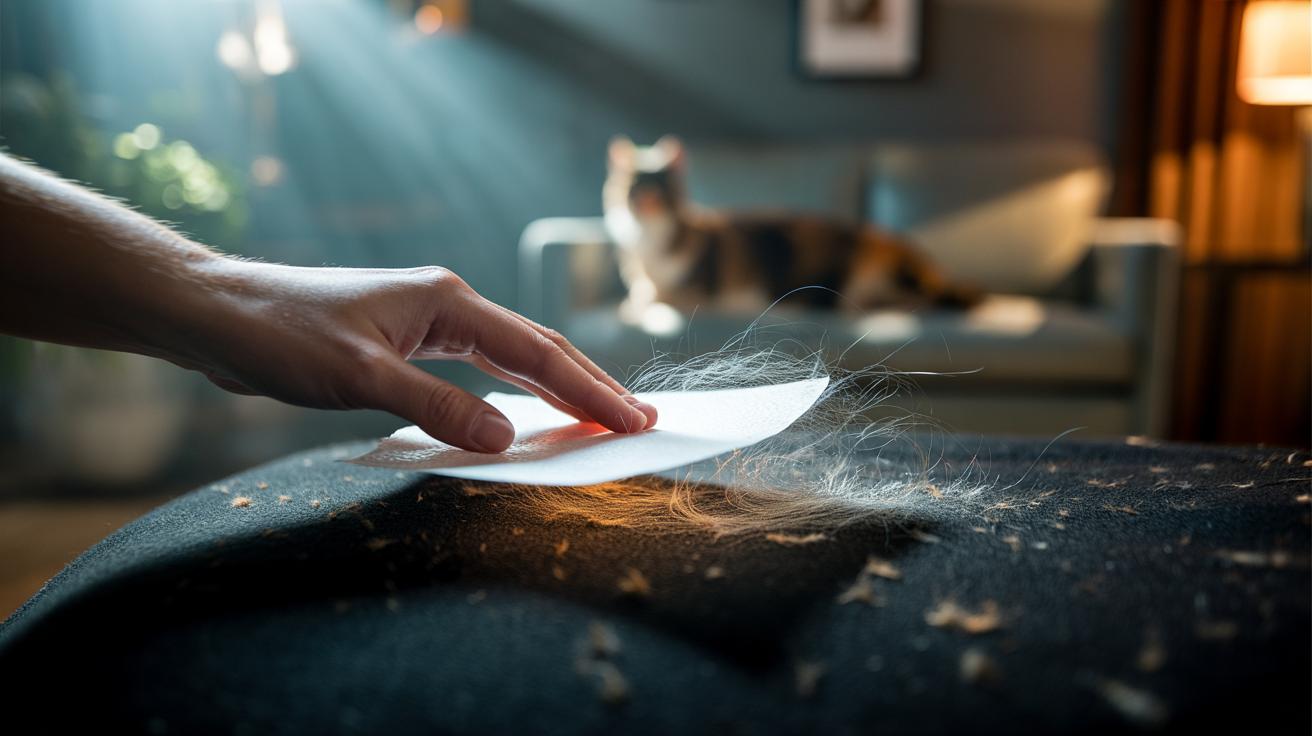
When you swipe a sheet across cloth, you create a tiny zone of static neutralisation. The sheet’s texture and light coating grab loosened strands, while the anti-static layer stops new clumps forming. Hair lifts, clings to the sheet, and stays put. In a tumble dryer, this plays out on a bigger stage — fabrics separate, charge is controlled, and the lint trap collects the bounty. On upholstery or car interiors, a hand-held sheet simulates the same release-and-capture mechanism, without needing a power socket or special tool.
Quick Method: Using a Dryer Sheet on Clothes and Upholstery
Start with preparation. Shake the garment or throw to dislodge loose clumps. Always spot-test an inconspicuous area first, especially on silk, rayon, or performance fabrics, to ensure no streaking or unwanted fragrance remains. Choose an unscented or hypoallergenic sheet if you have sensitive skin or reactive pets. If you’re cleaning a sofa, vacuum crumbs first; grit drags.
Now the sweep. Hold the fabric taut. Using a fresh dryer sheet, make light, overlapping strokes in one direction, then cross-strokes to lift embedded strands. Don’t scrub. Use light, sweeping strokes — pressure pushes hair deeper. Replace the sheet as it loads up; a saturated sheet simply shuffles debris. For stubborn patches, pinch the fabric lightly and flick the sheet’s edge under the hair to pry it free. Follow with a microfibre cloth to nab any strays. If you’re by the machine, a 10-minute tumble on low heat with a sheet can finish the job, sending the loosened pet hair to the lint filter.
Results at a Glance: What to Expect
The pay-off is quick. Most surfaces show visible improvement within a minute, with dense knits taking a little longer. Smooth weaves, synthetics, and blended upholstery tend to respond best because their fibres don’t trap hair as deeply. Fuzzy blankets and looped terry need an extra pass. The finish feels cleaner because the anti-static layer stops re-attachment — a small but real win during shedding season. You’ll see less re-cling during the day.
Below is a simple comparison for speed and suitability:
| Method | Typical Time | Best For | Pros | Watch-outs |
|---|---|---|---|---|
| Dryer Sheet (hand wipe) | 1–3 mins | Clothes, upholstery, car seats | Fast, portable, reduces re-cling | Residue on delicate/performance fabrics |
| Tumble + Sheet | 10 mins | Mixed laundry loads | Hands-free, lint trap collects hair | Not for heat-sensitive items |
| Lint Roller | 2–5 mins | Wool coats, suits | Precise, no residue | Wasteful, runs out quickly |
| Rubber Glove (damp) | 2–4 mins | Upholstery, carpets | Reusable, strong drag | Can smear on delicate fabrics |
Alternatives, Fabric Care, and Sustainability
Dryer sheets aren’t the only route. For technical gear and performance fabrics, avoid residues that can impede moisture-wicking. Opt for a barely damp microfibre cloth, a silicone squeegee for sofas, or wool dryer balls in the machine to reduce static without coatings. On wool and cashmere, a soft garment brush keeps fibres smooth while lifting hair. When in doubt, choose the least invasive tool first.
There’s also the eco question. Disposable sheets are convenient but create waste and introduce fragrances some households would rather skip. Fragrance-free or plant-based sheets reduce that load, but reusable options do better. Wool balls decrease static and speed drying, cutting energy use. A microfibre cloth and a reusable glove can shoulder daily de-furring. If you do rely on sheets, use one per task, not multiples; store spares sealed to preserve effectiveness. Never use dryer sheets on flame-resistant finishes or infant sleepwear, as softeners can compromise protection. For allergies, stick to unscented, rinse cleaned textiles once weekly, and clean lint traps meticulously to reduce airborne dander.
Why This Trick Feels Effortless — And When It Won’t
The ease comes from defeating friction at the surface. The sheet reduces static so hair releases, while a mild, even film keeps fibres from snagging fresh strands. That’s why results feel immediate and tidy. It’s also why the method is brilliant for car interiors and office wear before a meeting. It’s speed you can count on in real life. But there are limits. Deep-pile throws and looped rugs trap hair in their architecture; you’ll need a vacuum with a pet tool or a rubber squeegee to tease it out. Old pilling worsens cling too — depill jumpers to reset the surface and improve future de-furring.
Think maintenance. Brush pets regularly, wash throws weekly with a pre-rinse, and dry with a sheet or wool balls to prevent static build-up. Keep a sheet in the glovebox and another in your desk. Save rollers for precision jobs. With a little planning, static control becomes routine, not a firefight. And the black trousers stay black.
Pet hair will always try to hitch a ride, but the dryer sheet trick turns a daily irritation into a two-minute fix. It leverages simple physics, leaves fewer strays, and requires zero special kit. Use it when you’re flying out the door, keep alternatives for delicate garments, and commit to small maintenance habits that reduce cling at the source. The goal is less static, less friction, and less fuss. What situation frustrates you most — the morning commute on a fuzzy coat, the sofa after a grooming session, or the car seat before guests — and which of these tactics will you try first?
Did you like it?4.4/5 (21)