In a nutshell
- 🌙 Salt works overnight via osmotic stress, dehydrating weed cells as dew forms a thin brine that accelerates damage by morning.
- 🎯 Apply with precision on hardscape (paving cracks, gravel paths), using shields for ornamentals; avoid beds and lawns entirely.
- ⚖️ Mix carefully: about 1:3 salt-to-water for tight paving joints, 1:10 for gravel; use additive-free table salt, not Epsom salt.
- 🚫 Protect the environment: keep brine out of drains, don’t treat before rain, brush away residues, and minimise repeat dosing to reduce soil salinity.
- 🧰 Combine tactics for resilience: spot-salting at night, mulch in beds, crack scrapers or a light flame weeder on stone, and improved jointing to prevent regrowth.
There’s a midnight trick doing the rounds on British allotments and terrace streets alike: use a humble sprinkle of salt to silence those cheeky weeds. It sounds almost too simple. Yet while you sleep, the crystals go to work, drawing water out of plant tissues and leaving pesky invaders shrivelled by sunrise. The shock to your neighbours isn’t the only thrill; the method is cheap, quiet, and suited to paths where chemicals feel heavy-handed. Still, this is a precision job, not a scattergun blast. Used carelessly, salt lingers in soil and punishes the plants you actually like. Here’s how to do it right.
Why Salt Works While You Sleep
At the heart of the method is osmotic stress. Sodium chloride sets up a fierce gradient: water inside a weed’s cells rushes outward, chasing equilibrium, and the plant dehydrates. Leaves and young stems are hit first. Under night-time humidity or dew, a light brine forms on the foliage, speeding uptake. By dawn, the damage can look dramatic. That fast-acting punch is why salt can appear almost magical on shallow-rooted interlopers in paving cracks.
There’s more happening below the surface. Salt interferes with nutrient balance in the root zone, particularly potassium and calcium transport. In high-enough doses, the combined desiccation and ion toxicity push annual weeds over the edge. Perennials, with larger reserves, may brown quickly above ground yet return from deep crowns. That’s why follow-up spot treatments are often needed, and why restraint matters: lower, targeted doses reduce the risk of collateral damage to surrounding soil life.
A final, overlooked detail: timing. Late evening applications exploit cooler air and slower evaporation. Water sits on leaf surfaces longer, generating a thin brine that continues working as you sleep. Come morning sun, dehydration accelerates. It’s a quiet, nocturnal double act—one that rewards patience, not heavy-handedness.
How to Apply Salt Without Trashing Your Beds
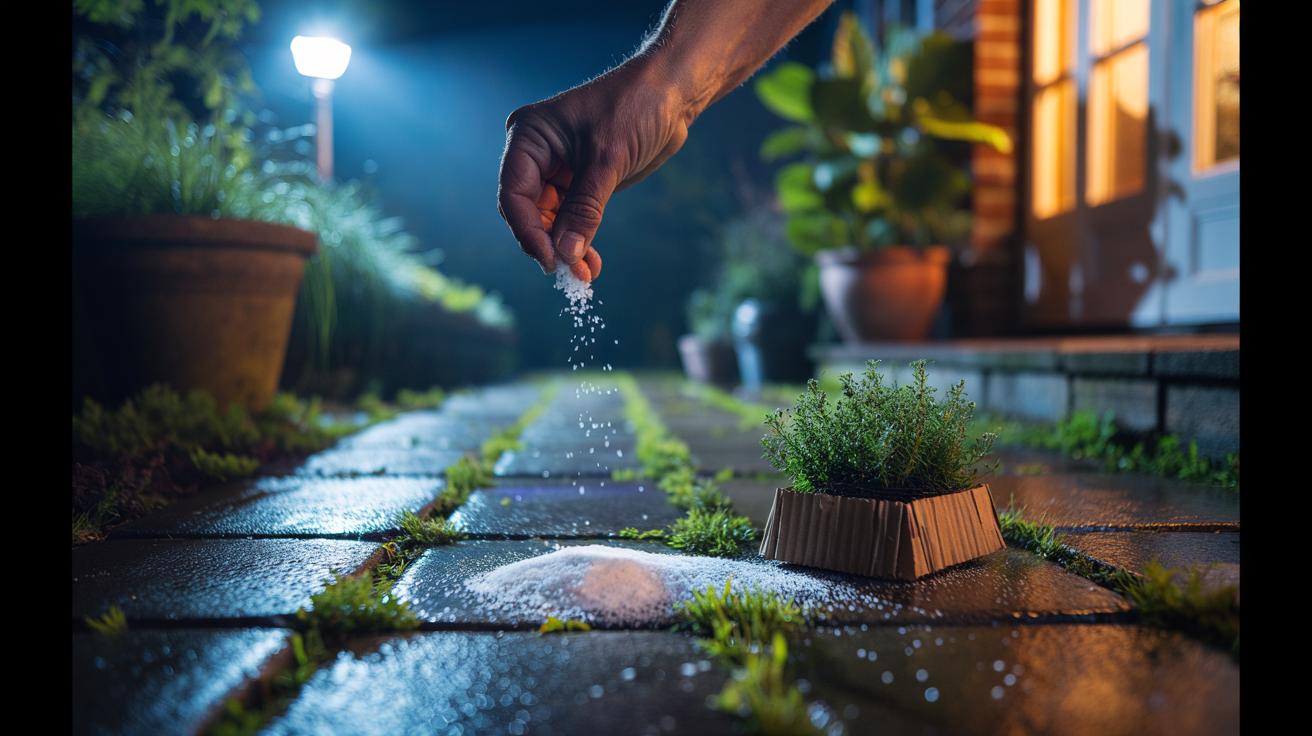
Think like a surgeon, not a scatterer. Start by choosing the right spots: hardscape joints in patios, gravel drives, and paths away from prized borders. On still, dry evenings, brush debris from cracks so crystals can reach crowns and meristems. Mix a controlled brine in a small trigger bottle—stronger for paving cracks, weaker for gravel—then mist the weed, not the whole area. A little goes a long way. You want damp, not dripping.
Shield ornamentals with a bit of cardboard or a cut plastic bottle while you spray. If using dry crystals, pinch and place precisely at the crown, then add a teaspoon of water to activate. Wear gloves; the solution is simple but can irritate. Crucially, do not let brine wash into drains or towards watercourses. Place pots beneath downspouts if rain is due, or simply wait. Salt moves with water; your job is to stop that.
After 12–24 hours, brush away residues and lift dead growth. Repeat only where you see green resurgence. In beds, avoid salt altogether—hand-weed or use mulch. Never salt soil you plan to plant. That includes lawns. For stubborn repeat offenders, alternate tactics: a narrow flame weeder on stone, dense mulch in shrub beds, or a crack scraper for deep-set taproots. You’re not waging war; you’re keeping the peace with strategic, tidy skirmishes.
Ratios, Salt Types, and Surfaces
Ratios matter. For tight paving joints where weeds are shallow and isolated, a robust 1:3 salt-to-water mix (by volume) used sparingly will typically scorch leaves overnight. For gravel paths, step down to about 1:10, applied as a light mist, to limit residual salinity. On porous stone or ageing concrete, go lighter still and treat fewer times; repeated salt can stress some materials, encouraging spalling or efflorescence. If you see a white crust on the surface, pause and rinse the area with plain water once plants are removed.
As for the salt itself: common kitchen sodium chloride works; gritty rock salt is harder to place accurately; sea salt is fine but sometimes pricier. Avoid any product with additives (anti-caking agents, dyes, perfume). Epsom salt (magnesium sulphate) is different chemistry; it can green plants under deficiency and is not a weedkiller. Softener pellets dissolve slowly and imprecisely—skip them. Keep leftover brine labelled and out of reach of children and pets.
| Salt Type | Best Use | Mix Ratio (salt:water) | Where to Avoid | Notes |
|---|---|---|---|---|
| Table salt (NaCl) | Spot-treating paving cracks | 1:3 for hardscape; 1:10 for gravel | Lawns, borders, veg beds | Accurate and predictable |
| Rock/grit salt | Larger cracks, winter stock | Pre-dissolve to control dose | Porous stone, near drains | Coarse; easy to overuse |
| Sea salt | As above, if additive-free | Same as table salt | Anywhere run-off is likely | Can be costlier |
| Epsom salt (MgSO₄) | Not for weed control | N/A | Weed treatments | Different effect; skip |
Salt is a blunt instrument that rewards restraint. Used at night on the right surfaces, it’s an elegant fix for path weeds—cheap, quiet, efficient. Used on beds or before rain, it’s an environmental headache waiting to happen. Keep it off soils you cherish and out of drains you share. Consider the whole toolkit: scraping, mulching, tighter jointing sand, even a whisper of flame where legal and safe. Done well, your patio wakes up pristine and your conscience stays clear. So, will your next weed-fighting move be a targeted night-time sprinkle, or will you reimagine the whole space to stop weeds before they start?
Did you like it?4.5/5 (25)