In a nutshell
- 🐦 Crushed eggshells deter raids by masking odours and creating a crunchy, unstable, reflective surface birds dislike, reducing magpie, gull, and crow activity overnight.
- 🥚 Proper prep matters: rinse, dry, then bake at 120–150°C for 8–10 minutes to pasteurise; crush finely and keep odourless, using up to 5% by volume in the top layer.
- 🧺 Apply smartly: mix shells into the top 5–8 cm, cap with browns at a 2:1 browns-to-greens ratio, turn lightly before dusk, then sprinkle and close with vents open.
- 🔥 Overnight gains: shells dry slick patches, cut scent plumes, retain heat, and buffer acidity via calcium carbonate, helping microbes speed decomposition while pests stay away.
- ✅ Real-world results: a thin, even scatter beats clumps; adjust for wet or dry piles; expect a tidier rim and warmer core by morning—eggshells are deterrent + conditioner, not a magic bullet.
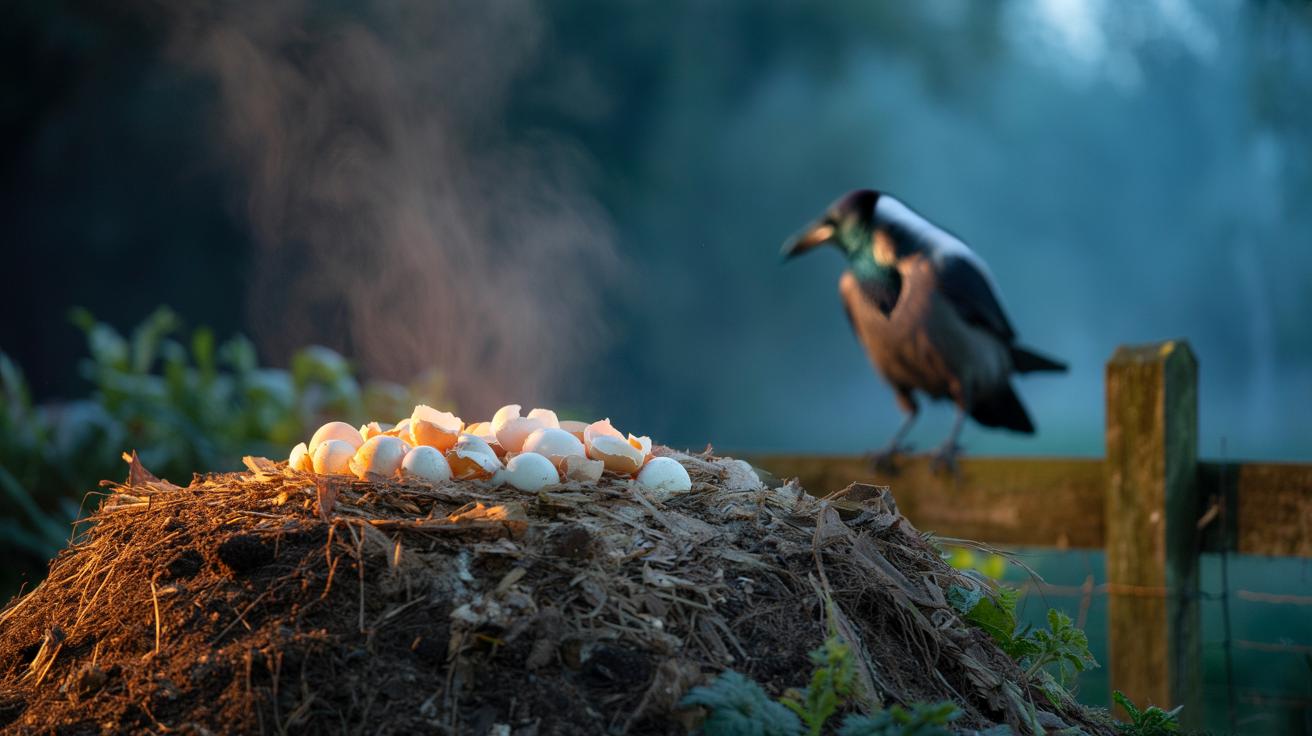
UK compost heaps are irresistible to clever urban birds. Magpies, gulls, crows. They patrol at dawn and dusk, flipping lids and scattering peelings in seconds. Here’s a neat twist from the kitchen: eggshells. When prepared and applied properly, they create a discreet shield that cuts smells, unsettles foragers, and keeps your heap hot through the night. The bonus is practical, not just thrifty. Finely crushed shells add calcium carbonate, stabilising acidity and helping the pile stay sweet rather than sour. Use eggshells to make the compost surface unappealing to birds while nudging the biology underneath to work harder, faster, and cleaner overnight.
Why Eggshells Keep Birds at Bay
Bird raids start with scent and opportunity. A glistening layer of fresh peel or bread scrap signals an easy meal. Crushed eggshells do two quiet jobs at once: they dry the top layer and damp down off-putting odours by buffering acids. Less moisture at the surface means fewer volatile smells. Less smell means fewer aerial scouts circling your bin. Reduce the scent plume and you reduce the visitor list, from herring gulls on the coast to jackdaws in town.
Texture matters, too. Birds prefer stable footing when they forage. A crunchy, irregular crust of shell confetti feels unreliable underfoot and sounds risky, especially to cautious corvids. The pale, reflective fragments make the heap look “busy” and unfoodlike at twilight, when raids peak. It’s not a spiky moat, but it’s a subtle deterrent. Many gardeners report fewer pulled scraps and less lid-tapping once a thin shell layer tops the mix.
There’s a catch. Untreated shells can smell like food and invite pecking, not prevent it. Cleanliness is the pivot. Rinse away albumen, dry thoroughly, then crush. Keep shells odourless and unrecognisable, and they work as armour rather than bait. Blend them into the upper 5–8 cm of material so they’re part camouflage, part cap.
Prepping Eggshells for Fast, Clean Composting
Start in the sink. Rinse each shell to remove clinging protein that can smell and attract pests. Dry on a tray. For extra safety and better brittleness, pop them into a low oven at 120–150°C for 8–10 minutes; this gently pasteurises and makes crushing effortless. Cool, then crush. A rolling pin inside a tea towel works. A blender creates near-powder, which is ideal for invisible integration and rapid reaction with acidic leachate.
How much? Think seasoning, not filler. Aim for up to 5% by volume in the top layer, or about one small mug of fine shells per 20 litres of kitchen scraps. Mix with a covering of browns—shredded cardboard, straw, dry leaves—at a rough 2:1 browns-to-greens ratio by volume. The shells sit between, drying and masking while the browns trap scent and the greens feed microbes. A thin, even scatter beats a thick, lumpy dump every time.
Do not remove the inner membrane obsessively; it’s mostly protein and breaks down. If you’re focused on odour control, baking handles it. Store crushed shells in an airtight jar so they stay crisp. Sprinkle right before you close the bin for the night, when bird activity rises. You’ll notice fewer tell-tale pecks and a tidier rim by morning.
Overnight Gains: Heat, Moisture, and Microbiology
Night is when a undisturbed heap holds heat. Turn the pile lightly before dusk to pull air into the core, add a handful of eggshell powder across shiny, wet patches, then cap with browns. This combination cuts surface wetness and odour, so the lid can stay barely ajar or the vents open—safe from raids. Oxygen in, heat retained, smells minimal. Microbes love it. By morning, the top should look settled rather than rifled, and the core will feel warmer to the touch. Stop the scavengers and you stop the heat loss, which is the fastest route to overnight breakdown gains.
| Action | Bird Deterrent Effect | Breakdown Benefit | Quick Note |
|---|---|---|---|
| Bake and crush shells | Removes food scent; creates crunchy, uneasy surface | Higher surface area; faster interaction; cleaner top | 120–150°C for 8–10 minutes |
| Scatter thin shell layer | Masks scraps; reflective confetti discourages probing | Dries slick patches; reduces smell release | Keep under 5% by volume |
| Mix with browns cap | Hides clues birds seek at dawn | Improves C:N ratio, airflow, insulation | 2:1 browns to greens (by volume) |
| Turn before dusk | Shortens raiding window; resets surface | Boosts oxygen; preserves overnight heat | Light fork, not full flip |
Keep perspective. Shells don’t turbocharge microbes like sugar would; they create the conditions for microbes to work unhassled. They also supply gentle calcium that buffers acidity, supporting bacteria that struggle in sour piles. If your heap is swampy, shells help dry it; if it’s dusty, add water first. Match shells to the job—odour masking, drying, and top-layer camouflage—and the “overnight” improvement is real because the pile stays warm, aired, and undisturbed.
Eggshells are not magic. They are tidy engineering: cheap, mineral, and quietly effective. Used as a surface conditioner and discreet deterrent, they keep opportunistic birds guessing and your compost humming overnight. The trick is cleanliness, fine crush, and timing—sprinkle at dusk, cap with browns, and leave the vents open for oxygen. Next morning, inspect. Less mess usually means more heat and progress beneath. What will you change first—your shell prep, your evening routine, or the way you cap that tempting top layer?
Did you like it?4.4/5 (30)