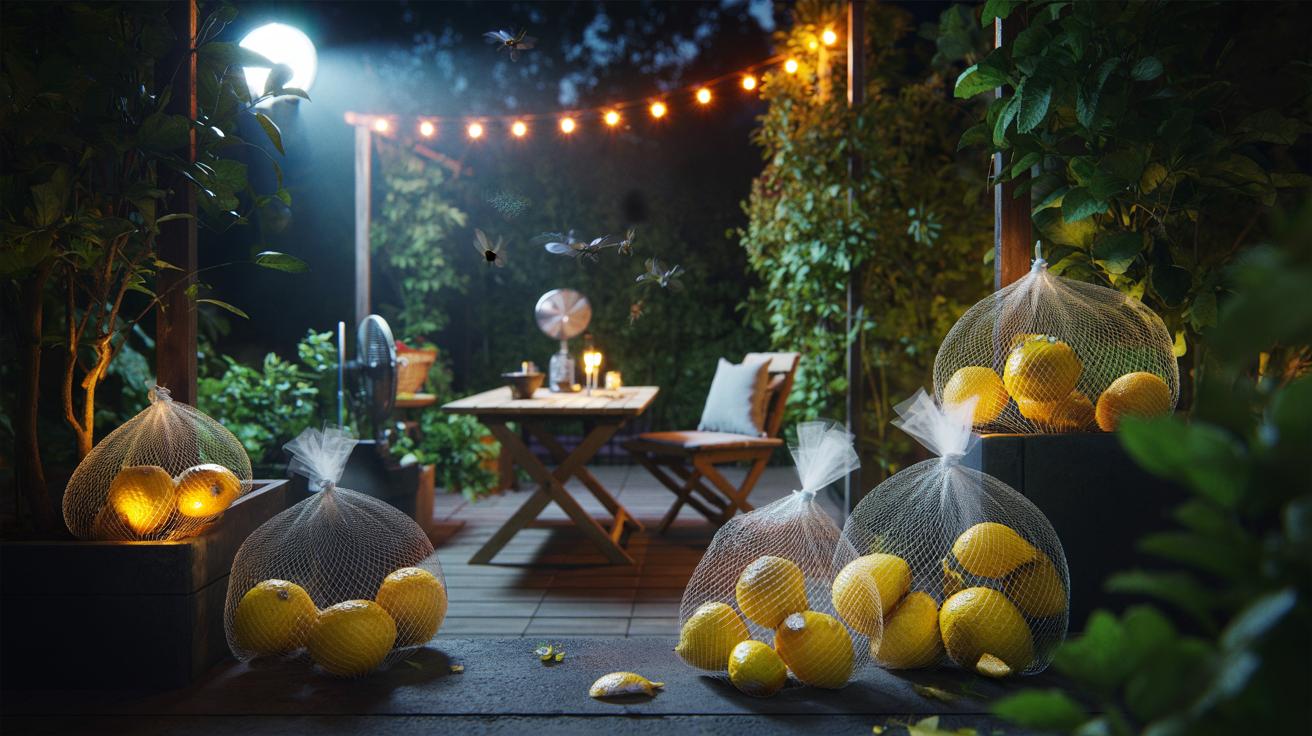
In a nutshell
- 🔬 Why it works: Lemon peel oils—limonene, citral, and linalool—create an aroma that masks human cues, offering modest repellency for about 1–3 hours; think deterrent, not full protection.
- 🍋 Prep that matters: Use fresh peels, twist to express oils, place in mesh bags or perforated jars, avoid sugary mixes, and be cautious around pets—especially with concentrated oils.
- 📍 Smart placement: Situate sachets on the leeward side of seating before dusk, refresh nightly, and pair with a steady fan; reduce breeding by emptying standing water and fitting screens and warm-toned LEDs.
- ⚠️ Safety and limits: Citrus can irritate skin; don’t burn or overuse oils, and compost spent peels. In heavy hatches, layer with sleeves, screens, fans, and, where suitable, Bti for larvae.
- 🌙 UK-friendly routine: Turn waste peels into a low-cost, scented aid alongside airflow, tidy water management, and good lighting—an integrated approach that makes summer nights noticeably calmer.
Warm evenings on the patio should feel like a reward, not a battle with whining insects. If you’d rather not smoulder chemical coils or fog your borders with spray, there’s an intriguingly simple tactic gaining favour: the humble lemon peel. Packed with aromatic oils, it offers a naturally scented deterrent that nudges mosquitoes elsewhere while you sleep. It’s not a silver bullet, but it can tilt the odds. Used cleverly, peels complement fans, screens, and good garden hygiene. The result is a calmer, sweeter-smelling night outside. Think of lemon as a gentle push, not a wall. Here’s how, and why, it can work in a UK garden.
Why Citrus Works: The Science Behind Lemon Peels
Inside the bright rind of a lemon sit reservoirs of volatile oils—notably limonene, citral, and linalool. These compounds evaporate into the air and can confuse a mosquito’s exquisitely tuned olfactory system, which normally locks onto human cues like CO₂ and skin odours. In laboratory settings, essential oils containing these molecules show moderate repellency for short windows. Whole peels are gentler, of course, but the same principles apply: the aroma plume can be enough to reduce landings where you sit or sleep. It’s a deterrent, not a shield. Warmth and a light breeze help spread the scent; heavy wind disperses it too quickly.
Expect a modest radius of effect and a limited timeframe. Depending on temperature, humidity, and airflow, the noticeable punch may last one to three hours before tailing off. That makes peels a handy pre-bed ritual: refresh them at dusk, pair with a fan, and enjoy the first, most bite-prone hours in relative peace. If you’re picturing a chemical-free perimeter, keep expectations realistic—use peels to nudge numbers down, not eradicate them.
| Component | Where in Peel | Noted Effect | Approx. Longevity Outdoors |
|---|---|---|---|
| Limonene | Oil glands in zest | Aroma that masks host cues | ~1–2 hours |
| Citral | Lemon oils, pith-adjacent | Citrus scent with mild repellency | ~1–3 hours |
| Linalool | Lower concentration in rind | Calming floral note; modest effect | ~1 hour |
Preparing Lemon Peels for Nighttime Repellency
Start with firm, fresh lemons. Wash and dry them, then remove the rind in broad ribbons to expose plenty of zest. Gently twist the ribbons to “express” the oils—tiny bursts of fragrance carry the active compounds. You can also lightly score the surface with a knife to open more oil glands. Avoid high heat, which drives off the very volatiles you want; if you must dry peels, do it slowly at low temperature or simply air-dry for a day to reduce stickiness while preserving scent. Freshly expressed peels release the strongest aroma.
To concentrate impact, load the peels into small mesh bags or perforated jars that allow air flow. Add a few crushed lemon leaves or a sprig of rosemary to round the scent. For a quick boost, rub a peel lightly along the rim of a plant pot, table edge, or window frame—test first on finishes, as citrus can be mildly acidic. Keep mixtures simple; sugar or leftover fruit attracts ants and slugs. Households with pets should take care: cats in particular dislike strong citrus oils. Don’t use concentrated essential oils where pets sleep.
Strategic Placement in the Garden After Dusk
Think like a mosquito. Air currents matter. Position your peel sachets on the leeward side of seating, where a gentle flow can carry the scent across your ankles and wrists. Cluster peels beneath tables, by chair legs, and along the path from door to lounger—anywhere you create a microclimate of human scent. Do the prep 30 minutes before dusk, when many species concentrate their biting. If wind rises, move sachets closer and add a low, steady fan. Fans do double duty: the breeze disperses odours and physically impedes weak fliers. A small table fan can cut landings dramatically.
Refresh peels nightly for best results. If you’re entertaining, scale up: three or four sachets around a patio edge is a sensible start for a small UK garden. Don’t forget fundamentals. Empty saucers and buckets after rain, keep gutters clear, and fit lids to water butts—denying larvae space pays better dividends than any scent. Warm-colour LEDs attract fewer insects than bright blue-white bulbs; switch them in. The art is stacking minor advantages. Together, they add up to quieter nights and fewer bites.
Safety, Limitations, and Smarter Alternatives
No natural aroma will outmuscle a heavy hatch after a warm, wet week. Peels are a nudge, not a guarantee. If you’re a magnet for bites, back them up with long sleeves, a fan, and screens. Sensitive skin? Avoid rubbing peel oils directly onto you; citrus can irritate. Outdoors, tidy up in the morning—spent peels mould and may draw pests. Compost them rather than binning. Be mindful with children and pets: while whole peels are low risk, concentrated oils are not toys. Keep candles well away from foliage and furniture; flames and fabrics never mix.
Consider clever allies. A steady fan is one of the simplest, strongest controls. Fine-mesh screens on doors and bedroom windows make a quiet, lasting difference. In water features, UK-approved Bti products can target larvae, while tight-fitting lids on water butts are even simpler. Plants like lemon balm, catnip, or lavender smell lovely but won’t repel on their own; treat them as ambience, not armour. Not every night demands every tactic, but an integrated approach tells. Layer small measures and the garden shifts decisively in your favour.
Lemon peels won’t rewrite ecology, yet they turn waste into a useful, fragrant line of defence while you sleep. Easy to prepare, quick to deploy, and pleasant to live with, they fit the British garden’s rhythm—especially when teamed with airflow, dry containers, and sensible lighting. The trick is setting realistic expectations and tuning placement to your space. Start with a few sachets, track what changes, and adjust as the weather does. Small rituals become habits, and habits tame the night. How will you combine peels, fans, and simple fixes to make your own mosquito-free evenings last longer this summer?
Did you like it?4.5/5 (22)