In a nutshell
- 🎯 The matchstick trick works via a subtle sulphur and compound odour plume that exploits insect chemoreception, nudging soil-dwelling pests away from roots; it’s a behavioural deterrent, not plant feed.
- 🛠️ Use plain wooden safety matches, unlit, placed head-down 2–3 cm to the side of the stem; one per seedling (two to three at “clock points” in high-pressure spots), and refresh after heavy rain or every 3–4 weeks.
- 🐛 Expect medium impact on cabbage root fly, cutworms, and medium–high on fungus gnats in pots; low effect on slugs. Results are stronger in free-draining soils and greenhouses than in waterlogged beds.
- 🧰 Treat it as a low-cost layer within integrated pest management: pair with collars, fleece/mesh, crop rotation, careful watering, and sticky traps for reliable, season-long protection.
- ⚠️ Safety first: do not ignite, avoid perfumed matches, use restraint to prevent cumulative sulphur inputs, store safely, and wash hands after handling.
Garden folklore is full of bold claims, yet some tricks endure because they quietly work. Across the UK, master gardeners have been known to drop a single matchstick into planting holes before setting in seedlings. The result, they say, is fewer nibblings, fewer mystery wiltings, and fewer grubs. The idea sounds disarmingly simple. It is also cheap, fast, and almost invisible once the soil is closed. What’s going on? The surprising reason pests seem to vanish speaks to chemistry, insect behaviour, and a whisper of scent at root level that signals danger. Used wisely, this tiny tool can tilt the odds in your favour.
The Science Behind the Matchstick Trick
At the heart of the tip is the humble safety match head, a compact bundle of compounds that includes sulphur, oxidisers such as potassium chlorate, and inert fillers. Buried unlit in moist soil, a trace of volatile compounds leaches away from the head, creating an odour gradient. Many soil-dwelling pests navigate by chemoreception, following faint chemical cues to roots. A whiff of sulphurous chemistry can read as a hazard cue, nudging them to turn back. A single match can broadcast a micro warning that pests prefer to avoid rather than investigate.
That deterrent effect is highly localised. It will not perfume the whole bed, nor should it; we want a boundary, not a fog. While soil microbes eventually metabolise elements from a match head, think of this as a behavioural nudge, not a feed. The tiny dose of sulphur might marginally support plant defence pathways, but the main action is in the insect’s brain, not the plant’s sap. Gardeners often notice it around cabbage root fly hotspots, cutworms that scout stems at night, or pesky fungus gnats in containers.
Is it a cure-all? No. It’s a tactical tool, strongest where pests make close-range choices—seedling collars, root zones, pot rims. In light, free-draining composts and raised beds, the effect tends to be clearer than in heavy, waterlogged clays where odours disperse differently. Think of the matchstick as a targeted tripwire rather than a bomb.
How to Apply It in the Garden, Safely and Effectively
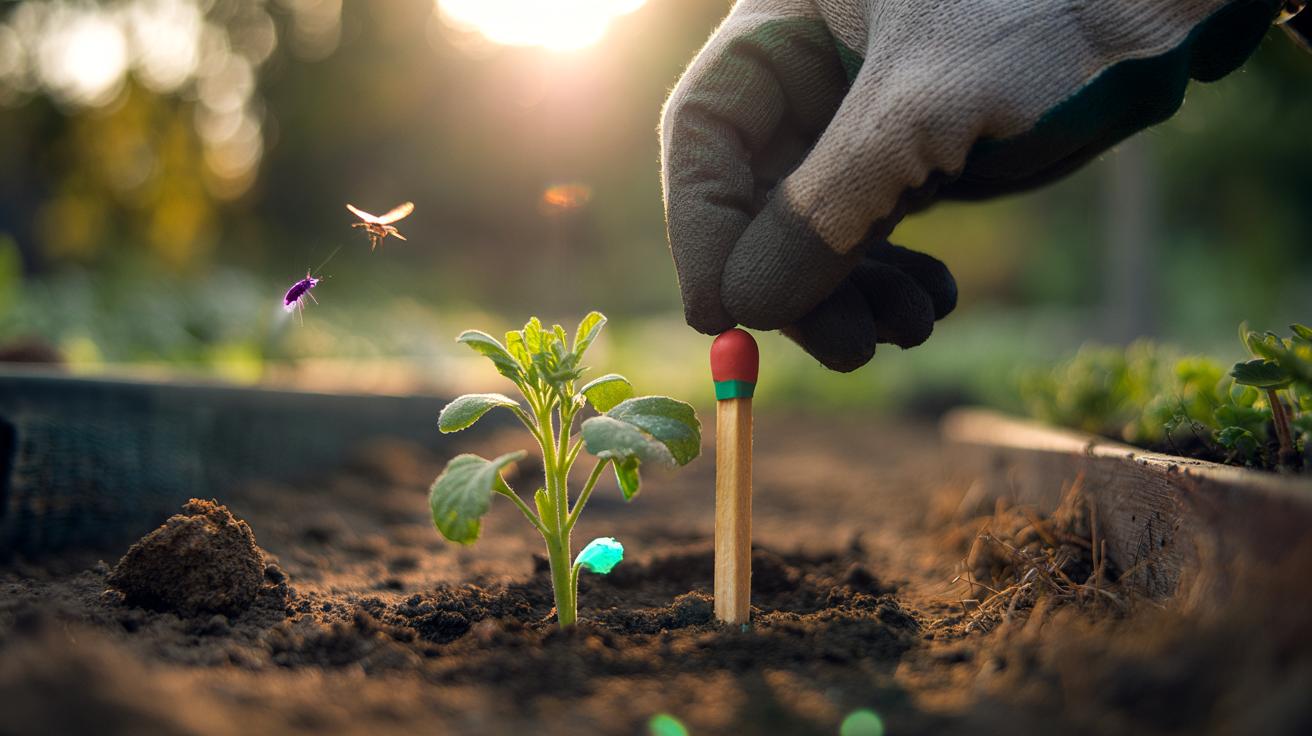
First, select plain wooden safety matches without perfumes or dyes on the stick. Keep them dry and unstruck. For transplanting brassicas, lettuce, tomatoes, or annual flowers, scrape a neat hole, then drop one match head-down an inch or so to one side of where the stem will sit. Backfill lightly, set the plant, and water in. For direct sowing carrots, beetroot, or spring onions, lay a match horizontally in the furrow every 20–30 cm before covering the seed. Do not ignite; the trick depends on slow release, not flame.
Dose matters. For small seedlings, one match per plant is enough. For pest-prone sites—old allotments with known root fly history—place two to three matches around the stem at “clock points” (for example, at 10, 2, and 6 o’clock), about 5 cm from the stalk. In containers plagued by fungus gnats, press a match into the compost near the pot rim, and repeat on the opposite side. Reapply after drenching rains or every 3–4 weeks during peak pest flights.
Safety is simple but non-negotiable. Store packets away from children and pets, wash hands after handling, and never use matches with added fragrance. Avoid overloading trays of tender seedlings; two or three matches per 10-litre volume of compost is ample. If you already use sulphur-based fungicides, step lightly to prevent cumulative inputs. A little chemistry goes a long way; restraint keeps plants, soil life, and you on good terms.
Likely Targets, Limitations, and When to Skip It
The matchstick method excels where close-quarters foraging meets sensitive antennae. Some pests are put off, others barely notice. Expect variation with weather, soil texture, and pest pressure. In the UK’s damp springs, odour plumes are short-lived yet timely—exactly when flies are scouting. Indoors and in greenhouses, the effect can be more reliable thanks to still air. Outdoors, pair the trick with physical barriers for robust defence.
| Pest | Tell-Tale Damage | Expected Effect | Notes |
|---|---|---|---|
| Cabbage root fly | Wilting brassicas, ragged roots | Medium | Use collars/fleece for best results |
| Carrot fly | Rusty tunnels, stunted roots | Low–Medium | Combine with mesh and high sowing |
| Onion/leaf miner flies | Twisting leaves, maggots in bulbs | Medium | Support with rotation and hygiene |
| Cutworms/wireworms | Seedlings cut at soil line | Medium | Scrape soil surface; add stem guards |
| Fungus gnats (pots) | Larvae in compost, damping-off | Medium–High | Dry-down cycles and sticky traps help |
| Slugs/snails | Shredded leaves, slime trails | Low | Prefer copper bands, traps, night picks |
It is not a silver bullet. In heavy pest years, odour cues may be ignored by hungry invaders. Where soils are waterlogged, the signal dilutes quickly. For root crops harvested whole, rely on fleece and timing; treat matchsticks as a supplement. Indoors, the method shines against fungus gnats, especially when paired with careful watering and yellow sticky traps. Outdoors, it’s best seen as a low-cost layer in an integrated defence, not a stand-alone fix.
Old tricks endure because they are small, practical, and oddly effective when used with judgement. A single matchstick is no talisman, yet the sulphur signal it releases can nudge pests off course, protecting seedlings during their most vulnerable weeks. Layer it with collars, netting, crop rotation, and tidy watering habits, and your beds look less like a buffet and more like a fortress. It takes seconds. Costs pennies. And it might spare you a season’s worth of sighs. Will you trial the matchstick method in your next planting, and which crop will be your first test case?
Did you like it?4.6/5 (27)