In a nutshell
- 🌱 Salt works fast: It desiccates weed cells via osmotic stress, wilting young weeds within hours; it’s a non-selective weed killer best for quick spot use.
- 🧭 Use in the right places: Target patios, paths, and gravel, not beds or lawns—salt can harm soil structure and nearby plants.
- 🧰 Apply precisely: Pinch coarse salt onto cracks, or use saline sprays (about 1:3 for patios, 1:10 near beds); consider hot salted water (1:6) on hard surfaces in dry, still weather.
- ⚠️ Manage risks: Avoid runoff into drains, keep clear of ponds, rinse metal to prevent corrosion, protect pets, and if you overshoot, flush with water and add gypsum on clay soils.
- 🛡️ Prioritise prevention: After the kill, maintain with jointing sand, mulch, thermal weeding, and sharp hoeing—treat salt as an emergency tool, not routine care.
British gardeners love a quick fix. When dandelions muscle through paving and chickweed colonises gravel overnight, the humble kitchen staple—salt—promises swift justice. Used with care, it can desiccate tender weeds in hours, leaving limp foliage by morning. Yet it’s no silver bullet. The chemistry is brutal, the collateral real, and the ethics matter when runoff meets drains and borders. Here’s a clear, practical guide to how sodium chloride works, how to deploy it precisely, and when to walk away. Salt is a powerful, non-selective weed killer that should be treated as a spot tool, not a routine habit. Apply it wisely and it can be your quickest defence; apply it everywhere and you’ll regret the fallout.
Why Salt Works on Weeds
Salt kills by physics as much as chemistry. It creates an intense osmotic gradient around leaf and root cells, pulling water out until membranes collapse. Desiccation follows. Sodium also disrupts the ion balance plants rely on to move nutrients and regulate enzymes. On small, shallow-rooted weeds—think annual seedlings in paving joints—the effect is fast. Wilting can begin within hours. By morning, tissues often look glassy and scorched. Against young weeds in hard surfaces, salt acts almost like a switch: on today, off tomorrow.
There are limits. Deep-rooted perennials with taproots—dock, horsetail, mature dandelions—can bounce back if the root crown survives. Halophytes (salt-tolerant species) shrug more than most. And soil plays referee: in clay-rich beds, excess sodium disperses clay particles, wrecking structure and trapping water, which harms the very spaces you want to cultivate. That’s why most gardeners confine salt to patios, paths, and gravel, not productive borders. The chemistry doesn’t distinguish between a weed and your lavender hedge. You must.
Weather tilts the outcome. Sun accelerates dehydration; rain dilutes and drives salt sideways. Apply during a dry spell and you get speed. Apply before a downpour and you get runoff, waste, and possible damage where you didn’t aim. Timing, as ever in gardening, is the quiet variable that decides everything.
Safe Application Methods for Fast Results
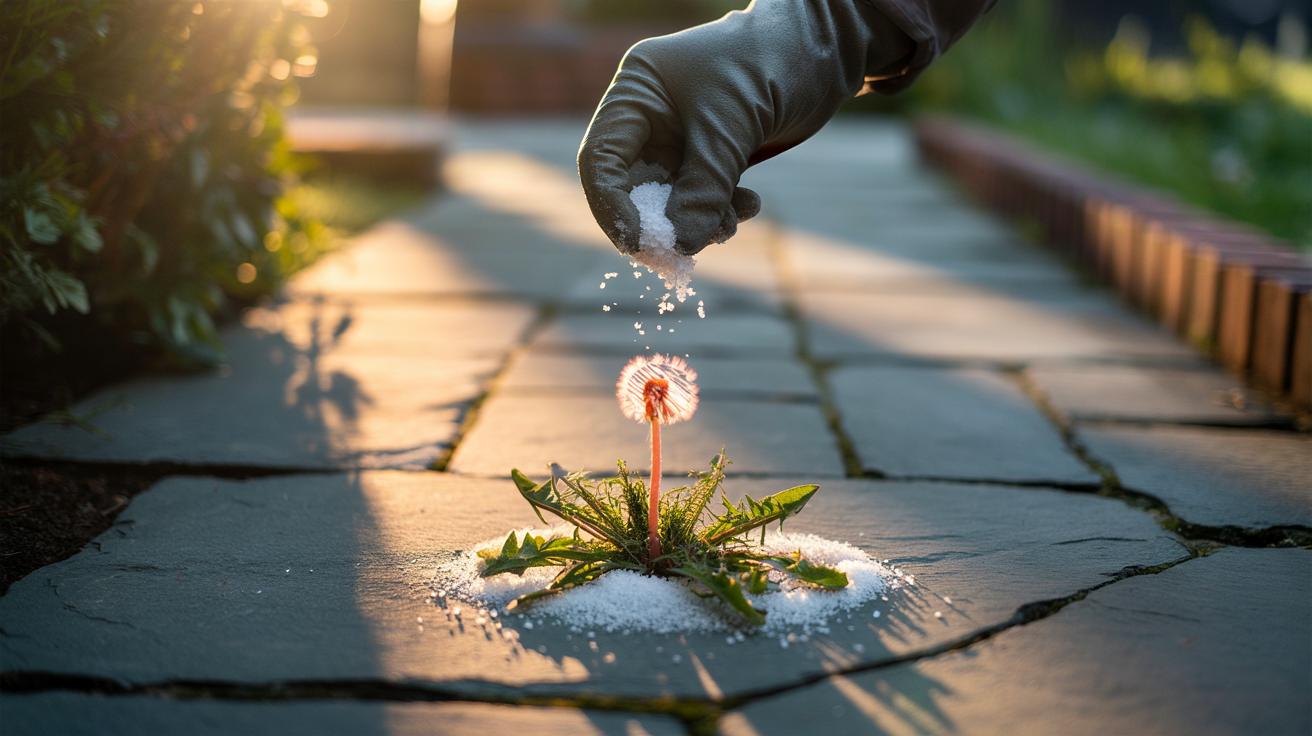
Targeted methods matter more than brand names. For cracks and paving joints, a pinch of coarse salt at the weed’s crown is precise, cheap, and effective. The crystals cling, drawing moisture from tender tissue. On wider hardstandings, a saline spray can work, but keep it controlled: 1 part salt to 3 parts water for paving, applied with a hand sprayer held low to avoid drift. Near beds or lawns, pull back to roughly 1:10 and spot-spray only the leaves. Never broadcast salt across soil you plan to plant; treat only the weed, not the ground.
Choose a still, dry day. Shield ornamentals with a board when spraying. Midday heat speeds desiccation; early morning gives you calm air and time to observe results. Always sweep stray crystals back onto the target, not the border. Rinse metal tools—salt corrodes. Gloves are sensible; eyes even more so. And don’t pour salt down drains or near ponds. What vanishes to you can linger downstream where it does harm.
| Use Case | Salt Form/Ratio | Speed of Effect | Best Location | Key Risk |
|---|---|---|---|---|
| Pinch on crack weeds | Coarse crystals, dry | 12–24 hours | Paving joints | Scorch radius 5–10 cm |
| Patio spot-spray | 1:3 salt:water | 24–36 hours | Paths, patios | Spray drift to borders |
| Near beds (cautious) | 1:10 salt:water | 24–48 hours | Gravel drives | Residual salinity |
| Hot salted water | 1:6, poured | Immediate–24 hours | Hard surfaces only | Scald + root damage |
If you don’t see collapse after a day, resist doubling down. Uproot what’s left, then top up the joint with kiln-dried sand to deny light. Salt is for the kill; denial of habitat keeps it done.
Risks, Soil Health, and When to Avoid Salt
Sodium changes soil. It breaks apart clay aggregates, turning fluffy loam into pudding when wet and concrete when dry. Microbial life suffers, worms retreat, and plant roots lose air. On lawns or vegetable beds, that’s a disaster. In coastal counties already prone to saline winds, the margin for error is even slimmer. If you value your soil, keep salt off it. Use it on hardscape, not horticulture. And remember pets: paws taste before brains think. Store salt high and label it clearly.
There’s also the question of water. Salt on a path today can wash into a storm drain tomorrow. That’s not a legal lecture; it’s common sense and good stewardship. Keep at least a metre from drains and soakaways, and avoid pre-rain applications entirely. For metal fixtures—gates, railings—salt invites corrosion. Clean splashes immediately. If you overshoot a border, drench the area with plain water to dilute, then add gypsum where appropriate to counter sodium in clay-heavy soils.
Sometimes the best move is abstention. Around hedges, newly planted trees, wildlife ponds, and edible beds, choose alternatives: thermal weeding on paths, dense mulch in borders, sharp hoes in dry weather, and regular top-ups of jointing sand. The fastest cure is prevention—block the light, reduce seed contact with soil, and the weeds never get a vote.
Used with a journalist’s scepticism and a gardener’s precision, salt is an efficient, near-instant weed defence for hard surfaces. It excels at small targets and quick turnarounds. Yet the very qualities that make it potent can make it destructive when misapplied. Aim tight, time it right, and stop once the job is done. Then switch to maintenance: refill joints, mulch bare ground, keep edges sharp. Think of salt as the emergency extinguisher, not the daily cleaner. When the next green tuft pops through your paving, will you reach for the shaker—or redesign the space so those weeds never return?
Did you like it?4.3/5 (27)