In a nutshell
- 🍳 A humble rubber band boosts friction and grip, cutting prep time while stabilising boards and opening jars with first-try torque.
- ⚡ Five fast tasks supercharged: jar opening, board stability, banded herb chiffonade, halving small produce with a two-lid clamp, and rolling pin thickness guides—backed by a table of time saved.
- 🧰 30-second setup: pick a medium band, clean it, loop bands on board edges, keep one within reach, then corral herbs, grapes/tomatoes, and dough for swift, repeatable cuts and rolls.
- 🛡️ Safety and hygiene first: keep bands from heat, manage latex allergy with silicone alternatives, wash after messy jobs, and retire any band that cracks or turns tacky.
- ♻️ Sustainability and savings: replace paper towels, clips, and bag ties; store bands cool and dark; small, routine gains compound into minutes saved every cook.
What if the fastest kitchen gadget costs pennies and already lives in your junk drawer? A simple rubber band can slash prep time dramatically, turning fiddly jobs into swift, repeatable motions. Chefs prize tools that add grip, control, and consistency; a band delivers all three in seconds. Wrap, anchor, corral. Suddenly jars open first try, herbs slice neatly, and cutting boards stop skating about. It’s not a gimmick so much as physics. The smallest increase in friction can yield the biggest leap in speed. Here’s how to put that humble loop of latex to work and get dinner on the table sooner.
The Science of Grip: Why Rubber Bands Matter
Speed in the kitchen is rarely about moving faster; it’s about eliminating micro-delays. A rubber band increases friction, which means fewer slips, fewer resets, and fewer do-overs. On a jar lid, the band’s ridged surface provides traction your palm can’t, converting effort directly into torque. On a cutting board, bands turned around the edges grip the counter like tyres on tarmac, stabilising the surface so your knife strokes flow. Grip equals speed and safety, because when things don’t wobble, you don’t hesitate, and hesitation is the enemy of fast prep.
There’s a psychological benefit too. Reliability reduces cognitive load. When your board doesn’t budge and a lid opens on the first attempt, you stay in rhythm. That rhythm compacts time. The band becomes an instant modifier for multiple tools: knives feel more secure, rolling pins become measurable, even bowls and baking paper behave. The result is not just faster tasks, but cleaner, more consistent results that cut rework—the hidden tax on every recipe.
Five Fast Tasks Rubber Bands Supercharge
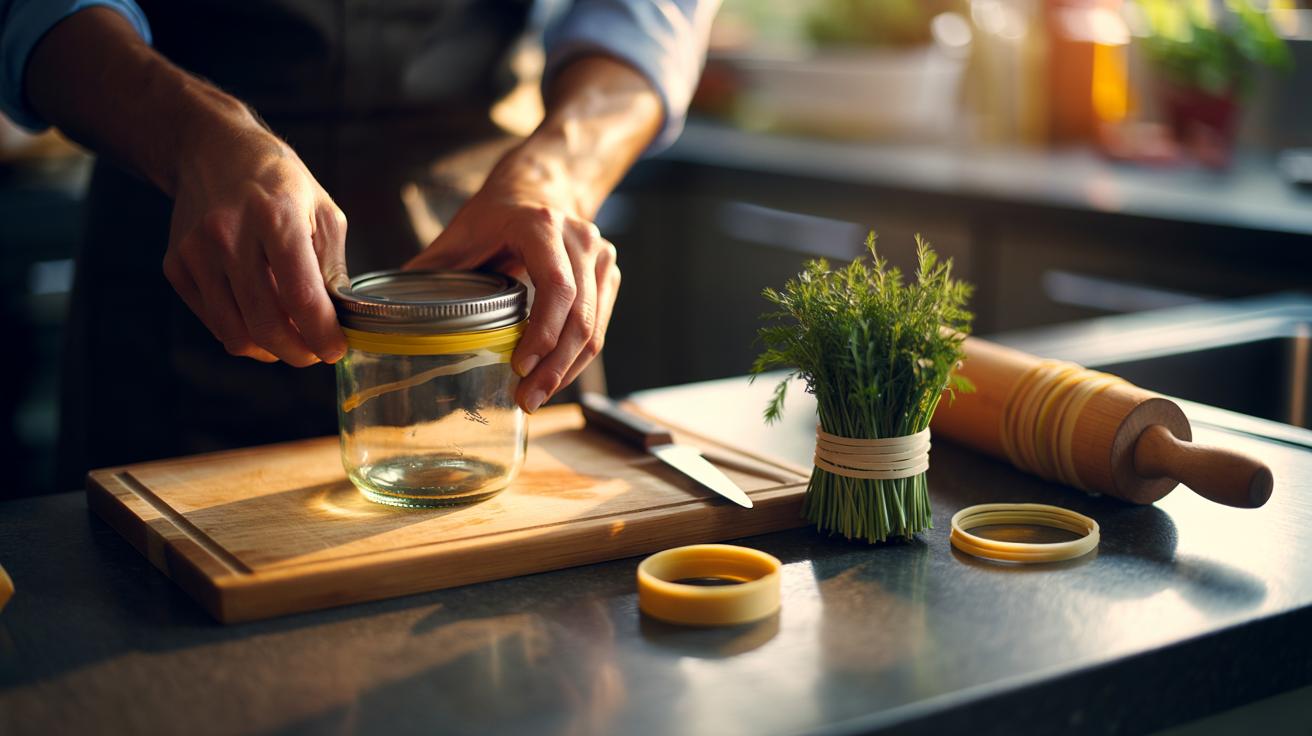
Think of a band as a portable grip, clamp, and corral. Wrap one around a jar lid for first-try opening. Loop two around the ends of your cutting board to stop slippage—no damp tea towel required. Slide a band around a bundle of herbs or spring onions, slice through in a tight chiffonade, then pull the band away—uniform pieces, minimal flyaway. For cherry tomatoes or grapes, sandwich them between two shallow lids, secure with two bands, and slice horizontally for instant halves. Finally, add two bands at equal distances on a rolling pin; they act as thickness guides for pastry or biscuits, speeding even rolling.
| Task | Rubber band trick | Approx. time saved |
|---|---|---|
| Opening jars | Band around lid for traction | 30–60 seconds |
| Chopping herbs | Band the bundle, slice tight | 1–2 minutes |
| Board stability | Bands on board edges | Setup and wipe-down time |
| Halving small produce | Two lids + bands as clamp | 2–3 minutes |
| Rolling pastry | Bands as thickness guides | 1–2 minutes |
Ten minutes shaved off a weeknight cook adds up to hours over a month. Small margins, big wins. And because these hacks reduce mess—fewer rolling disasters, tidier herbs—you’ll spend less time cleaning too.
Step-by-Step: The 30-Second Setup for Speed
First, choose the right band. Medium-width bands (not the ultra-thin ones) grip best without biting into food or tools. Give the band a quick wash with hot, soapy water, then dry. Now stabilise: loop one band around each short side of your cutting board; the friction points should contact the worktop directly. That’s your foundation. Next, pre-stage a second band near your knife area for jars or for bundling herbs. One band on the board, one in reach—this is your baseline.
For produce, corral before you cut. Slide a band gently around a small stack of herbs, holding stems together but not crushing leaves. Slice confidently with a rocking motion. For tomatoes or grapes, set up the two-lid clamp and secure with bands in a criss-cross; one decisive pass of a sharp knife does the work of dozens of fiddly cuts. When rolling dough, measure the desired thickness, then position bands the same distance from each end of your pin; the bands act as rails, preventing over-rolling and rework. Each micro-setup takes seconds, yet compounds into major time gains.
Safety, Hygiene, and Sustainability Considerations
Rubber bands are safe when used sensibly, but they’re not heatproof. Keep them away from open flames, oven racks, and hot oil. If you have a latex allergy, choose silicone alternatives; many reusable silicone “jar grippers” and bands offer identical benefits. Wash bands before the first use and after contact with raw meat packaging or sticky residues. When a band cracks or feels tacky, retire it—degraded rubber sheds and loses grip.
From a sustainability angle, a single sturdy band replaces disposable parchment clips, extra paper towels under boards, and even some single-use bag ties. Store bands in a cool, dark jar to extend life. If you’re buying new, look for natural rubber or silicone designed for kitchen use; they last longer and resist odours. And remember knife safety: stabilise the work surface first, keep fingers curled, and let the added friction do the heavy lifting rather than brute force. The goal isn’t just speed; it’s consistent, relaxed efficiency that feels professional.
In a world crowded with gadgets, the plain rubber band stands out by doing three things brilliantly: gripping, guiding, and gathering. That trio trims effort, slashes hesitation, and turns repetitive prep into smooth, almost mechanical flow. The quicker your tools obey, the quicker dinner’s done. Try stabilising your board tonight, banding a herb bundle, and rolling pastry with built-in guides—then count the minutes you get back. What other overlooked, low-cost item could become your next secret weapon in the kitchen?
Did you like it?4.4/5 (21)