In a nutshell
- 🛡️ In 30 seconds, aluminium foil forms an impermeable barrier that blocks oxygen, moisture, light and odours, slowing oxidation and keeping flavours intact.
- 🧰 Follow the quick method: use heavy-duty foil, centre the food, create double-crimped seams, press out air, let steamy items cool, and label for easy rotation.
- 🔁 Foil beats plastic for long-term odour, light and air control; add parchment against acidic/salty foods, and pair foil with a freezer bag to prevent punctures and frost.
- ⚠️ Avoid condensation by cooling before sealing, never microwave foil, prevent cross-contamination, choose sturdy sheets, and keep the fridge around 4°C.
- 📊 A quick table guides pairings—roasts, cheeses, pastries, herbs—so you can match method to food and preserve texture and shelf life.
Busy cooks don’t have time for faff. You want last night’s roast to taste like it did fresh from the oven, not like the fridge. That’s where aluminium foil earns its keep. In under 30 seconds, a neat wrap creates a tight vapour and oxygen barrier that slows drying, curbs odours, and shields delicate textures. The trick is understanding how foil behaves: it reflects light, blocks air, and moulds closely to food. Done right, it means fewer limp salads and fewer bins of leftovers. Quick technique plus smart material equals longer freshness and less waste. Here’s the science, the method, and the small tweaks that make a big difference.
Why Foil Works as a Barrier
Aluminium foil is both simple and clever. Its metal layer forms an impermeable shield against oxygen, water vapour, and strong odours, three of the biggest culprits behind staling and off-flavours. By excluding air, foil helps slow the chemistry of oxidation—the same process that turns cut apples brown and makes fats taste stale. It also limits moisture migration. That keeps pastry crisp, cheese supple, and roasted meat juicy. Stop the exchange of air and moisture, and you slow down spoilage.
There’s more going on. Foil’s reflectivity minimises light exposure, protecting light-sensitive nutrients and flavours. Its malleability lets you shape a tight, custom fit, creating a near-hermetic seal without kitchen gadgets. And because foil conducts heat, it helps rapidly chill warm leftovers when left slightly vented at first, then pressed shut once cool. In a domestic fridge, where doors open all day and humidity swings, that robust barrier effect is what keeps tonight’s sandwiches from tasting like last night’s curry.
The 30-Second Wrapping Method
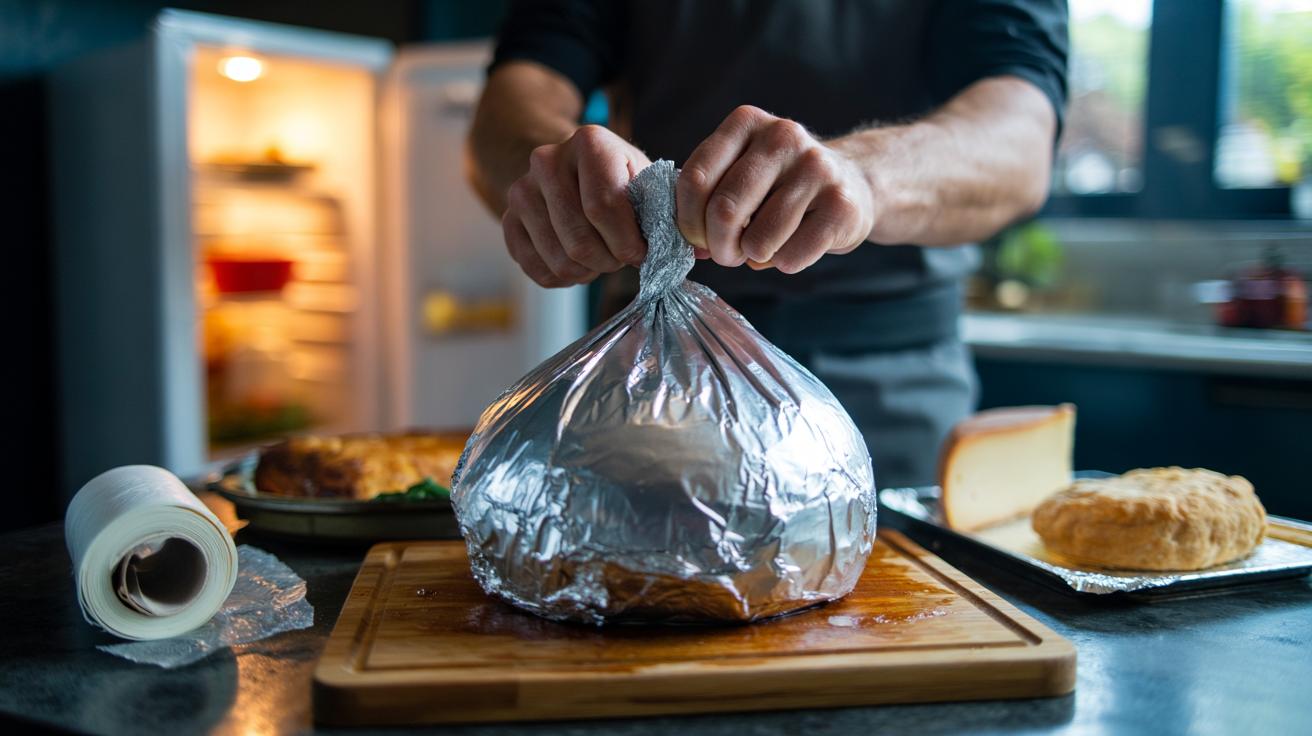
Speed matters, but neatness matters more. Start with a piece of heavy-duty foil large enough to fold under itself on every side. Place the food in the centre, smooth-side down if it has one. Fold the nearest edge over the food and press to mould. Fold the opposite edge over, then crimp the two edges together into a tight seam. Repeat with the side edges, again crimping firmly. You’re making a small parcel with double-folded seams that resist tears and leaks. Seams are where freshness leaks out—reinforce them.
Label with the date. Flatten excess air pockets by gently pressing the surface; a closer fit equals a better barrier. For steamy items, let them cool until just warm, tent loosely for five minutes to prevent condensation, then seal tight. Need quick reference? Use the table below to match food types to foil techniques for fast, consistent results.
| Food | Foil Technique | Why It Works |
|---|---|---|
| Roast meat | Tight wrap, double-crimped seams | Limits oxygen, keeps juices in |
| Hard cheeses | Snug wrap, small air gap | Prevents drying, reduces odour transfer |
| Pastries | Loose wrap, then tighten | Protects flakes, avoids soggy layers |
| Herbs | Wrap with paper layer inside | Absorbs moisture, slows wilting |
When Foil Beats Plastic (and When It Doesn’t)
Foil is unbeatable for blocking light, air, and odours. It excels with aromatic foods, baked goods, and fatty items prone to oxidation. It’s the right choice when you need a form-fitting physical shield that won’t sag or creep open. Plastic wraps, by contrast, are often semi-permeable to gases and odours. They’re handy for short-term, high-moisture foods, but they don’t deliver the same long-term barrier. For longevity and flavour protection, foil is your default.
There are caveats. Avoid direct contact between foil and acidic or salty foods—think tomatoes, citrus, brined cheeses—as this can lead to pitting and metallic notes. Use a baking parchment layer against the food, then foil outside. For the freezer, combine foil with a labelled freezer bag to guard against punctures and frost. And don’t waste foil on leafy salads; a lidded container keeps delicate leaves from bruising. The rule of thumb is simple: choose the material that best blocks the specific enemies your food faces—air, moisture, light, or pressure.
Common Mistakes and Safety Tips
Most freshness losses come from small slips. Thin supermarket foil tears; pick heavy-duty for anything with edges or bones. People forget to cool foods before sealing; trapped steam becomes condensation, which invites sogginess and off-flavours. Others wrap too loosely, leaving air channels that defeat the barrier. And many overlook labelling, so food lingers past its prime. Control air, control moisture, and you control shelf life.
Safety matters too. Keep foil out of the microwave to avoid arcing. In the oven, tight foil lids speed even reheating but always leave a small vent for pressure. For acidic dishes, use parchment between the food and foil. Reuse clean, unwrinkled sheets where practical; recycle used foil if it’s free of heavy grease. Finally, pair foil with fridge discipline: store raw and cooked foods separately to prevent cross-contamination, and keep your chiller near 4°C. Good wrapping extends time, but sound hygiene protects flavour and health.
Handled well, a sheet of aluminium foil is more than a shiny cover; it’s a fast, flexible protective barrier that keeps oxygen out, moisture balanced, and flavours locked in. In 30 seconds flat, you can turn leftovers into tomorrow’s lunch without the stale fridge taste or soggy crusts we all dread. Choose the right foil, seal the seams, and match the method to the food. Less waste, better eating, lower bills. What food in your kitchen would benefit most from a tighter foil wrap today, and what tweak will you try first?
Did you like it?4.5/5 (28)